Singulart guarantees reliability and traceability.
All the artists on the platform have been specially selected and certify to only sell works, of which they are the artist. Whatever the medium, the work is sent to the buyer with a certificate of authenticity. Photographs are numbered and signed.
Every customer can be given a copy of their certificate of authenticity by contacting support@singulart.com
With Singulart, you can pay safely by credit card or bank transfer.
For all transactions exceeding your credit limit, contact us. We are required to verify every transfer, as part of the fight against fraud and money laundering.
Singulart prices include:
Price of an artwork defined by an artist.
Insurance. Your order is 100% protected in case of any damage or loss.
All customs fees, taxes, and document preparation.
Third-party logistic provider shipping costs.
A dedicated Singulart customer care specialist that will assist you with any questions or problems during shipment.
Other details :
Artwork on supported wooden frame. Artwork framed.
Dimensions :
68x36in
About this artwork
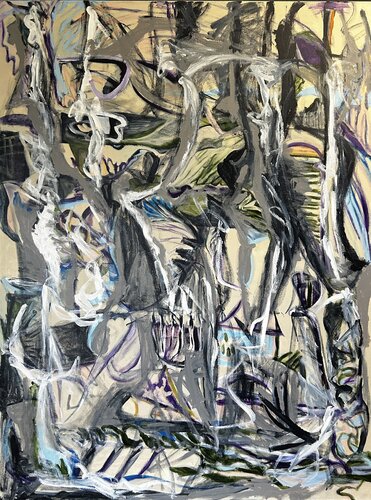
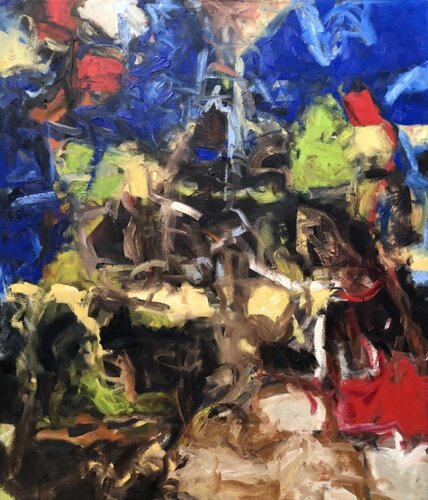
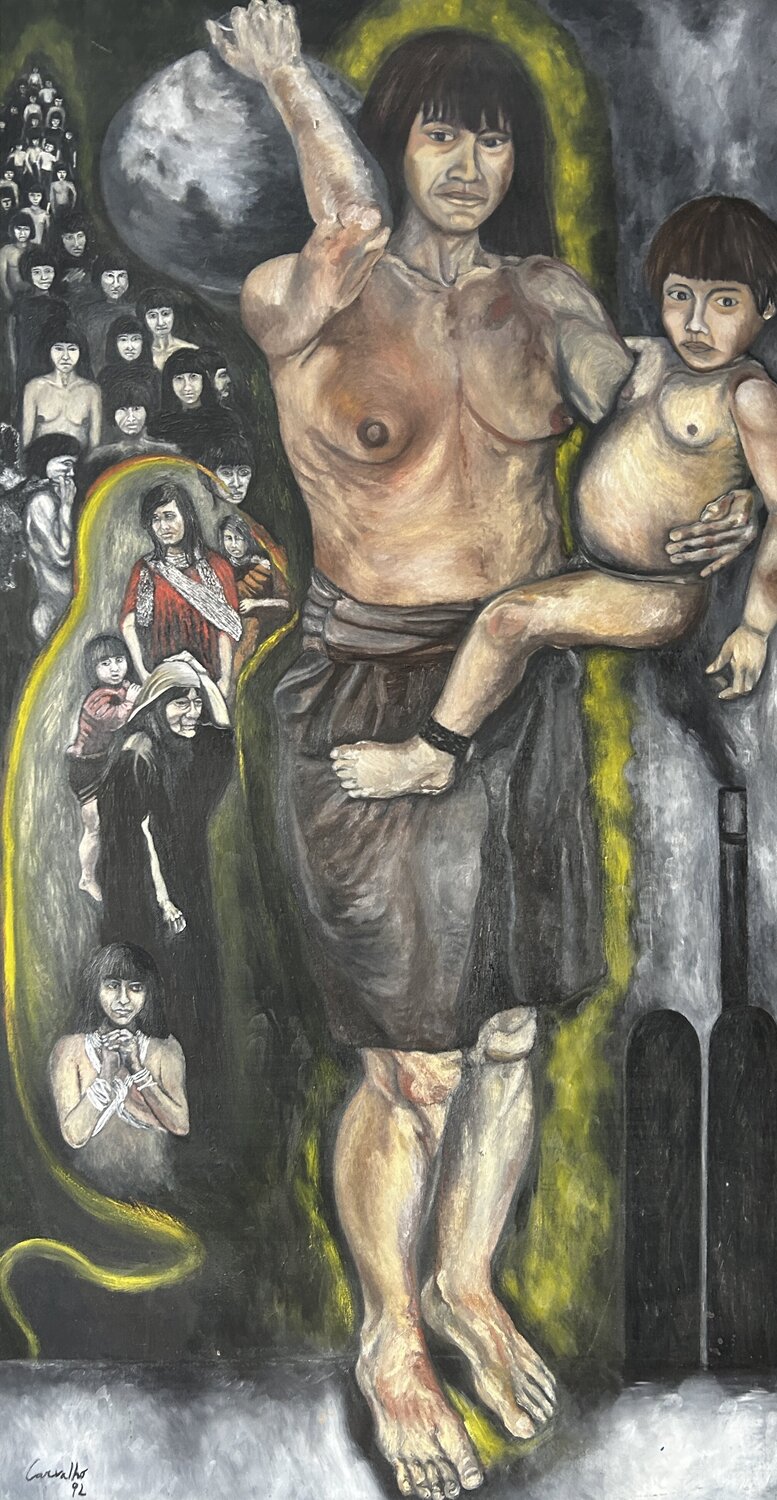
This painting is about my country's region of Amazonia. A few of the indigenous figures, including the larger woman carrying a child, are based on the photographs by Mirella Ricciardi shown in the book Vanishing Amazon (1991) published by Harry N. Abrams, Inc. The book featured three indigenous cultures from the Brazilian Amazonia: the Kempa, the Marubo, and the Yanomami. An earlier volume, Vanishing Africa (Morrow, 1971), was also photographed by… Ricciardi, with images from six tribal groups in Kenia. My painting added here was based on the disappearing cultures of the tribes in the Amazon.
The deforestation of the Amazon has been a major topic for many Brazilian artists, which I included in various artists' reviews, but it was also part of my scholarship as a Ph.D. in cultural studies. In the painting, Untitled (1992), shown here, I address the Amazonian issue through a path of disappearance that is not limited to the Amazon, but had included various indigenous peoples.
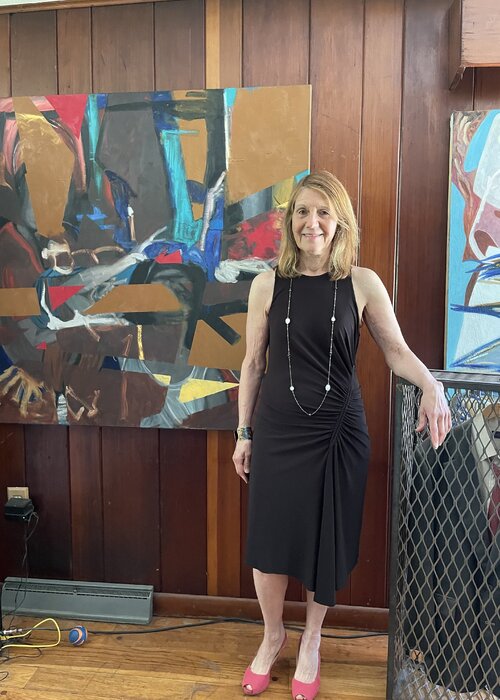
Denise Carvalho is a painter with a rich background shaped by Neo-concrete art in Brazil, academic training in New York, and international exhibition experience. Her multifaceted practice spans representational and abstract works, with techniques deeply intuitive, evolving from abstraction to poignant figurative painting influenced by her family and early modernist art. She channels layers of art history, music, philosophy, and personal memory into styles that remain distinctly her own. Her artworks resonate with profound spirituality, empathetic reflection, and a search for transformation—inviting viewers to explore both inner growth and the enduring bonds of creativity across generations.
Denise recently published a book, We are All Children at the End, which is a deeply personal account of the artist's upbringing in Brazil, her journey to the US, and her life in New York City, while also exploring her mother’s struggle with Alzheimer’s during the final years of her life. When her mother moved in with her in the US, the author began teaching her how to draw and paint. This creative process became a way for her mother to overcome many challenges posed by the illness and rediscover her passion for the arts. The author documented some of her mother’s works, including paintings and drawings, during this time. The book highlights how art can change the perception of illness and inspire a renewed desire for life. The artist writes under the pen name Denise VanMoss. This book can be purchased through the publisher, Pegasus Elliot Mackenzie Publishers Ltd.