
Singulart guarantees reliability and traceability.
All the artists on the platform have been specially selected and certify to only sell works, of which they are the artist. Whatever the medium, the work is sent to the buyer with a certificate of authenticity. Photographs are numbered and signed.
Every customer can be given a copy of their certificate of authenticity by contacting support@singulart.com
With Singulart, you can pay safely by credit card or bank transfer.
For all transactions exceeding your credit limit, contact us. We are required to verify every transfer, as part of the fight against fraud and money laundering.
Singulart prices include:
Price of an artwork defined by an artist.
Insurance. Your order is 100% protected in case of any damage or loss.
All customs fees, taxes, and document preparation.
Third-party logistic provider shipping costs.
A dedicated Singulart customer care specialist that will assist you with any questions or problems during shipment.
Other details :
Artwork on supported wooden frame. Artwork framed.
Dimensions :
78.7x66.9in
About this artwork
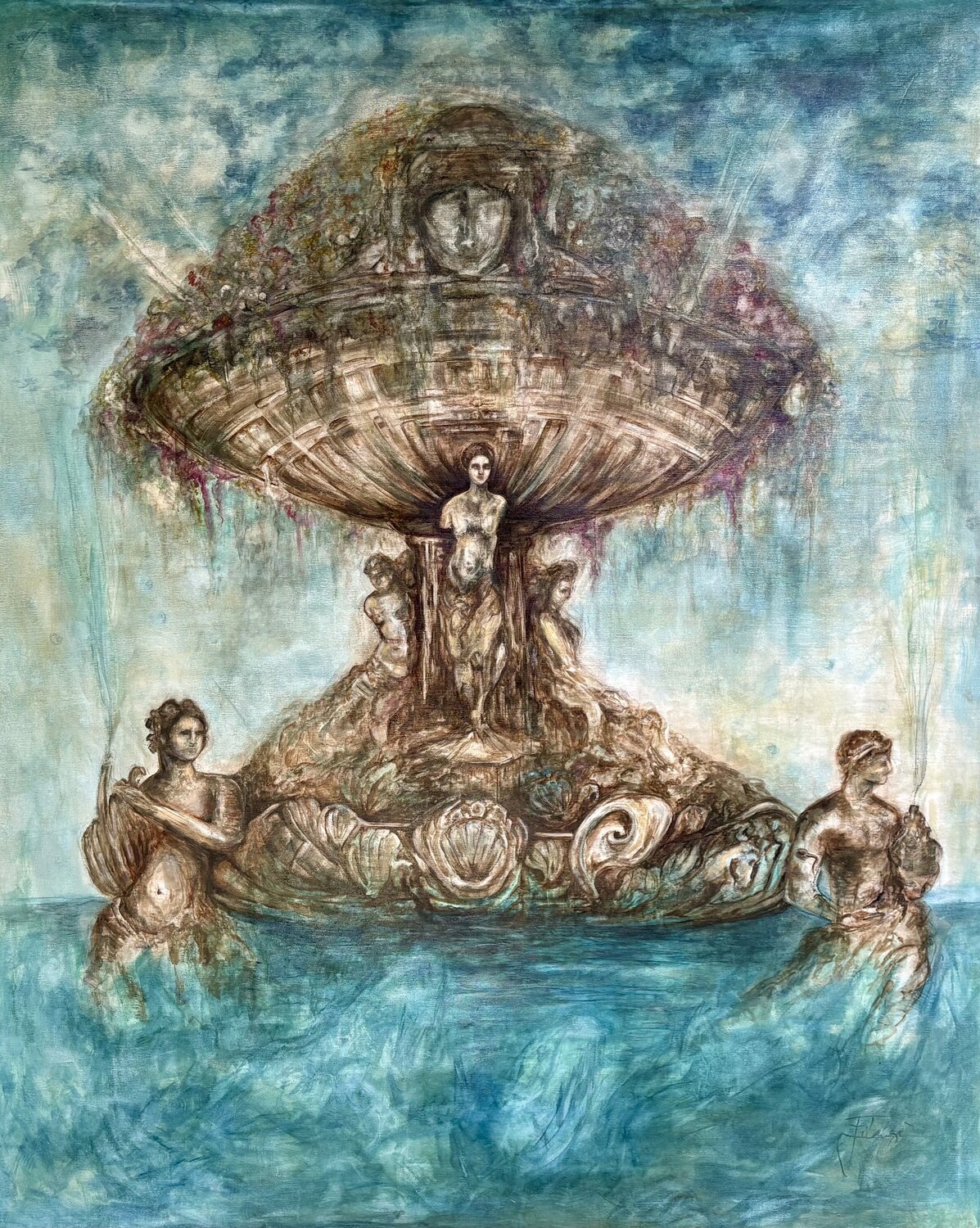
La Fontaine du Silence s’inscrit dans un travail de lenteur et de profondeur, où la matière picturale devient un espace de recueillement.
La figure centrale, minérale et presque intemporelle, émerge de la pierre comme un souvenir ancien. Autour d’elle, les corps semblent naître de la roche et de l’eau, dans une continuité organique où la frontière entre chair, minéral et architecture s’efface.
La peinture est construite par superpositions de glacis,… poudres minérales et pigments naturels, travaillés dans une économie de moyens volontaire. Les matières se déposent, s’érodent, puis se révèlent dans une lumière contenue, presque sacrée.
La fontaine n’est pas ici un décor mais un seuil : un lieu de passage, de silence et de mémoire. L’eau n’est pas mouvement, mais respiration.
L’œuvre invite à une contemplation lente, intime, où le regard s’installe plutôt qu’il ne traverse.
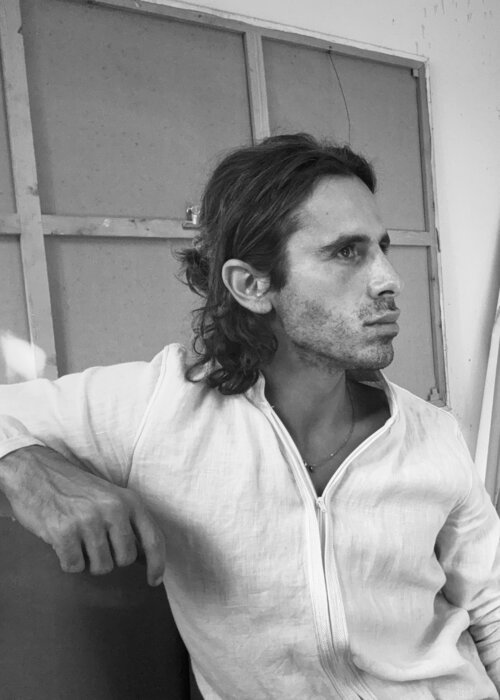
Florentino Filangi is a French painter whose work explores a painting of restraint, silence, and depth. He develops a demanding body of work where the figure, architecture, and matter engage in a dialogue in a constant search for balance and plastic authority.
Working primarily with oil on linen canvas, Filangi favors a slow and deliberate approach, based on layering, halftones, and the interplay between transparency and opacity. The material is never merely decorative; it structures the space and imposes a silent presence.
His work is organized into coherent series, conceived as architectural ensembles. The figures that appear in them do not seek the gaze; they withdraw, leaving room for a form of inner contemplation and a suspended temporality.
At the crossroads of classical heritage and a personal contemporary style, his painting invites an intimate and lasting relationship with the work.