Singulart guarantees reliability and traceability.
All the artists on the platform have been specially selected and certify to only sell works, of which they are the artist. Whatever the medium, the work is sent to the buyer with a certificate of authenticity. Photographs are numbered and signed.
Every customer can be given a copy of their certificate of authenticity by contacting support@singulart.com
With Singulart, you can pay safely by credit card or bank transfer.
For all transactions exceeding your credit limit, contact us. We are required to verify every transfer, as part of the fight against fraud and money laundering.
Singulart prices include:
Price of an artwork defined by an artist.
Insurance. Your order is 100% protected in case of any damage or loss.
All customs fees, taxes, and document preparation.
Third-party logistic provider shipping costs.
A dedicated Singulart customer care specialist that will assist you with any questions or problems during shipment.
Other details :
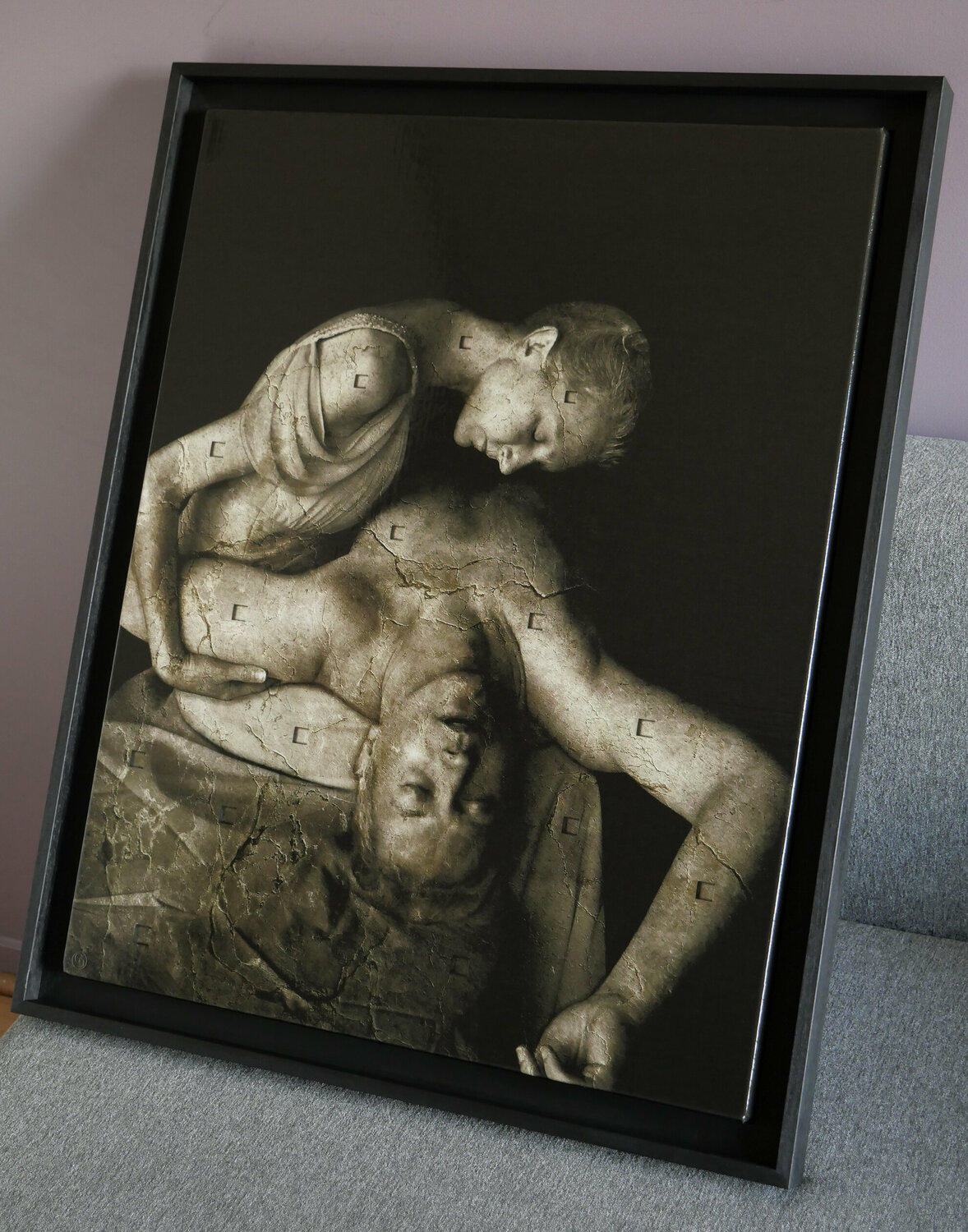
Artwork on supported wooden frame. Artwork framed.
Dimensions :
24.8x19.7in
About this artwork
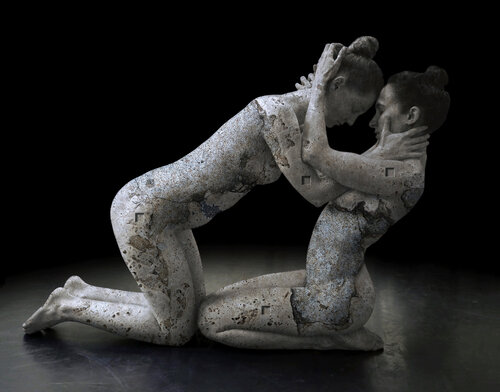
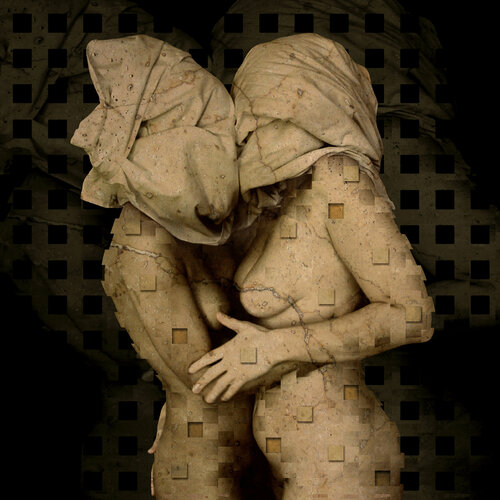
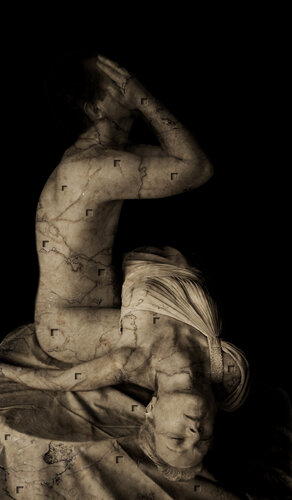
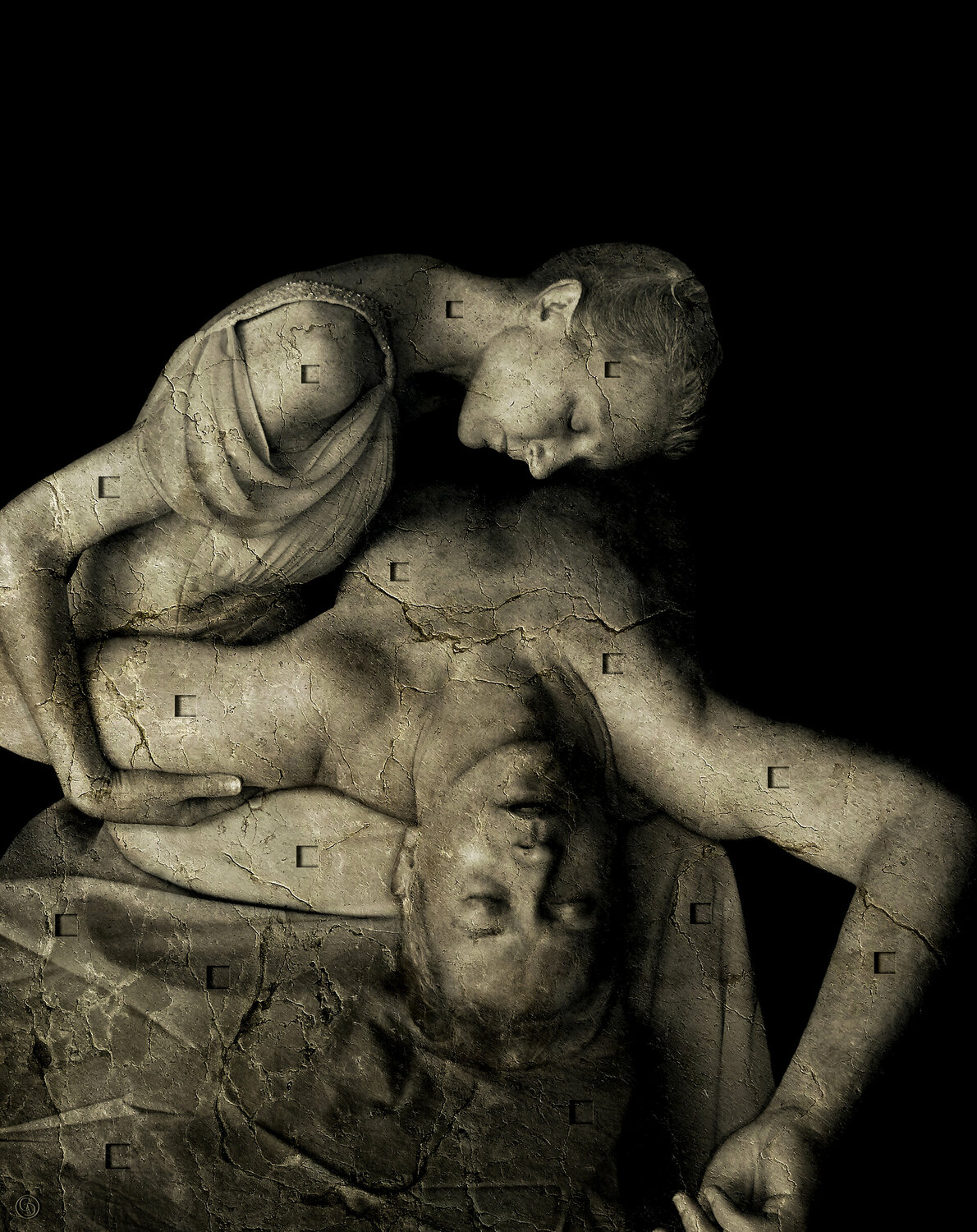
"To Lose my Life" appartient à une série de trois œuvres consacrées à la fin de l'histoire de Romeo et Juliette, lorsque les deux amants se retrouvent dans une situation confuse où la mort est simulée par un philtre avant d'advenir pour de vrai. Ici, Juliette s'est réveillée du sommeil où elle était plongée et découvre Romeo sans vie à côté d'elle ; elle le prend sur ses genoux, comme dans une Pietà, pour déplorer sa mort, dans un ultime geste de… tendresse.
Cette œuvre est réalisée en technique mixte sur toile. Elle combine photographie, art digital et peinture à l'acrylique (glacis laqués et carrés en relief), il s'agit d'une pièce unique et elle est accompagnée d'un certificat d'authenticité. Le tableau est encadré en bois noir (dimensions : 69 x 56 x 3,5 cm)
« In the age of digital technologies, I couldn't just be a painter or a photographer. My 'paintographies' destroy borders and offer a resolutely contemporary hybrid art. »
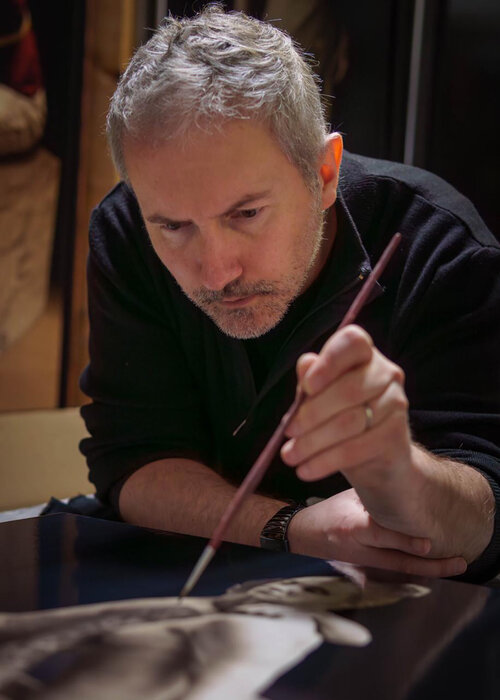
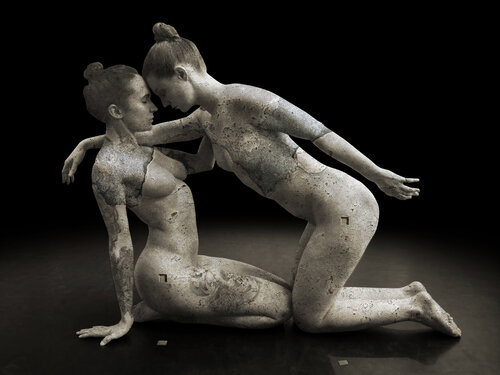
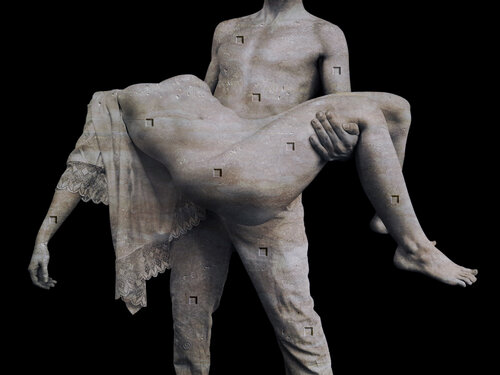
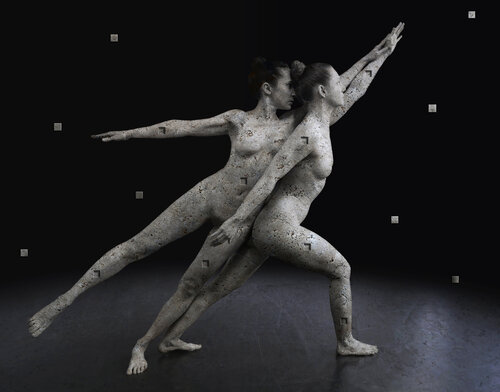
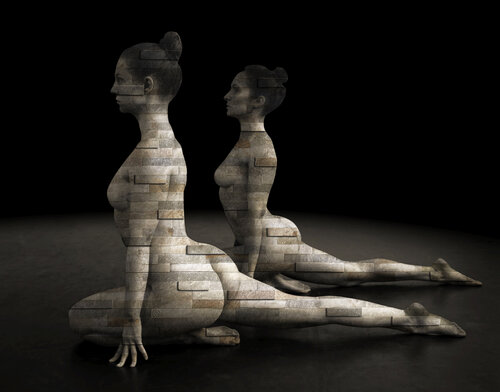
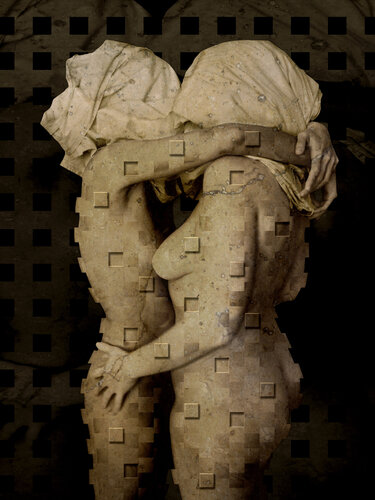
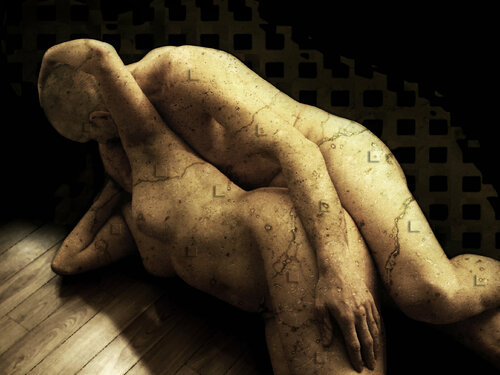
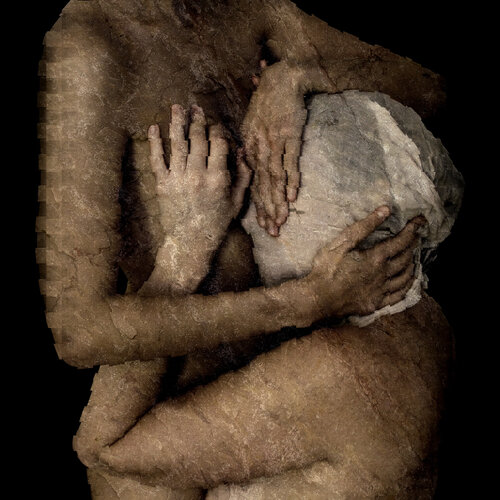
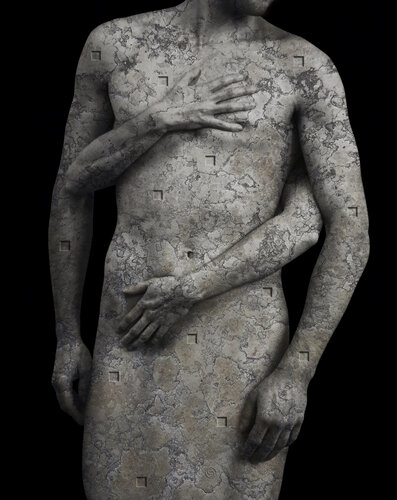
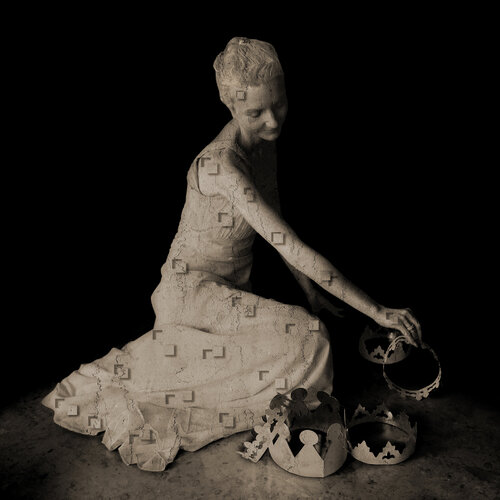
Georges Dumas's artistic approach is both simple and complex. While the aesthetic of his works, which he describes as "paintographies," is highly figurative, their composition is slow and complex, blending photography, digital art, and acrylic paint. Georges Dumas transforms the models he photographs into virtual sculptures by replacing their skin with mineral materials to represent both the passage of time and the fragility of the body.