Singulart guarantees reliability and traceability.
All the artists on the platform have been specially selected and certify to only sell works, of which they are the artist. Whatever the medium, the work is sent to the buyer with a certificate of authenticity. Photographs are numbered and signed.
Every customer can be given a copy of their certificate of authenticity by contacting support@singulart.com
With Singulart, you can pay safely by credit card or bank transfer.
For all transactions exceeding your credit limit, contact us. We are required to verify every transfer, as part of the fight against fraud and money laundering.
Singulart prices include:
Price of an artwork defined by an artist.
Insurance. Your order is 100% protected in case of any damage or loss.
All customs fees, taxes, and document preparation.
Third-party logistic provider shipping costs.
A dedicated Singulart customer care specialist that will assist you with any questions or problems during shipment.
Other details :
Artwork on supported wooden frame. Artwork framed.
Dimensions :
30x20in
About this artwork
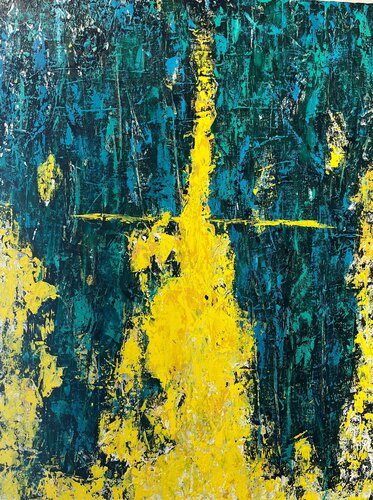
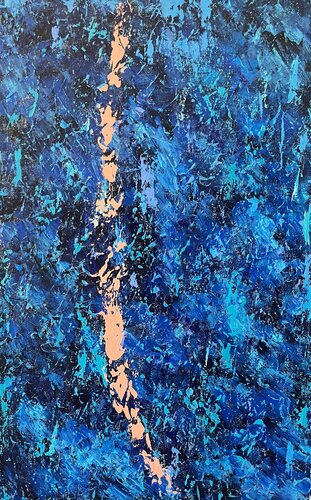
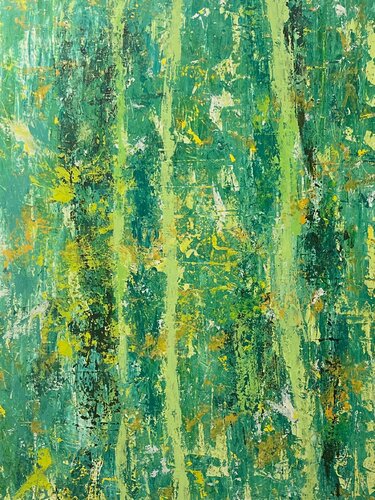
Harmeet Singh continues his sustained inquiry into structural tension, material behavior, and spatial friction. Belonging to his highly acclaimed Fault Lines series, this acrylic canvas explores the shifting boundaries between order and uncertainty. Rather than viewing a break or fracture as collapse or destruction, Singh’s practice treats the fracture as a primary, generative space where new forms and structural resilience become visible. The painting… refuses to return to a prior state of serenity, instead integrating the damage directly into its architecture. This scale holds an exceptional, vibrating presence when hung
Harmeet Singh is an abstract artist based in New Chandigarh, India.
Working primarily in large-format acrylics, Harmeet Singh builds his paintings through repeated mark-making, layering, scraping, and reworking. Inspired by the idea of fault lines, his work explores how structure emerges, shifts, and occasionally breaks apart.
Each painting develops gradually rather than from a fixed plan. Layers are added, buried, cut through, and revealed again. Knife movements leave traces across the surface, creating lines, scars, and interruptions that remain visible within the finished work. These accumulated marks record the painting's evolution, allowing earlier decisions and hidden layers to remain part of the final image.