Singulart guarantees reliability and traceability.
All the artists on the platform have been specially selected and certify to only sell works, of which they are the artist. Whatever the medium, the work is sent to the buyer with a certificate of authenticity. Photographs are numbered and signed.
Every customer can be given a copy of their certificate of authenticity by contacting support@singulart.com
With Singulart, you can pay safely by credit card or bank transfer.
For all transactions exceeding your credit limit, contact us. We are required to verify every transfer, as part of the fight against fraud and money laundering.
Singulart prices include:
Price of an artwork defined by an artist.
Insurance. Your order is 100% protected in case of any damage or loss.
All customs fees, taxes, and document preparation.
Third-party logistic provider shipping costs.
A dedicated Singulart customer care specialist that will assist you with any questions or problems during shipment.
Other details :
Unmounted artwork. Mounting and/or framing available on request.
Dimensions :
55.1x39.4in
About this artwork
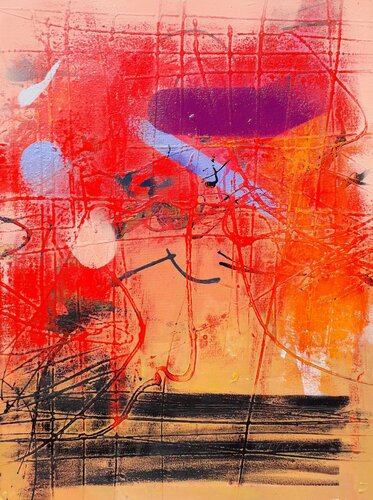
Acrylic and spray paint on canvas
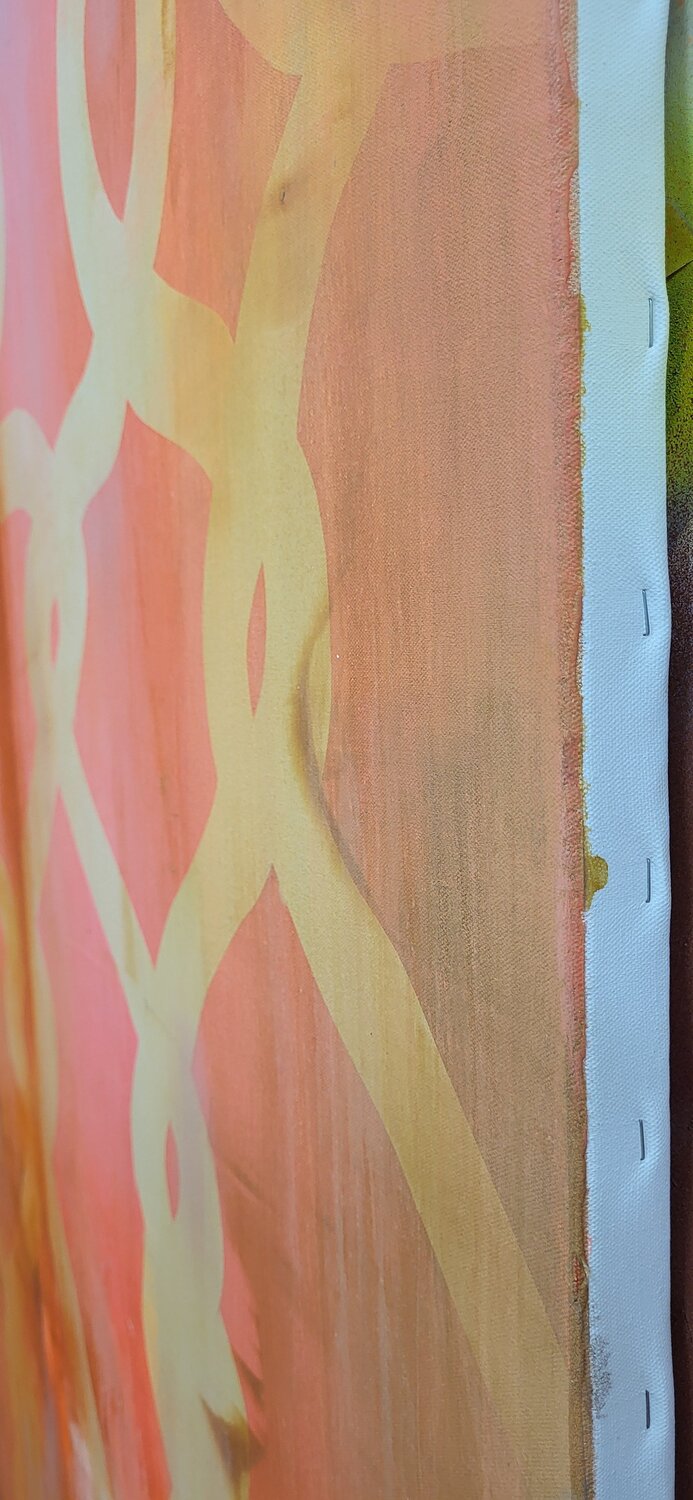
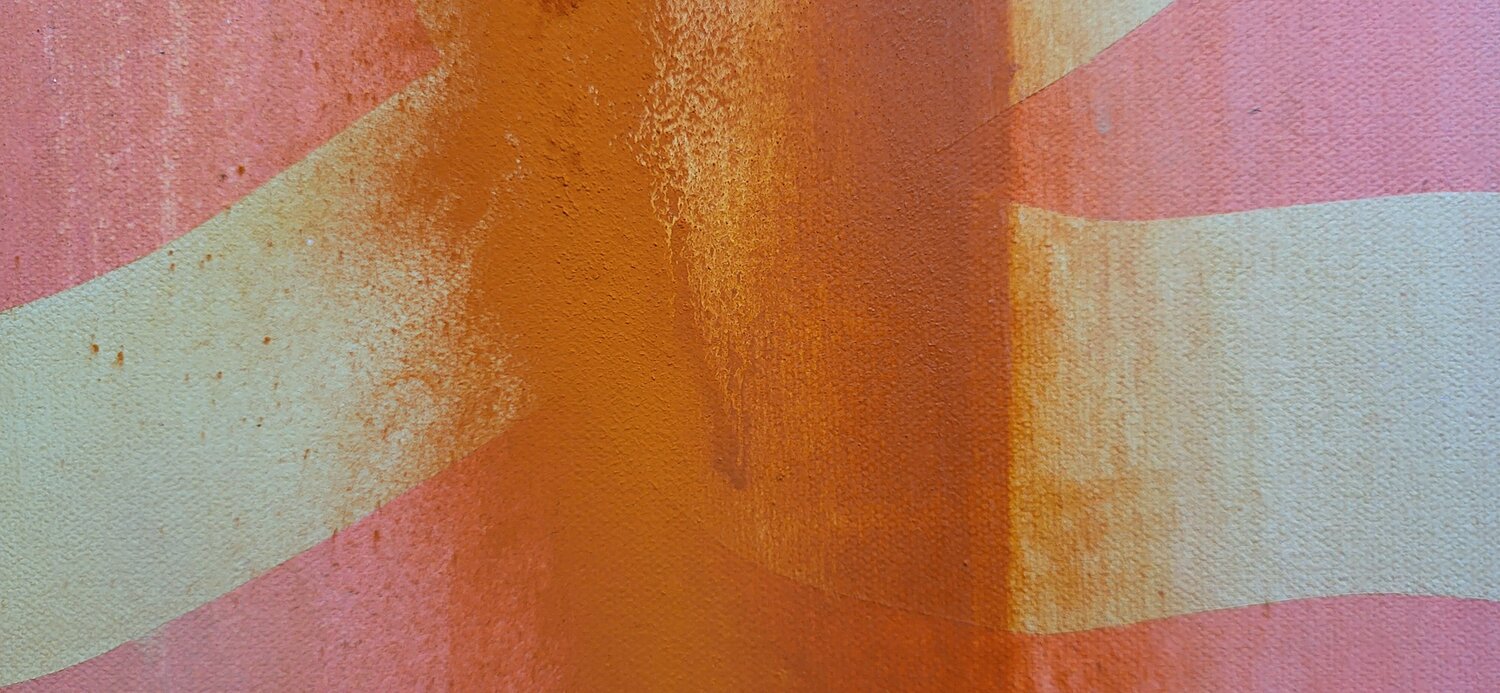
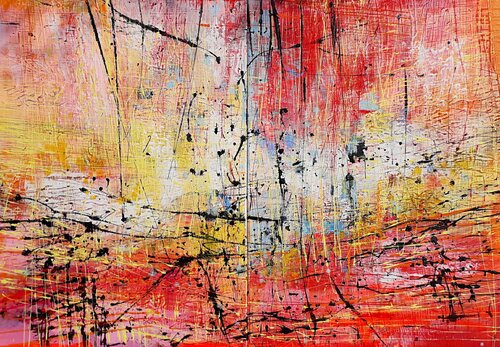
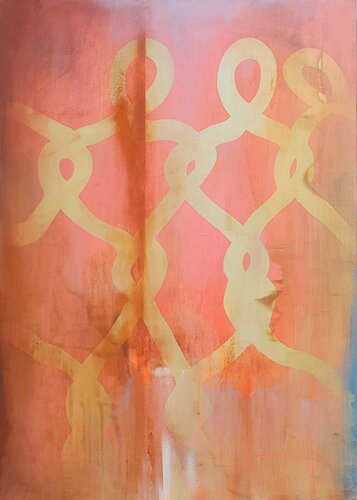
Residual explores the after-state of a system once its intensity has faded. A softened grid structure hovers within a muted red–ochre field, suggesting infrastructure that remains, even as its authority dissolves. Vertical stains and subtle surface erosion evoke time, control, and quiet transformation.
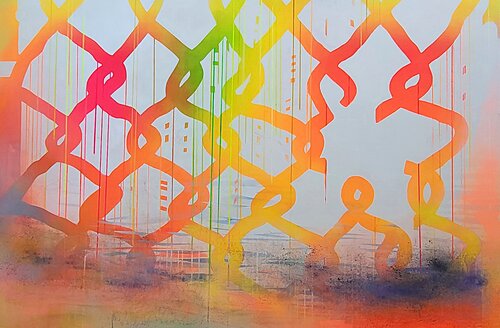
The work reflects on borders not as visible lines, but as lingering conditions — psychological, administrative,… and spatial. It is a restrained counterpart within the Border Condition series, where tension shifts from confrontation to residue.
« I focus on images and motifs that are fundamental, archetypal, and universal in human experience, as opposed to those that are socially determined. »
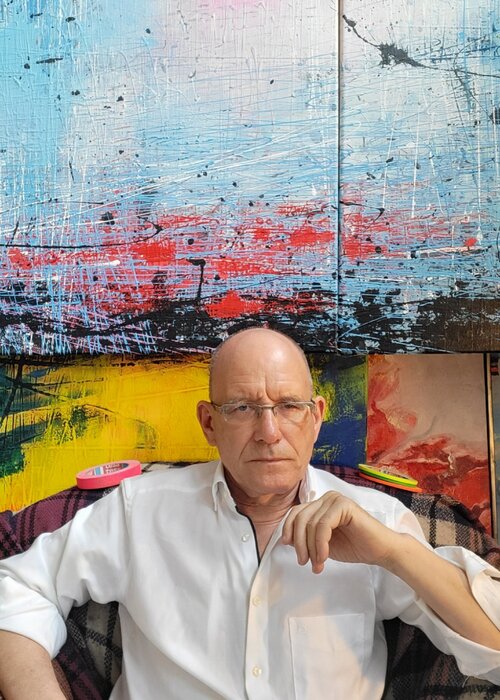
Ilgvars Zalāns is a Latvian visual artist working primarily with abstract painting and mixed media. His practice investigates borders as conditions of tension, control, and transformation rather than fixed geographical lines. Using repetitive structures, grid formations, and deliberate material disruptions, he reflects on how systems of order reveal their fragility over time.
Zalāns’ works combine vivid, often contrasting color fields with graphic elements and traces of erosion, allowing the painting to function as both an image and a physical record. His recent projects focus on border zones as spaces where political, social, and perceptual boundaries intersect, positioning abstraction as a critical tool for examining contemporary instability.