

- Professional worldwide delivery, monitored by our logistics experts
- Shipping fees, duties and taxes are included in the price
- 30-day free returns (except made-to-order items)
Singulart guarantees reliability and traceability.
All the artists on the platform have been specially selected and certify to only sell works, of which they are the artist. Whatever the medium, the work is sent to the buyer with a certificate of authenticity. Photographs are numbered and signed.
Every customer can be given a copy of their certificate of authenticity by contacting support@singulart.com
With Singulart, you can pay safely by credit card or bank transfer.
For all transactions exceeding your credit limit, contact us. We are required to verify every transfer, as part of the fight against fraud and money laundering.
Singulart prices include:
- Price of an artwork defined by an artist.
- Insurance. Your order is 100% protected in case of any damage or loss.
- All customs fees, taxes, and document preparation.
- Third-party logistic provider shipping costs.
- A dedicated Singulart customer care specialist that will assist you with any questions or problems during shipment.

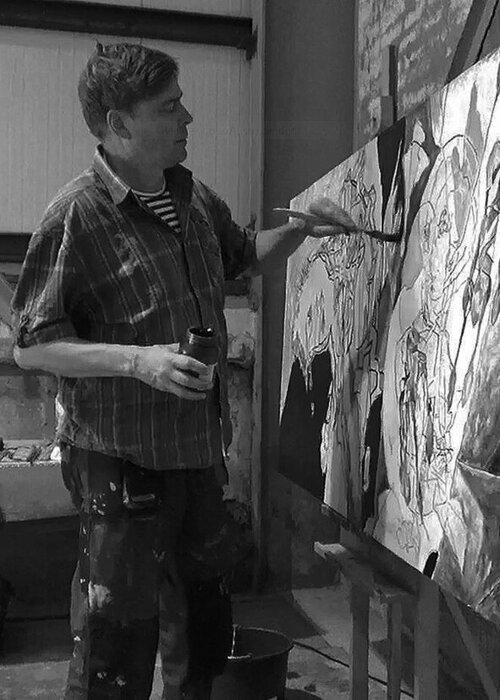
Matthias Bargholz
Germany
Related collection
Artworks Inspired by Theresa Möller
430 pieces
Artist highlights
- International Exposure
- Experienced Artist
- Solo shows participant
- Favorited by galleries
- Featured in gallery curations
Discover the creation in interiors
Artwork details
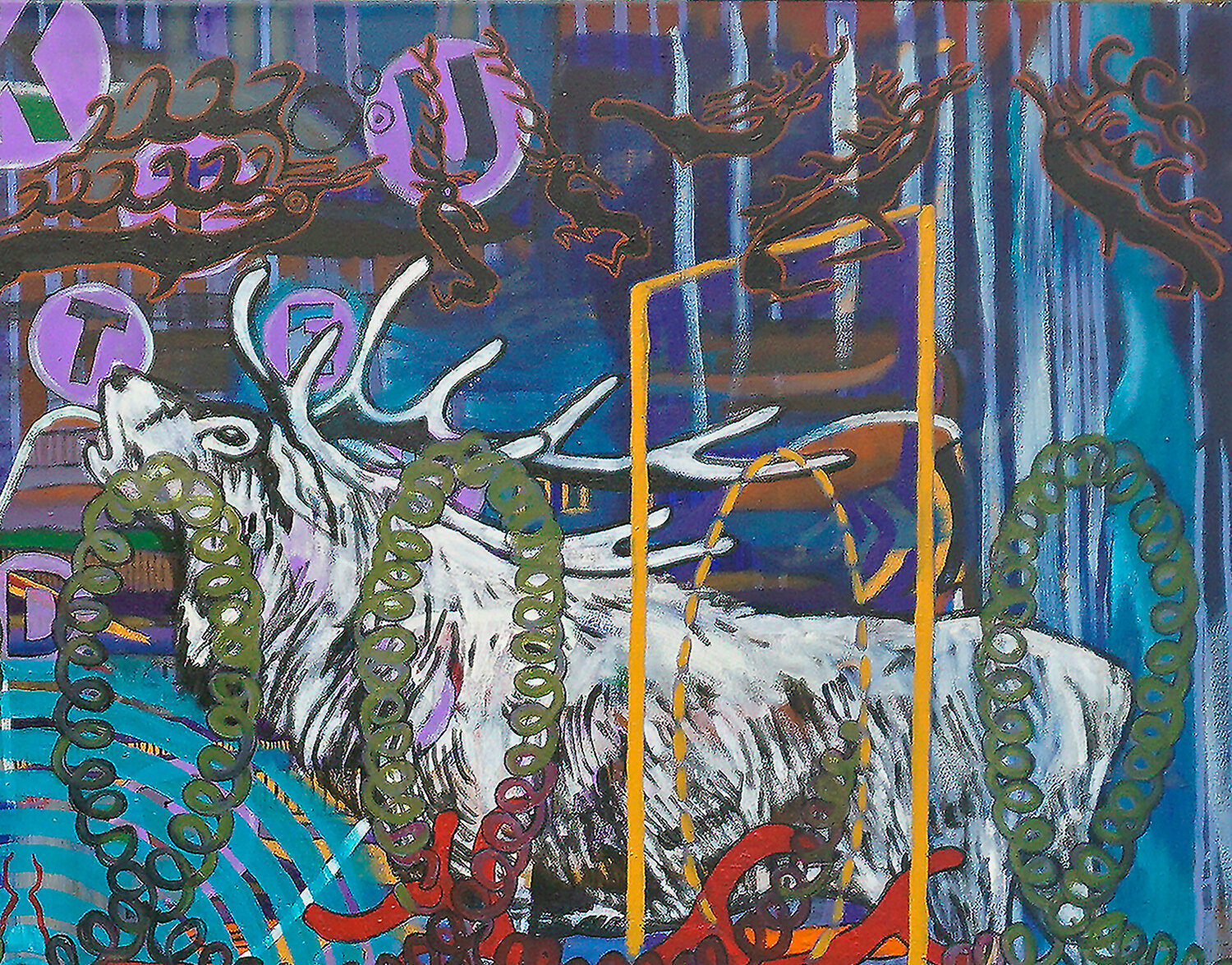
- Medium : Acrylic, Oil on Canvas
- Other details : Artwork on supported wooden frame. Ready to hang. Framing on request.
- Dimensions : 51.2x70.9in
About this artwork
In 1986, M.Bargholz undertook a journey of several weeks to the PR of Mongolia.
Especially the visit to the only intact monastery in Ulan Bator changed his thinking. This experience: the old temple, the monks, the prayers, the countless Buddha figures, the believers - all of this was completely overwhelming for Bargholz, and he only mentally processed these impressions in the months that followed.
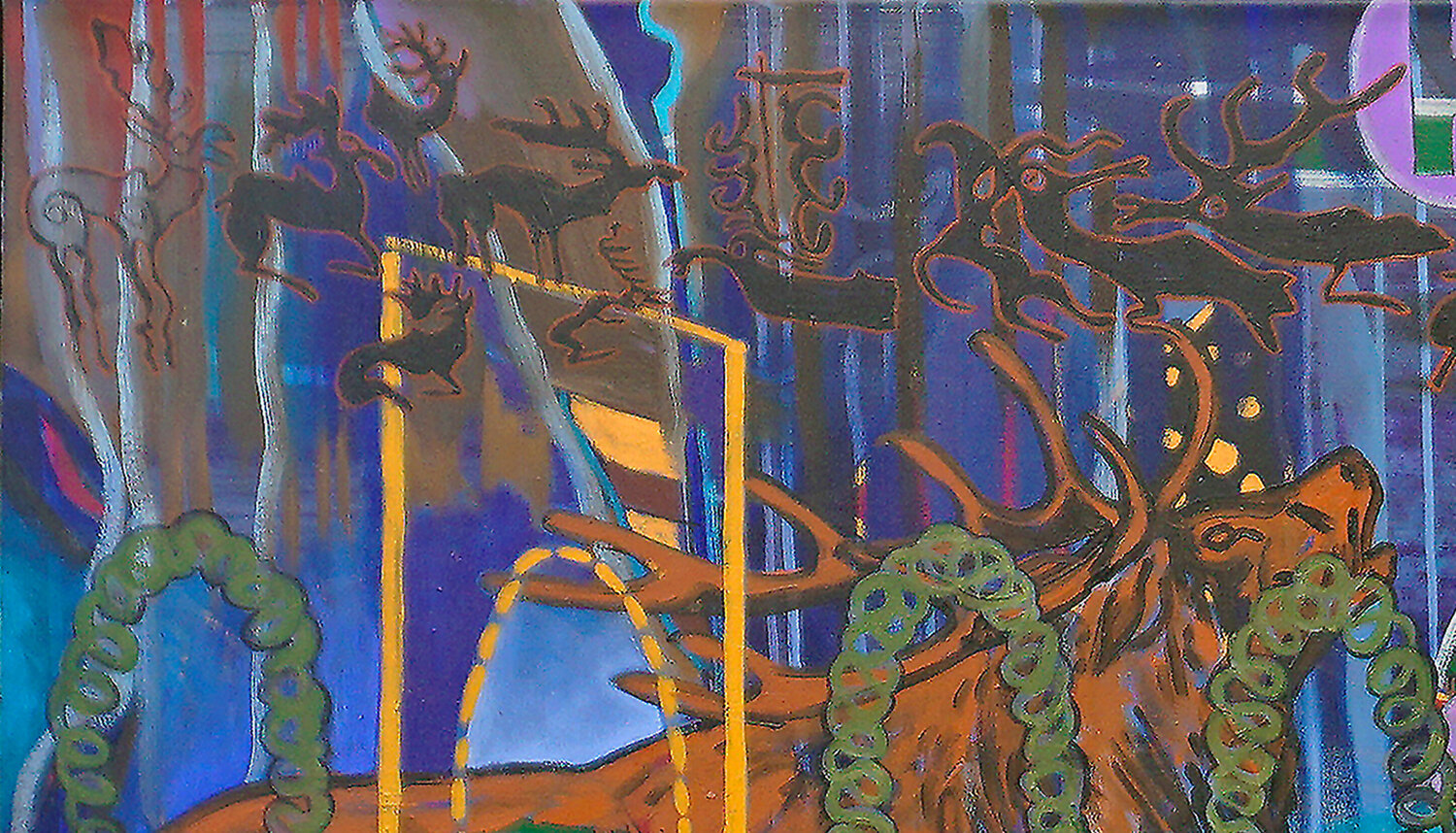
His paintings "Shaman Dance" and "Animal Fates"… reflect his artistic preoccupation with mythological and spiritual themes. The spiral - as a symbol of eternal return, reincarnation and the connection of different worlds - appears in both pictures. Just as the shaman is intensely connected with the animal world, so are the animals with humans.
Especially the visit to the only intact monastery in Ulan Bator changed his thinking. This experience: the old temple, the monks, the prayers, the countless Buddha figures, the believers - all of this was completely overwhelming for Bargholz, and he only mentally processed these impressions in the months that followed.
His paintings "Shaman Dance" and "Animal Fates"… reflect his artistic preoccupation with mythological and spiritual themes. The spiral - as a symbol of eternal return, reincarnation and the connection of different worlds - appears in both pictures. Just as the shaman is intensely connected with the animal world, so are the animals with humans.
Matthias Bargholz
Germany
Credentials
- International Exposure
- Experienced Artist
- Solo shows participant
- Favorited by galleries
- Featured in gallery curations
« The inner man cannot appear to himself without magic. »
Matthias Bargholz is an artist based in Germany whose paintings have been exhibited nationally and in Brazil. In addition, his art has been featured in publications such as the Ostsee Zeitung and the Hagenower Kreisblatt. Originally inspired by classical modernism, Bargholz views the line as an independant and active element in a composition, as well as being "the direct expression of intuition and the infinite possibilities of form". His distinctive pieces are created with acrylics and oils on canvas.