Singulart guarantees reliability and traceability.
All the artists on the platform have been specially selected and certify to only sell works, of which they are the artist. Whatever the medium, the work is sent to the buyer with a certificate of authenticity. Photographs are numbered and signed.
Every customer can be given a copy of their certificate of authenticity by contacting support@singulart.com
With Singulart, you can pay safely by credit card or bank transfer.
For all transactions exceeding your credit limit, contact us. We are required to verify every transfer, as part of the fight against fraud and money laundering.
Singulart prices include:
Price of an artwork defined by an artist.
Insurance. Your order is 100% protected in case of any damage or loss.
All customs fees, taxes, and document preparation.
Third-party logistic provider shipping costs.
A dedicated Singulart customer care specialist that will assist you with any questions or problems during shipment.
Other details :
Artwork on supported wooden frame. Artwork framed.
Dimensions :
52x52in
About this artwork
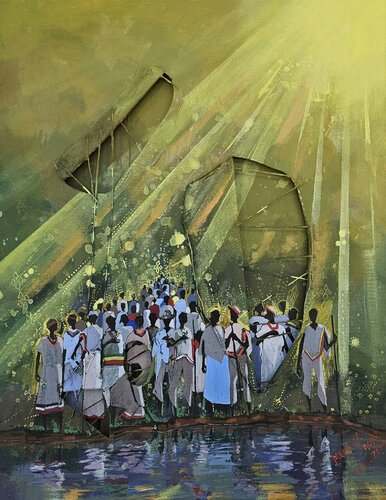
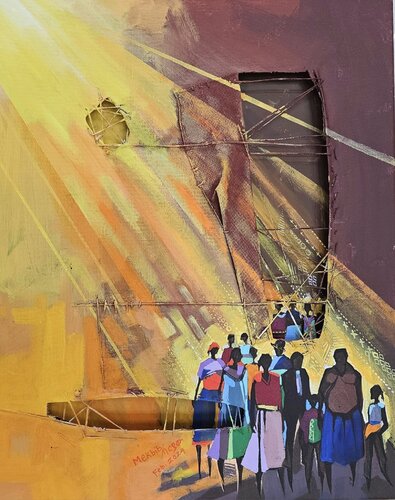
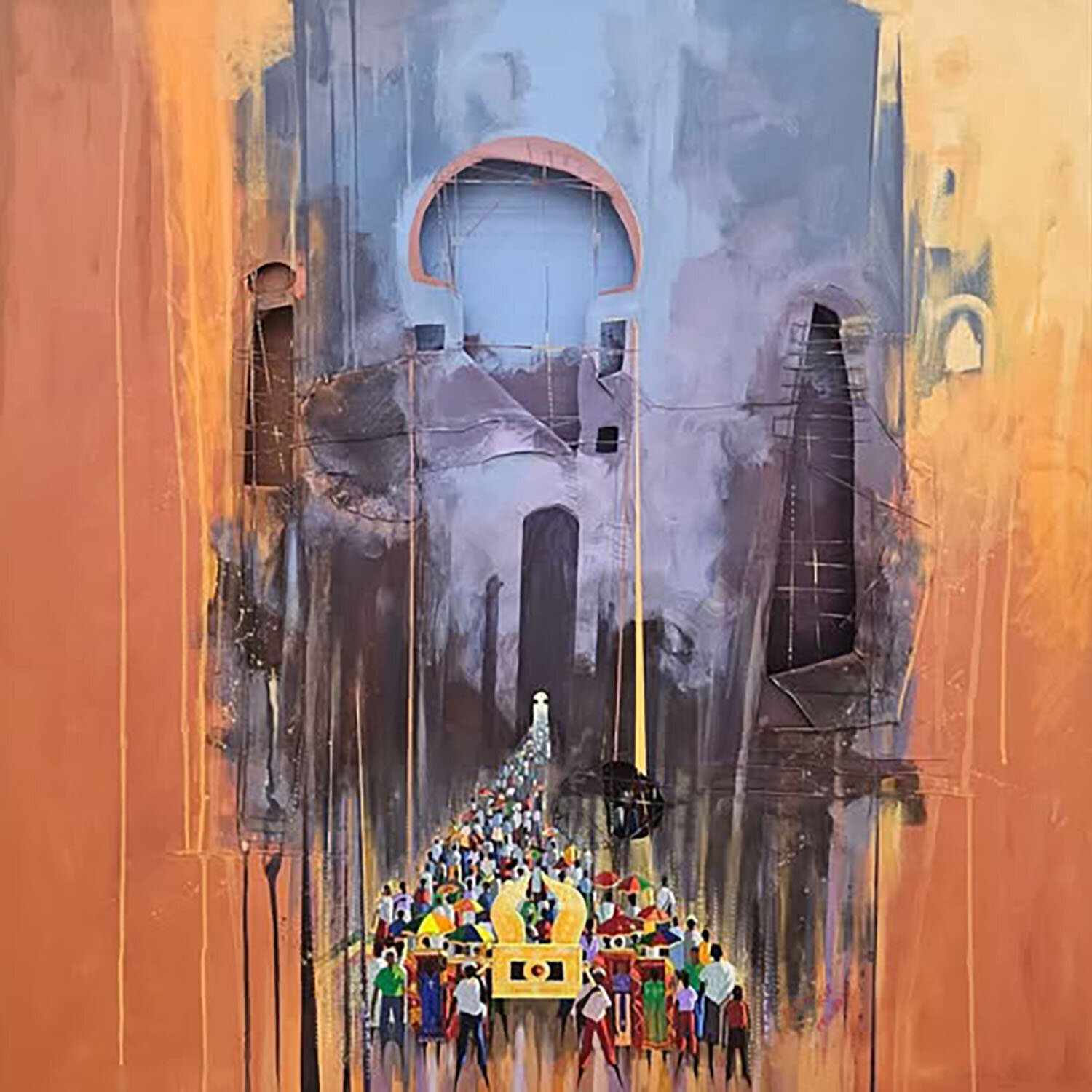
This artwork visualizes a historic and spiritual connection between Ethiopia and Israel that reaches back nearly 3,000 years. It draws on the Kebra Nagast and the Bible to recount the story of King Solomon and Queen Sheba. According to tradition, their son, Menelik I, became the first king of Ethiopia’s Solomonic dynasty, symbolizing a sacred transfer of royal and spiritual heritage.
The narrative tells that Menelik I brought the Ark of the Covenant… to Ethiopia, accompanied by the sons of Israel. This tradition remains central to the Ethiopian Orthodox Tewahedo Church, where a tabot represents the Ark in every church.
In this painting, I depict a ceremonial procession honoring the tabot, with devoted followers surrounding it. A symbolic reference to the Obelisk of Axum anchors the composition, uniting history, faith, and cultural memory.
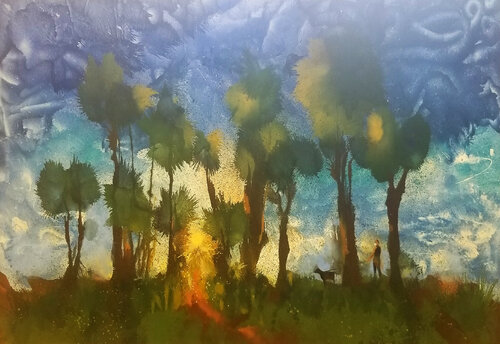
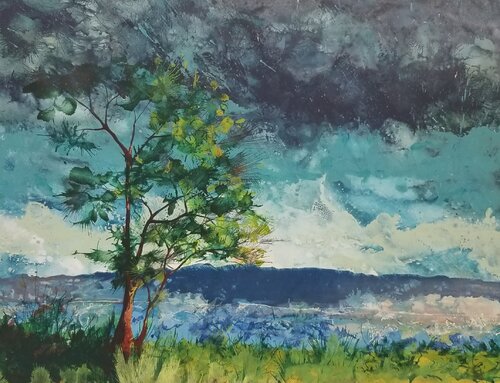
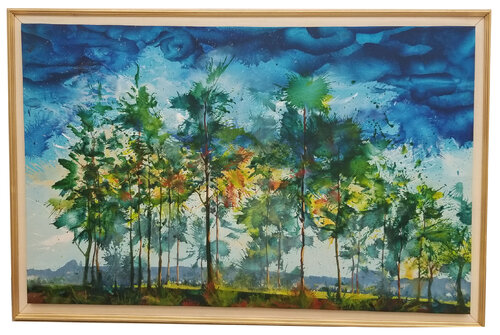
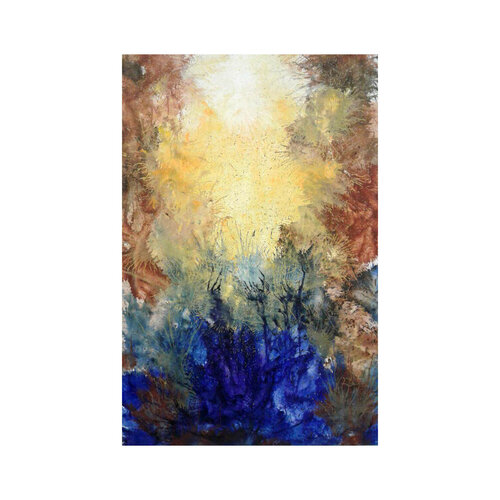
Mekbib Gebertsadik, an Ethiopian-born painter, sculptor, and visual artist, draws on a rich cultural heritage and academic training in both Ethiopia and the United States. He employs a process-based technique, manipulating unstretched canvas with water, air, and gravity, allowing natural forces to create atmospheric textures and organic landscapes, particularly focusing on trees as symbols. His expressive works evoke a deep reverence for nature, conveying the urgency and hope of environmental renewal while fostering a sense of interconnectedness with the living world.