

- Professional worldwide delivery, monitored by our logistics experts
- Shipping fees, duties and taxes are included in the price
- 30-day free returns (except made-to-order items)
Singulart guarantees reliability and traceability.
All the artists on the platform have been specially selected and certify to only sell works, of which they are the artist. Whatever the medium, the work is sent to the buyer with a certificate of authenticity. Photographs are numbered and signed.
Every customer can be given a copy of their certificate of authenticity by contacting support@singulart.com
With Singulart, you can pay safely by credit card or bank transfer.
For all transactions exceeding your credit limit, contact us. We are required to verify every transfer, as part of the fight against fraud and money laundering.
Singulart prices include:
- Price of an artwork defined by an artist.
- Insurance. Your order is 100% protected in case of any damage or loss.
- All customs fees, taxes, and document preparation.
- Third-party logistic provider shipping costs.
- A dedicated Singulart customer care specialist that will assist you with any questions or problems during shipment.

Philippe Fares
France
Related collection
Jess Mardi's Picks
20 pieces
Artist highlights
- Works on commission
Artwork details
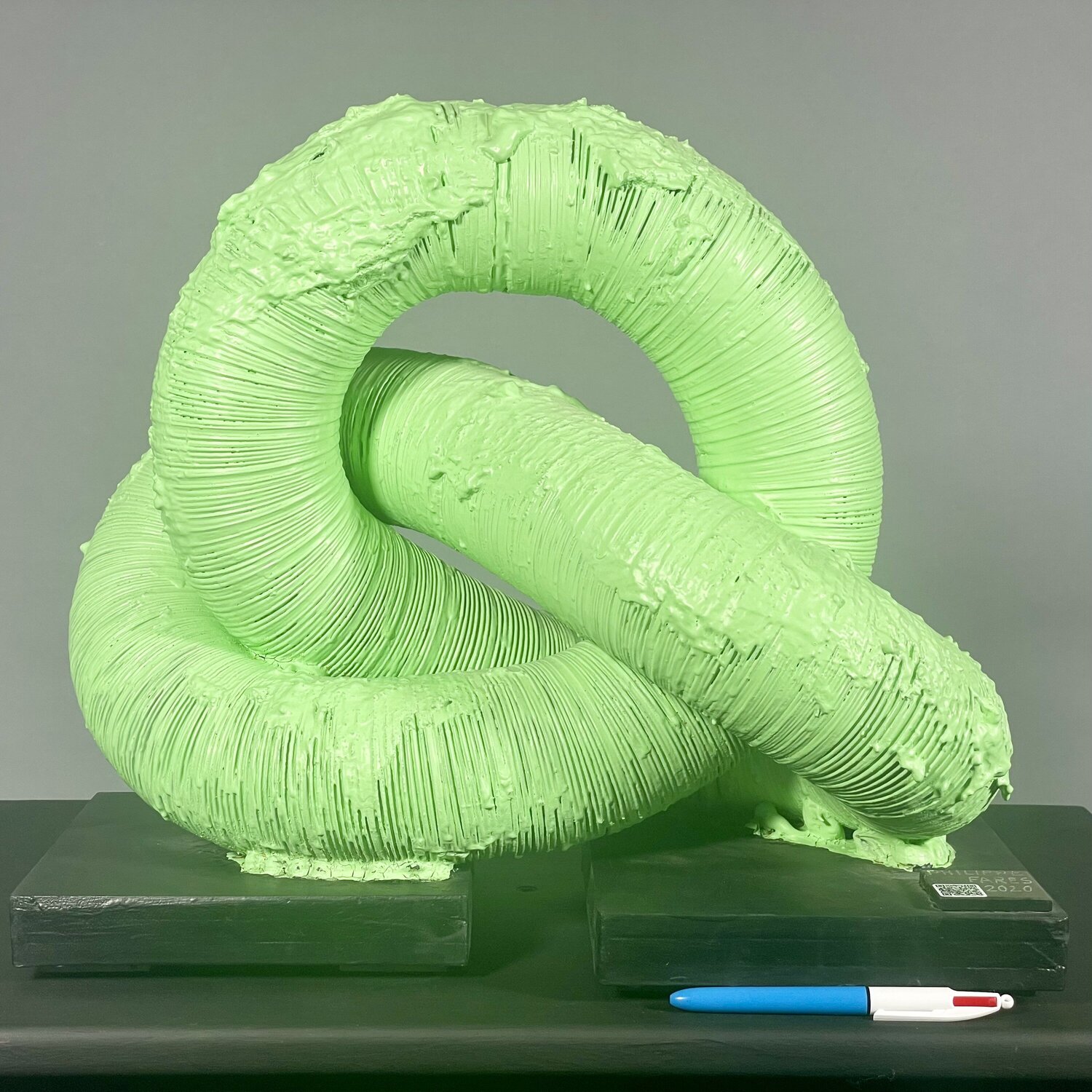
- Medium : Acrylic, Cement With Stand
- Dimensions : Length: 15.7in, Height: 17.7in, Depth: 10.6in
- Edition : All editions sold (6 / 6)
- Artist's proof : 1
- Hors commerce : 3
About this artwork
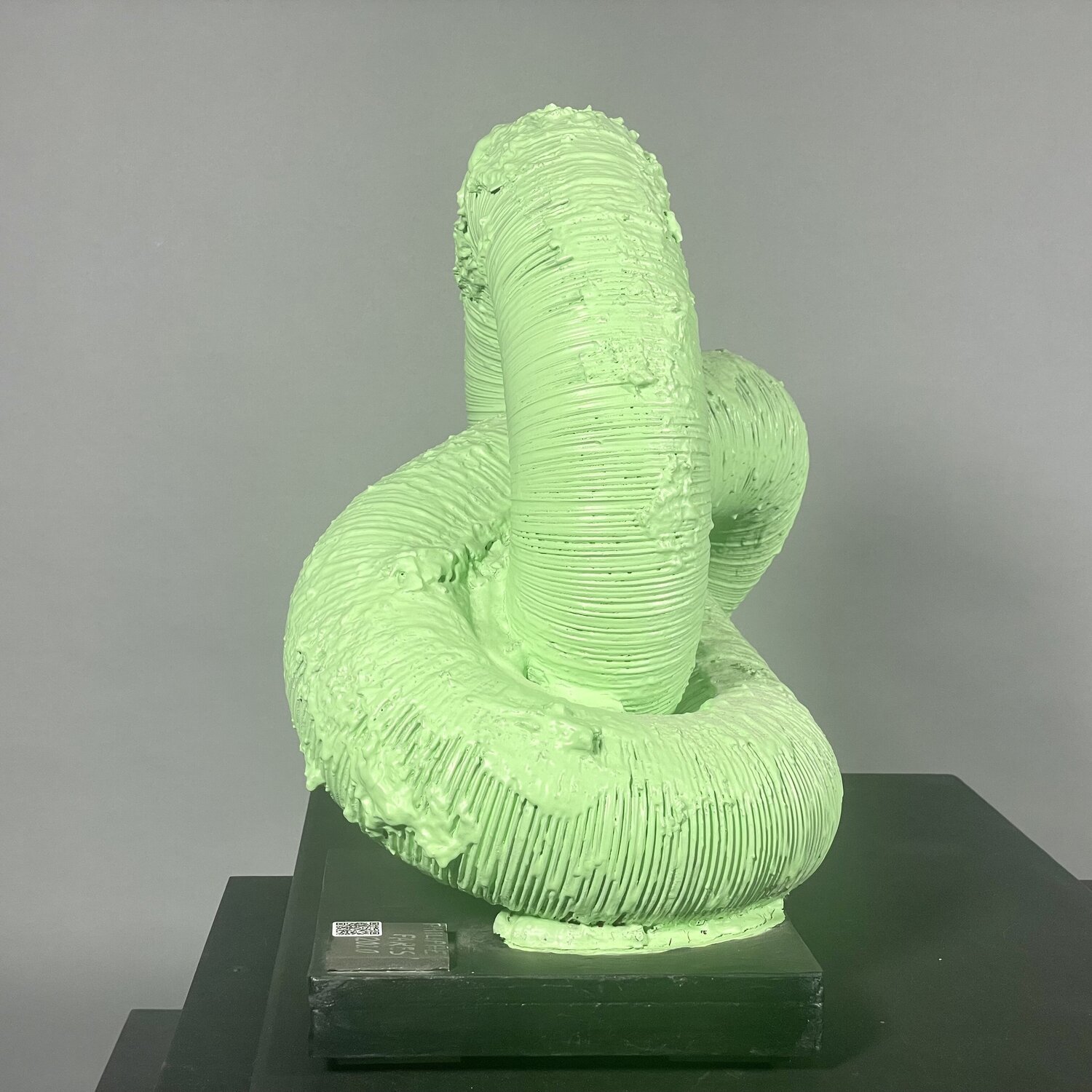
In the presentation of this topological figure, Philippe Fares opted for a double anthracite plinth. The two studs that constitute it are a few centimeters apart from each other and it is the triple knot stiffened beforehand, by an injection of epoxy cement, which creates the connection between the two supports. This adds to the mathematical mystery of the object.
It is the work of Maurits Cornelis ESCHER that inspired the artist.
Philippe Fares… has for this work, formalized in three dimensions, the flat engraving of the author with impossible drawings and perspectives.
We can consider that a triple knot like the one made by the artist, is a continuous line in space, which returns to its point of origin.
Indeed there is only one section of metal pipe which is connected at its two ends and the three loops make it possible to classify the object topologically as a toroidal knot
of type ( 1, 3 ).
It is the work of Maurits Cornelis ESCHER that inspired the artist.
Philippe Fares… has for this work, formalized in three dimensions, the flat engraving of the author with impossible drawings and perspectives.
We can consider that a triple knot like the one made by the artist, is a continuous line in space, which returns to its point of origin.
Indeed there is only one section of metal pipe which is connected at its two ends and the three loops make it possible to classify the object topologically as a toroidal knot
of type ( 1, 3 ).
Philippe Fares
France
Credentials
- Works on commission
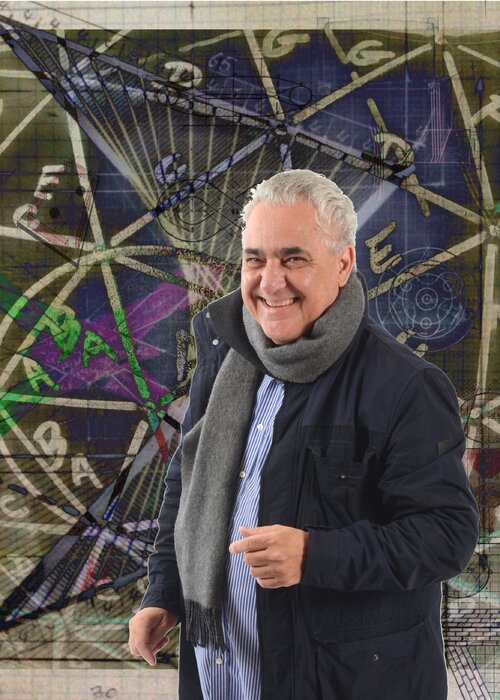
Philippe Fares is a contemporary French artist whose career has been profoundly shaped by the diversity of cultures and the interaction of art and science. His unique perspective, sharpened by a childhood spent in sub-Saharan Africa, is a testament to his early exposure to the art world, particularly to the influence of primitive arts. Returning to France at the age of 16, Philippe embarked on a path that allowed him to cultivate his understanding of Western arts while pursuing scientific studies.
Philippe Fares’ artworks are meticulously constructed using scientific methods and careful planning. His creations often feature a recurring tiling pattern, a meticulously balanced play with chance. This synthesis of meticulous design and the unpredictability of chance gives his works a dynamic and intriguing quality.
Philippe Fares’ artworks are meticulously constructed using scientific methods and careful planning. His creations often feature a recurring tiling pattern, a meticulously balanced play with chance. This synthesis of meticulous design and the unpredictability of chance gives his works a dynamic and intriguing quality.