Singulart guarantees reliability and traceability.
All the artists on the platform have been specially selected and certify to only sell works, of which they are the artist. Whatever the medium, the work is sent to the buyer with a certificate of authenticity. Photographs are numbered and signed.
Every customer can be given a copy of their certificate of authenticity by contacting support@singulart.com
With Singulart, you can pay safely by credit card or bank transfer.
For all transactions exceeding your credit limit, contact us. We are required to verify every transfer, as part of the fight against fraud and money laundering.
Singulart prices include:
Price of an artwork defined by an artist.
Insurance. Your order is 100% protected in case of any damage or loss.
All customs fees, taxes, and document preparation.
Third-party logistic provider shipping costs.
A dedicated Singulart customer care specialist that will assist you with any questions or problems during shipment.
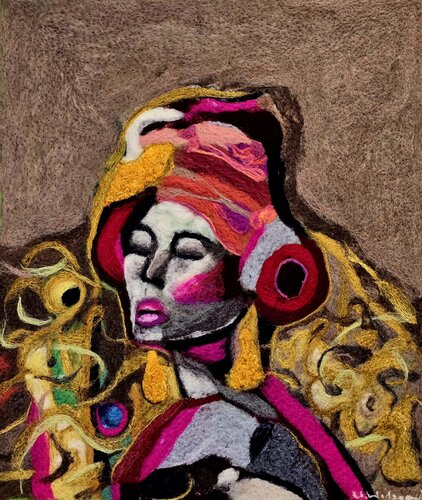
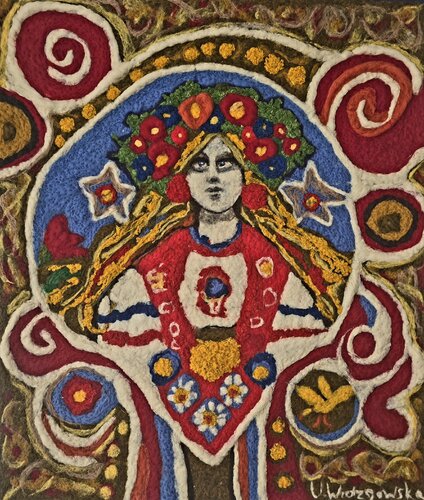
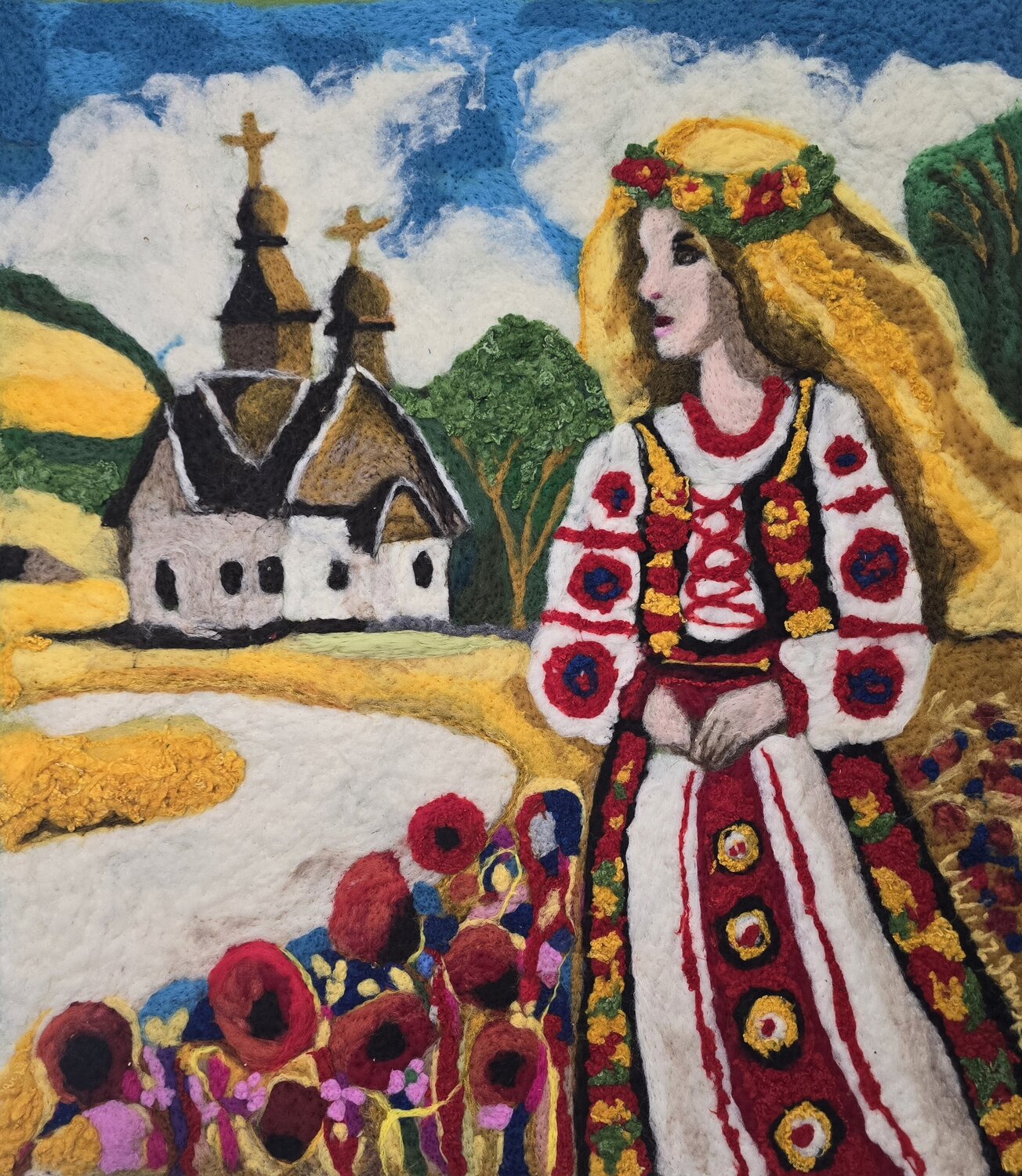
"Slavic Sisterhood – Path to Peace" is a unique work of art that conveys the interconnectedness of Slavic cultures through colors, textures, and symbols. The intricate felting technique combines traditional craftsmanship with deep symbolic meaning.
The depicted Slavic woman in traditional costume symbolizes strength, community, and the desire for peace. A characteristic wooden church appears in the background, emphasizing the spiritual dimension… of Slavic culture. The work combines naive and folk art with a modern idiom and can be understood as a subtle political commentary on the need for dialogue and unity in our time.
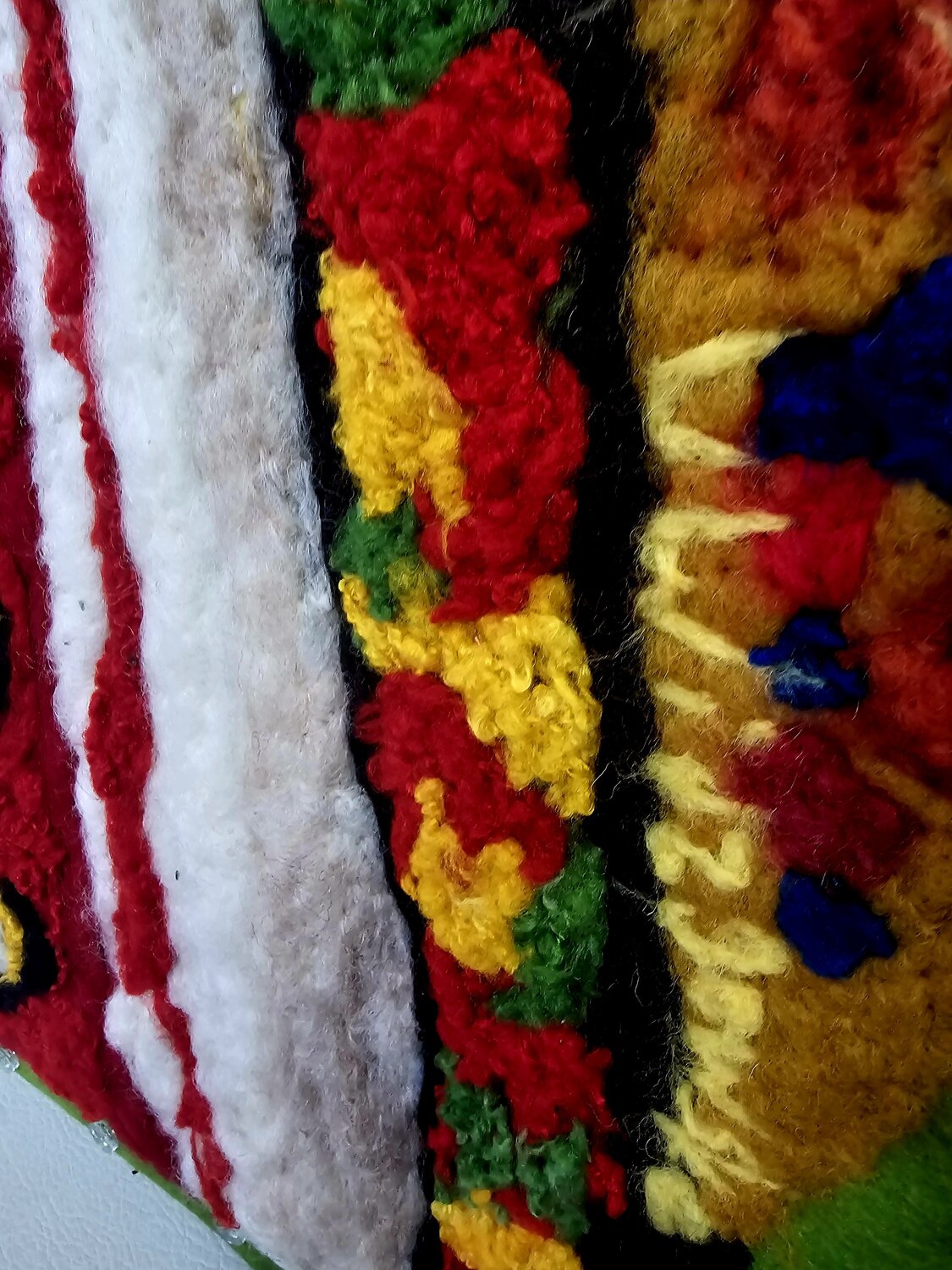
The artwork has a visible green felt border that serves as a natural frame and gives it a special aesthetic depth
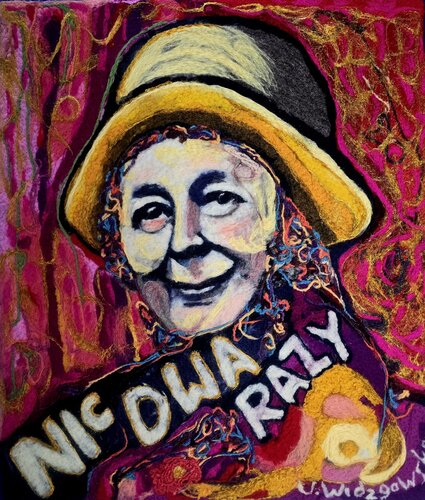
Urszula Widzgowska is a Polish visual artist who lives and works in Germany. Her practice moves between painting, textile art, and Pop Art-inspired symbolic worlds. She combines abstraction with cultural motifs and reflects on themes such as identity, memory, and the dialogue between Poland and Germany.
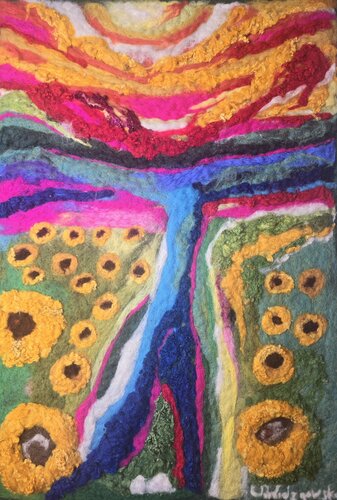
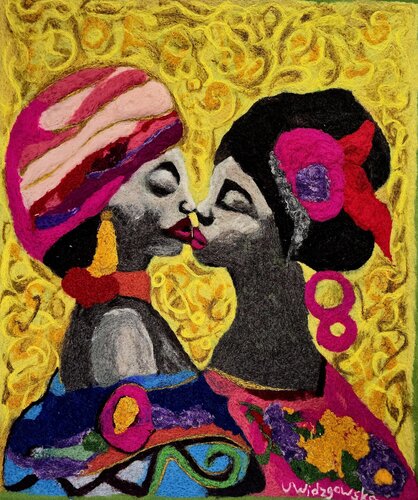
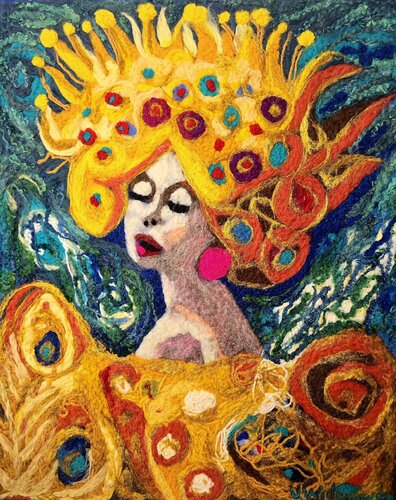
Widzgowska studied painting in Poland, where she learned traditional techniques as well as printmaking. Today she works with acrylic paints and hand-felted wool, which she models like paint. Her textile paintings belong to contemporary fiber art and are characterized by luminous areas, relief-like surfaces, and a narrative visual language.
The artist integrates elements of Polish culture, folk art, childhood symbols and pop culture references – including the figure of Stańczyk – to create vibrant works that enrich both private and public spaces.