Singulart guarantees reliability and traceability.
All the artists on the platform have been specially selected and certify to only sell works, of which they are the artist. Whatever the medium, the work is sent to the buyer with a certificate of authenticity. Photographs are numbered and signed.
Every customer can be given a copy of their certificate of authenticity by contacting support@singulart.com
With Singulart, you can pay safely by credit card or bank transfer.
For all transactions exceeding your credit limit, contact us. We are required to verify every transfer, as part of the fight against fraud and money laundering.
Singulart prices include:
Price of an artwork defined by an artist.
Insurance. Your order is 100% protected in case of any damage or loss.
All customs fees, taxes, and document preparation.
Third-party logistic provider shipping costs.
A dedicated Singulart customer care specialist that will assist you with any questions or problems during shipment.
Medium :
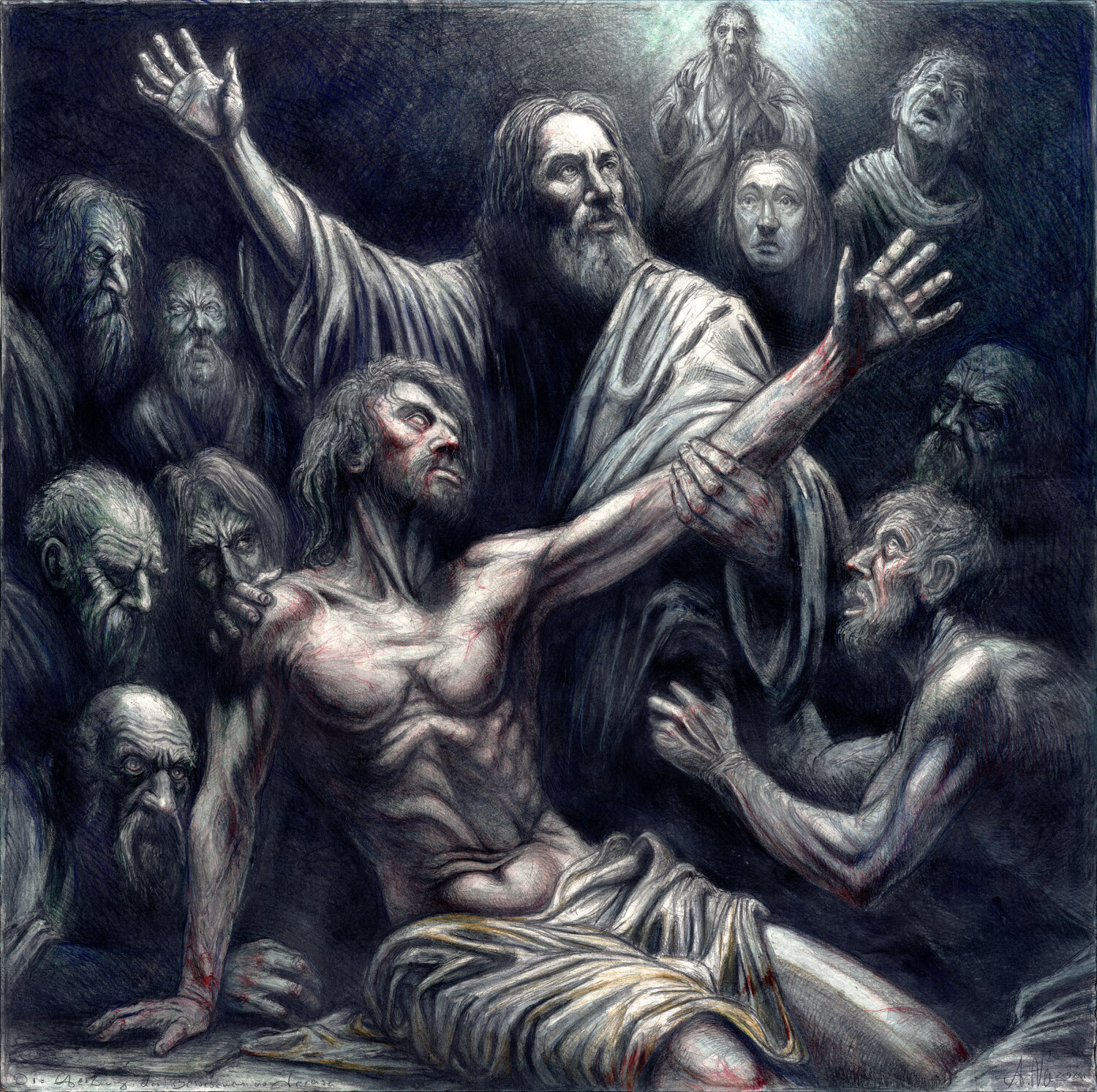
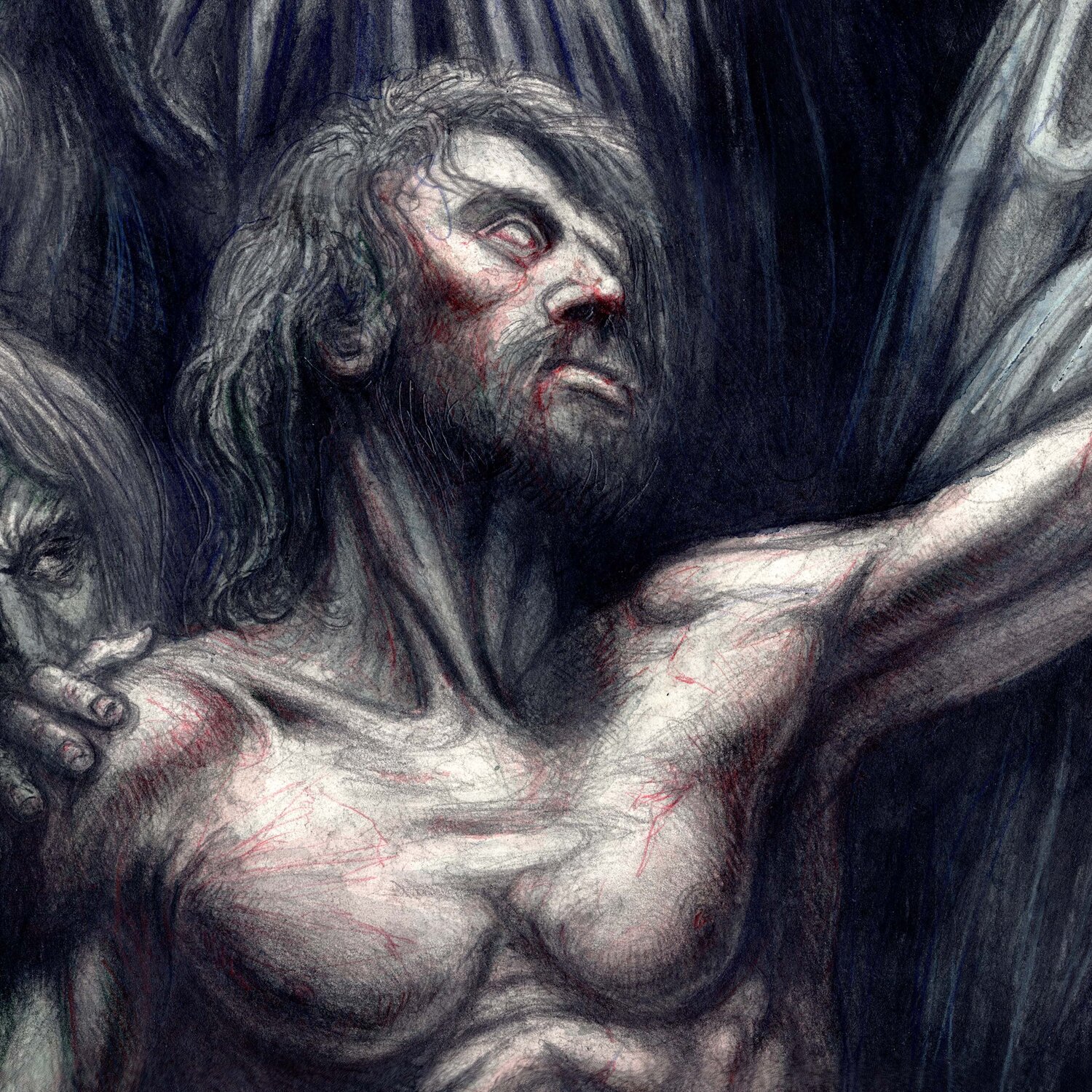
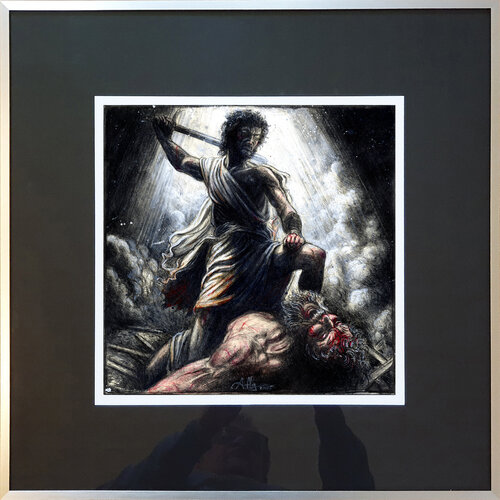
Pencil, India Ink on Paper , Synthetic board under glass
Framing :
Framed
Dimensions :
35.4x35.4in
About this artwork
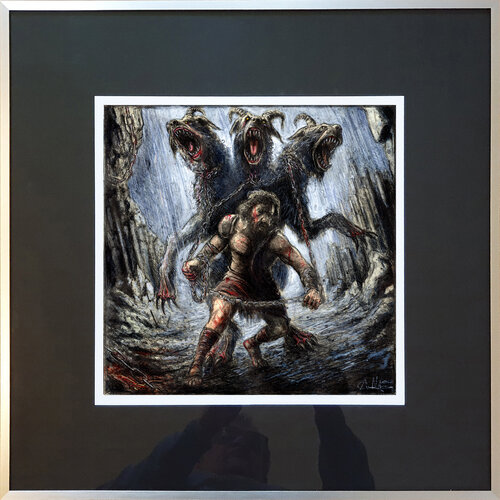
The parable of Jesus healing the possessed man of Gerasa is one of the strangest miracle stories in the New Testament (MK 5:1-20) and, in historical-critical consideration, raises more questions and doubts about theological, political symbolism than any other. Why Jesus even goes to Gadara-Gerasa, an area inhabited exclusively by pagans with their 2,000 or so pigs, remains unclear. The possessed man is probably a metaphor for the power of evil or… oppression that holds humanity captive. His possession by the demons "Legion" could describe the collective oppression by the Roman tyranny, the once omnipresent political regime, as well as the base social structures and cultural norms. The presence of the demons of the "Legion" therefore suggests that this oppression is widespread and deeply rooted.
« Even in my early youth, I wanted to be a great artist. I don't know why. »
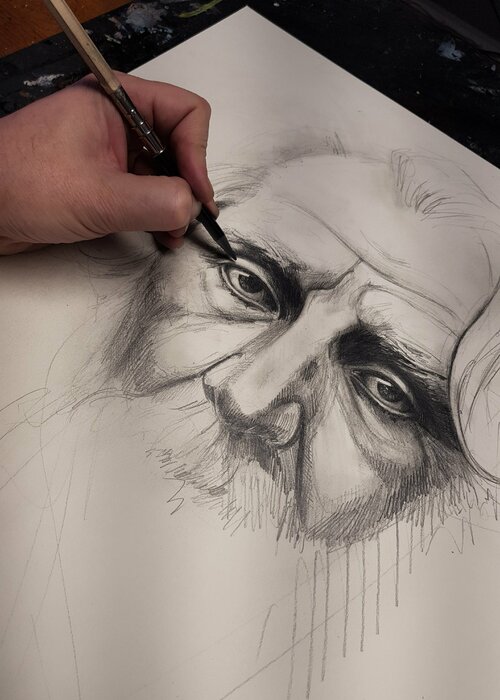
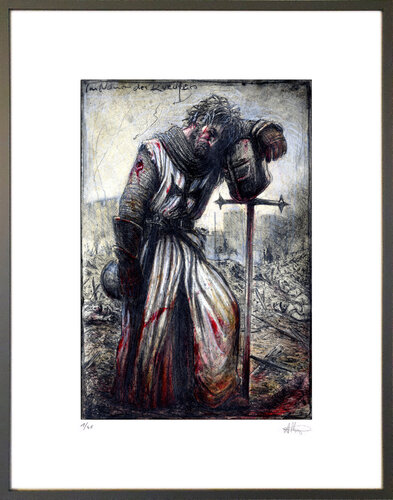
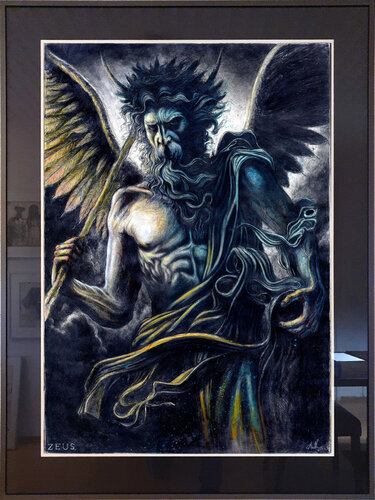
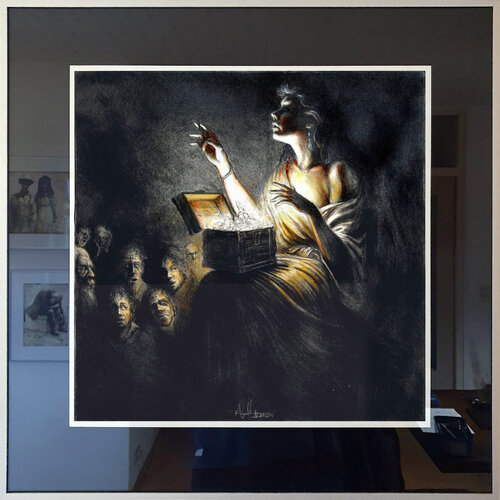
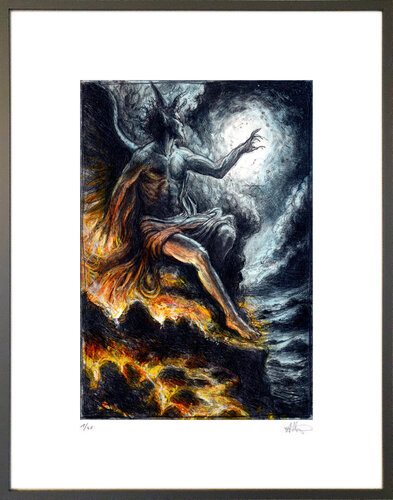
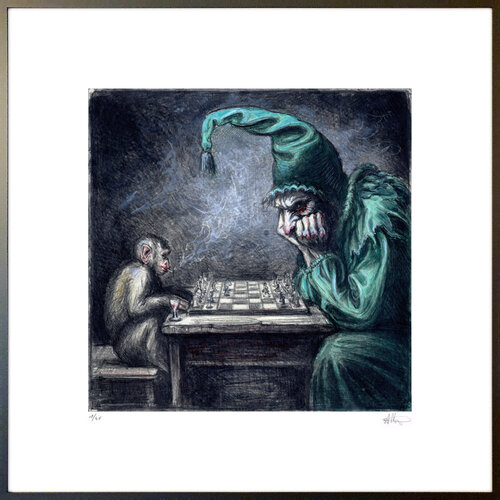
Andreas Noßmann is a draftsman based in Germany whose works have been exhibited nationally and in the Netherlands. Having always been fascinated by topics that touch or disturb, his artistic practice is also marked by his requirement for "a perfect graphic implementation". Noßmann's distinctive and diverse landscapes, portraits, and still-lifes are created with pastels, graphite, pencils, India ink, chalk, and charcoal on paper, canvas, or cardboard.