Discover the creation in interiors
Other artworks by Anna Riabchevskaia
Artwork details
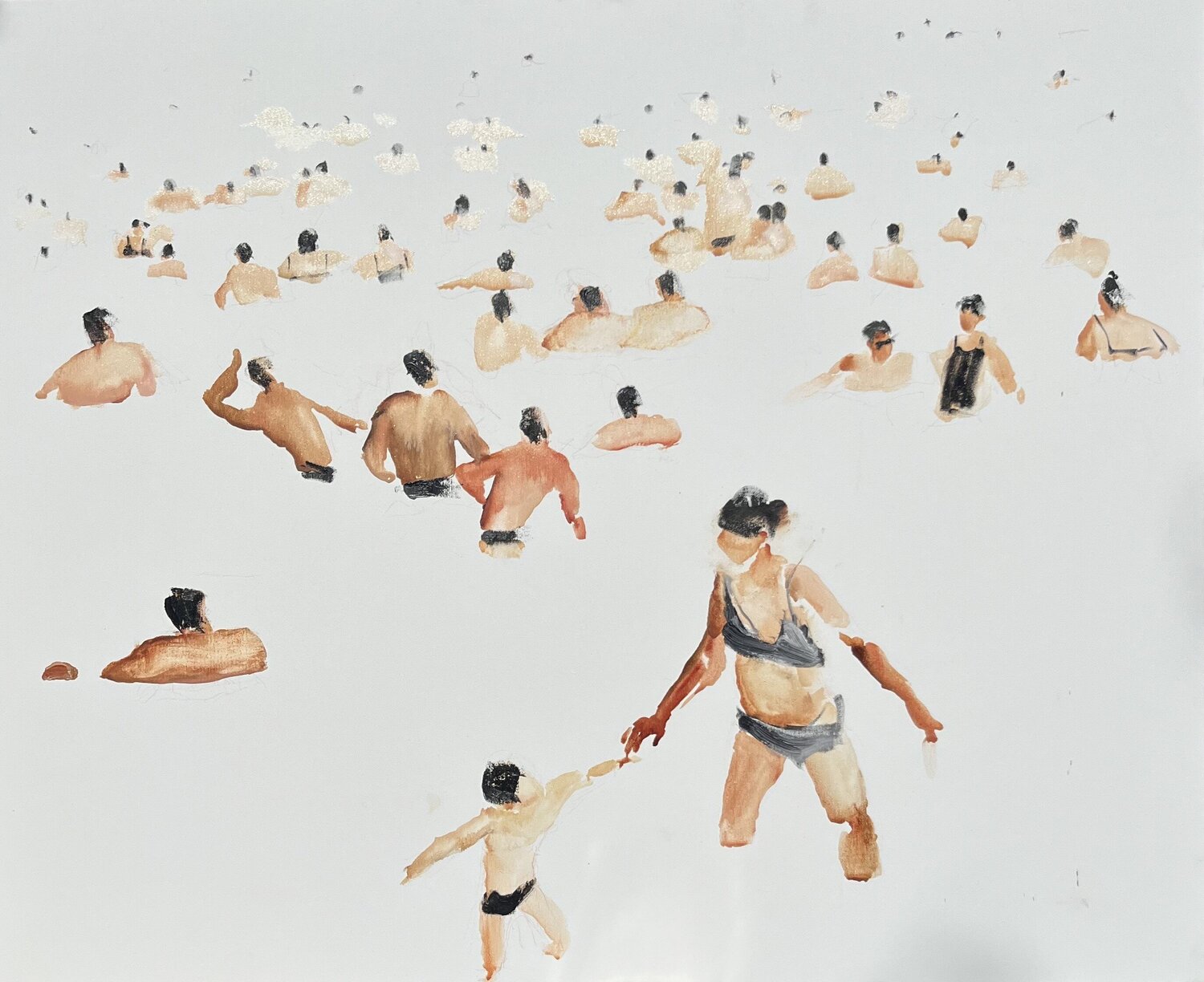
- Medium : Oil on Canvas
- Other details : Artwork on supported wooden frame. Ready to hang. Framing on request.
- Dimensions : 35.4x43.3in
About this artwork
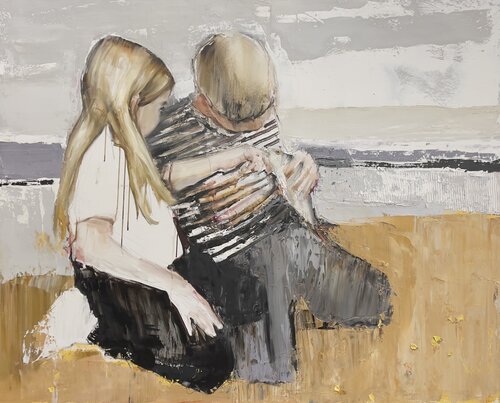
In this piece, I sought to capture the fleeting moments of connection and freedom at the beach. The soft, muted tones and loose forms reflect a blend of memory and emotion, inviting you to feel the warmth and lightness of those joyful days. It brings an airy, nostalgic energy that will uplift and animate any space with a sense of calm togetherness and subtle movement.
Anna Riabchevskaia
Russia
Credentials
- Featured in gallery curations
- Works on commission
Anna Ryabchevskaya — Originally from Russia, I live and work in Hungary, where I explore the bonds between nature, memory, and familial origins through oil painting and collage. My practice transforms the discarded and the overlooked into compositions that evoke both rupture and renewal.
“Family Chat” is a series of portraits and collages that weave together multiple temporal threads into a single narrative fabric. Childhood memories reappear as faint yet tangible impressions—ghosts of intimacy that hover between presence and absence.
I work with lace, cardboard, paper bags, and magazine clippings to evoke the collision between the mundane and the eternal. Each collage emerges from the tension of disunity: the torn edge becomes a wound, a passage from one state of being to another. Fragments of discarded material find new life—as tenderness, loss, and love.
Like life itself, these works embody the complex simplicity of an improbable unity.
“Family Chat” is a series of portraits and collages that weave together multiple temporal threads into a single narrative fabric. Childhood memories reappear as faint yet tangible impressions—ghosts of intimacy that hover between presence and absence.
I work with lace, cardboard, paper bags, and magazine clippings to evoke the collision between the mundane and the eternal. Each collage emerges from the tension of disunity: the torn edge becomes a wound, a passage from one state of being to another. Fragments of discarded material find new life—as tenderness, loss, and love.
Like life itself, these works embody the complex simplicity of an improbable unity.