Singulart guarantees reliability and traceability.
All the artists on the platform have been specially selected and certify to only sell works, of which they are the artist. Whatever the medium, the work is sent to the buyer with a certificate of authenticity. Photographs are numbered and signed.
Every customer can be given a copy of their certificate of authenticity by contacting support@singulart.com
With Singulart, you can pay safely by credit card or bank transfer.
For all transactions exceeding your credit limit, contact us. We are required to verify every transfer, as part of the fight against fraud and money laundering.
Singulart prices include:
Price of an artwork defined by an artist.
Insurance. Your order is 100% protected in case of any damage or loss.
All customs fees, taxes, and document preparation.
Third-party logistic provider shipping costs.
A dedicated Singulart customer care specialist that will assist you with any questions or problems during shipment.
I was eating a peach in the summer and thought the seeds looked like part of a woman's genitalia. And the peach skin with downy hair and its shape was like a woman's buttocks.So I decided to make a work on the theme of various abuses of female genitalia. The peach seeds were washed and dried, and wool fibers were used to form new peach pulp shapes on top of the seeds.There are many types of female genital abuse. Sometimes sand, pebbles, or glass… are put into the vagina. Circumcision is often performed by grandmothers or female doctors, not by men.These women are forced to live in pain and poor hygiene. Nevertheless, female circumcision continues to increase. Sometimes women themselves want to be circumcised. After the stitches are removed, some women ask to be stitched again to please their husbands.I express cherishing the female genitalia rather than evoke violent images and condemn them for making people aware of the importance of fragile and precious parts of the female body.
« I am an artist who earnestly learns various knowledge and techniques of textiles, digests them, and takes a unique approach to conventional thinking and methods to create innovative works. »
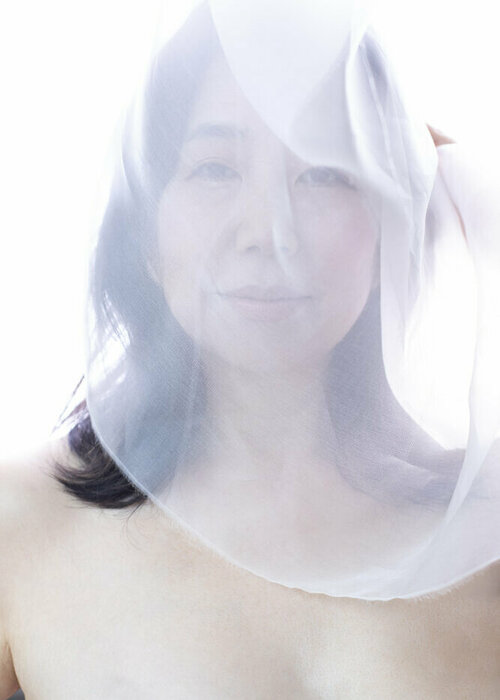
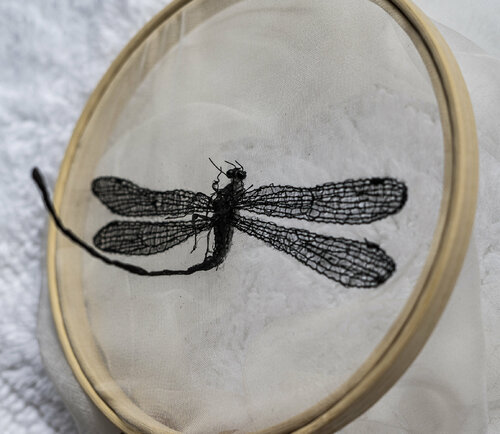
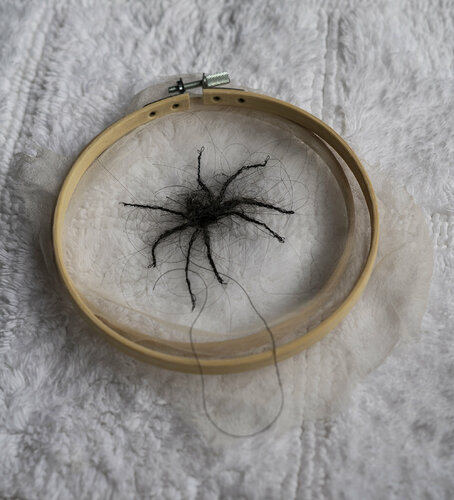
Aomi Kikuchi is an award-winning Japanese textile artist whose works have been exhibited nationally, as well as in the United States and South Korea. Her art is based on Japanese aesthetics and Buddha’s philosophy, which can be summarized in three central concepts: impermanence, insubstantiality, and suffering. Mesmerized by the beauty of Yuzen dyeing, a traditional Japanese dyeing technique for kimonos, Kikuchi devoted nearly three decades to learning the ten stages of its process, which she incorporates in her art.