Not currently available for saleThis piece is currently reserved (either by a client or for an exhibition...).Get notified when it becomes available again.
Thank you very much for your interest!
Your message has been sent successfully! We will get back to you if the artwork becomes available again.
Singulart guarantees reliability and traceability.
All the artists on the platform have been specially selected and certify to only sell works, of which they are the artist. Whatever the medium, the work is sent to the buyer with a certificate of authenticity. Photographs are numbered and signed.
Every customer can be given a copy of their certificate of authenticity by contacting support@singulart.com
With Singulart, you can pay safely by credit card or bank transfer.
For all transactions exceeding your credit limit, contact us. We are required to verify every transfer, as part of the fight against fraud and money laundering.
Singulart prices include:
Price of an artwork defined by an artist.
Insurance. Your order is 100% protected in case of any damage or loss.
All customs fees, taxes, and document preparation.
Third-party logistic provider shipping costs.
A dedicated Singulart customer care specialist that will assist you with any questions or problems during shipment.
Other details :
Artwork on supported wooden frame. Artwork framed.
Dimensions :
45.7x35in
About this artwork
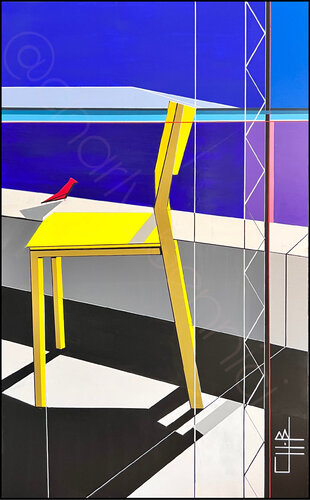
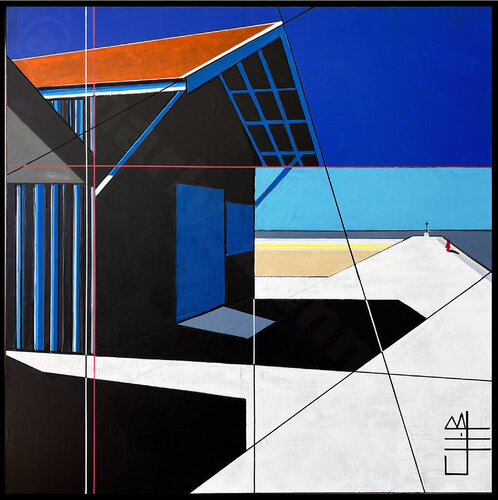
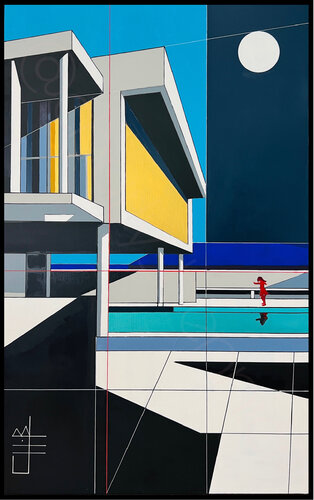
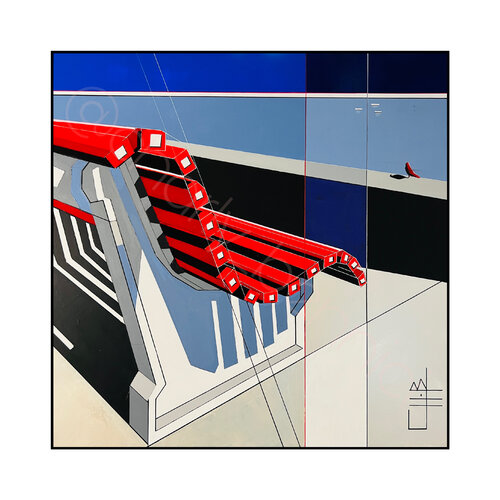
I explored, by representing the iconic "Pipistrello" lamp, the intersection of cubism and minimalism. The clean lines and blocks of color evoke a visual harmony that brings a calm and thoughtful energy to any living space.
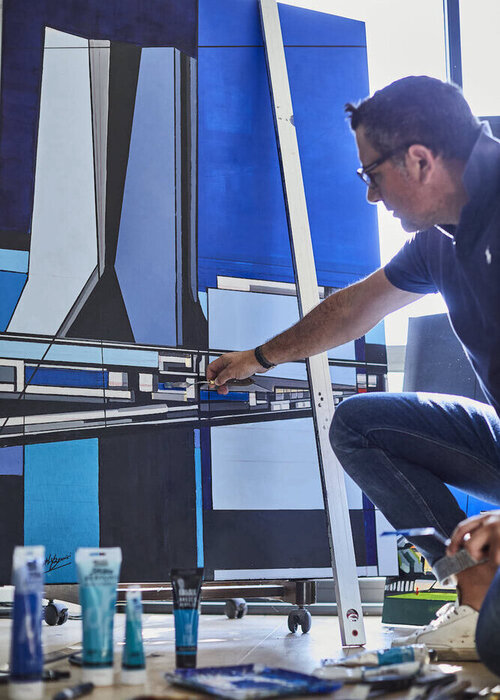
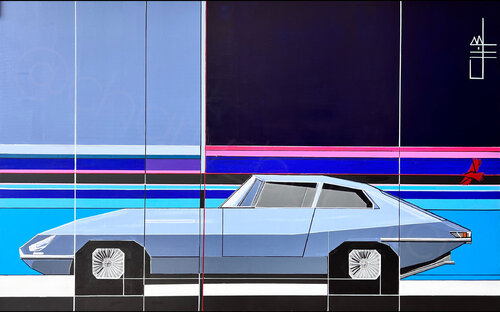
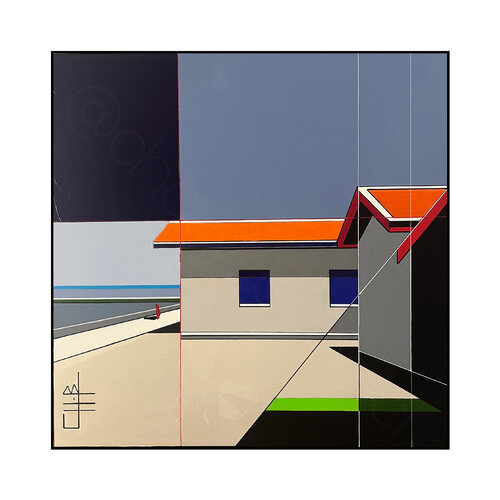
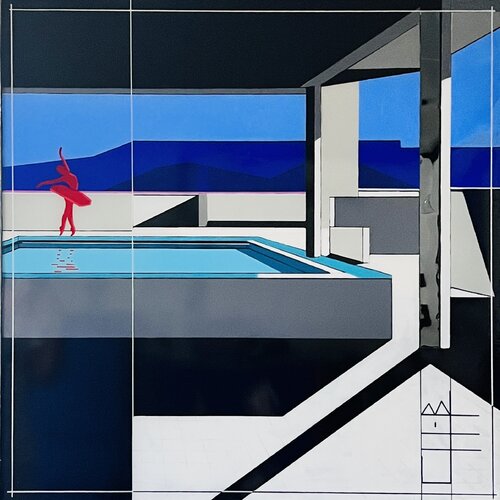
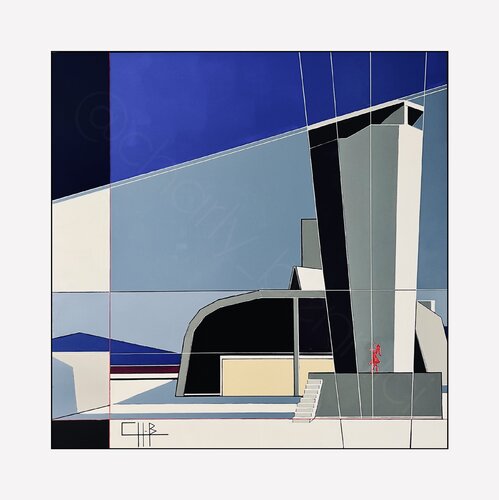
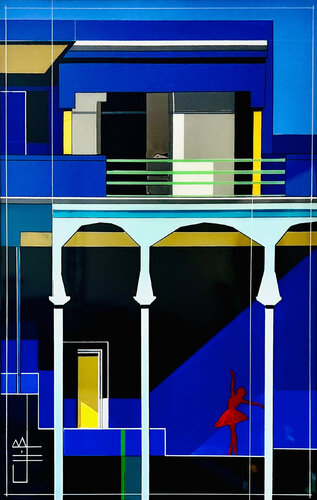
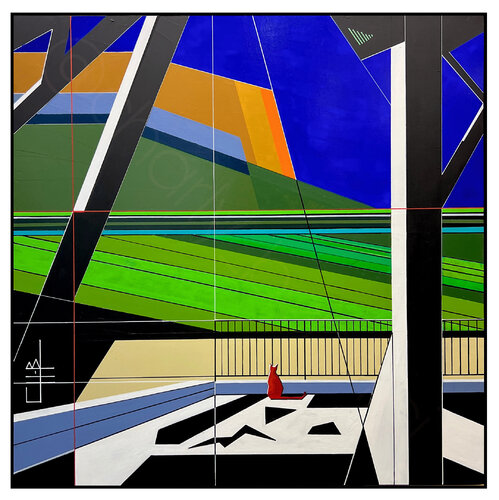
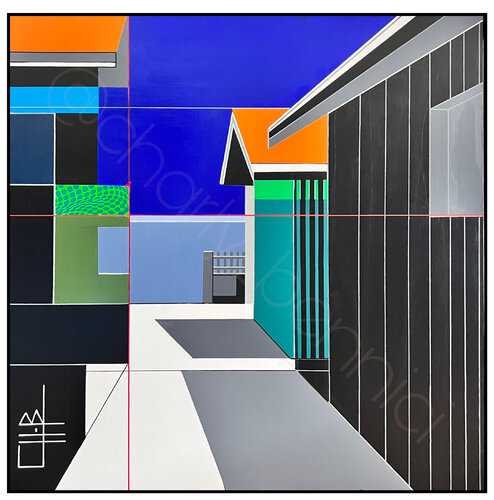
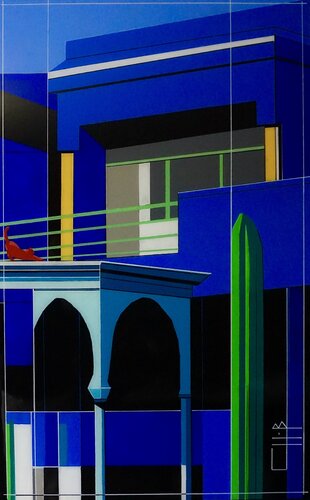
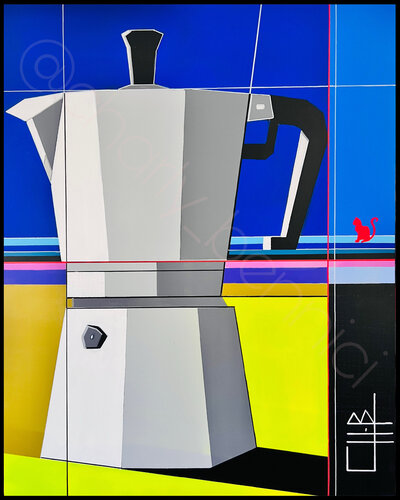
Charly Bennici, nicknamed “the Archi-Painter”, is an artist who lives and works in Marseille, his hometown. Born in 1971, he studied architecture at the same time as he took courses at the Beaux-Arts in Marseille, until obtaining the architect's diploma dplg Captivated by painting since adolescence, he has painted out of passion for 30 years and exhibits his work in galleries, prestigious locations and contemporary art fairs throughout France. His "geometric" painting reflects his architectural background, highlighting marked perspectives and architectural lines of force, bringing out all the vanishing points structuring the figurative compositions of the subjects in his paintings.