Discover the creation in interiors
Other artworks by Konstantin Danilov
Artwork details
- Medium : Acrylic, Pastel on Canvas
- Other details : Artwork on fixed support. Ready to hang. Framing on request.
- Dimensions : 59.1x39.4in
About this artwork
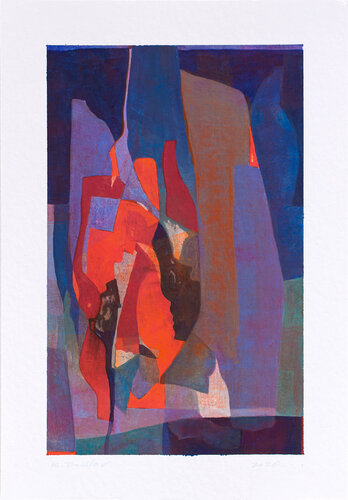
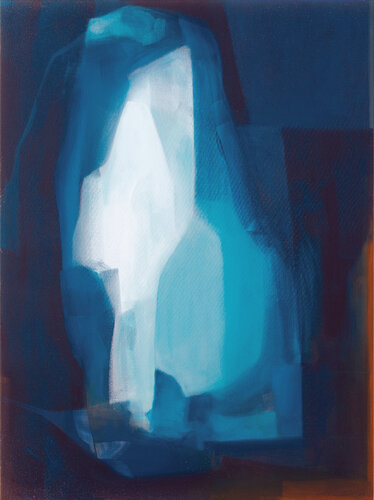
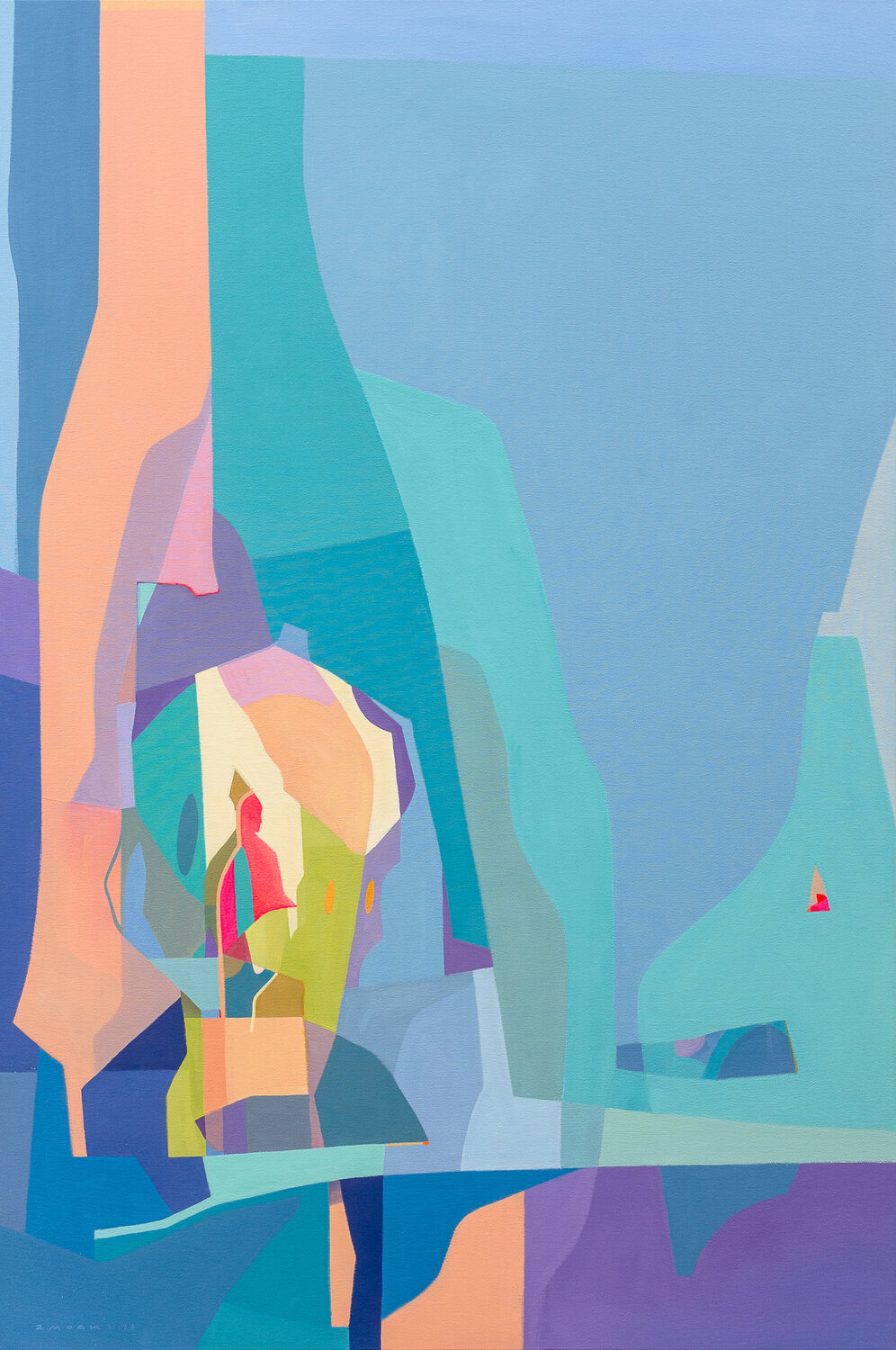
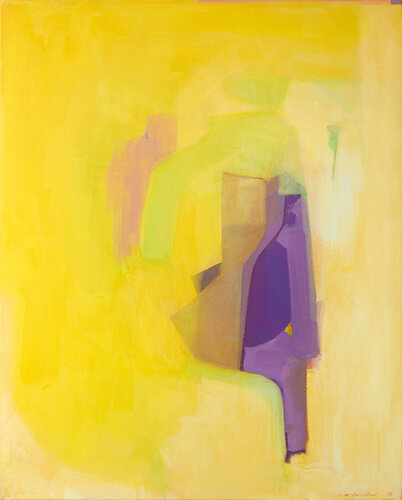
This abstract painting presents a layered space built from soft geometric forms and transparent color fields. Cool blue and turquoise tones dominate the environment, creating a sense of distance and emotional neutrality. Within this space, a semi-figurative human-like form appears in bright red, expressing strong inner tension and mental strain. A separate red element stands isolated in the cold field, where contrast reaches its peak. Together, these…
elements reflect inner pressure and the difficulty of existing within an indifferent surrounding.
Konstantin Danilov
Georgia
Credentials
- Featured in gallery curations
- Works on commission
Konstantin Danilov (also known as Zmogk) is a Moscow-born painter and muralist based in Athens. His practice grew out of early work in 1990s Russian graffiti and later shifted toward studio-based painting, where color and structure became primary tools for exploring internal states shaped by lived experience.
His work focuses on boundary conditions: between inner and outer experience, stability and tension, adaptation and loss. Using layered color fields, semi-abstract landscapes, and restrained figurative traces, he examines moments of fragile balance, quiet pressure, and psychological transition over time.
A recurring method in his practice is the “active perimeter,” where the edges of the canvas function as an emotional membrane rather than a neutral frame. Color operates not decoratively, but as a carrier of pressure, memory, and slow transformation, inviting a sustained and attentive dialogue with the viewer.
His work focuses on boundary conditions: between inner and outer experience, stability and tension, adaptation and loss. Using layered color fields, semi-abstract landscapes, and restrained figurative traces, he examines moments of fragile balance, quiet pressure, and psychological transition over time.
A recurring method in his practice is the “active perimeter,” where the edges of the canvas function as an emotional membrane rather than a neutral frame. Color operates not decoratively, but as a carrier of pressure, memory, and slow transformation, inviting a sustained and attentive dialogue with the viewer.