Not currently available for saleThis piece is currently reserved (either by a client or for an exhibition...).Get notified when it becomes available again.
Thank you very much for your interest!
Your message has been sent successfully! We will get back to you if the artwork becomes available again.
Singulart guarantees reliability and traceability.
All the artists on the platform have been specially selected and certify to only sell works, of which they are the artist. Whatever the medium, the work is sent to the buyer with a certificate of authenticity. Photographs are numbered and signed.
Every customer can be given a copy of their certificate of authenticity by contacting support@singulart.com
With Singulart, you can pay safely by credit card or bank transfer.
For all transactions exceeding your credit limit, contact us. We are required to verify every transfer, as part of the fight against fraud and money laundering.
Singulart prices include:
Price of an artwork defined by an artist.
Insurance. Your order is 100% protected in case of any damage or loss.
All customs fees, taxes, and document preparation.
Third-party logistic provider shipping costs.
A dedicated Singulart customer care specialist that will assist you with any questions or problems during shipment.
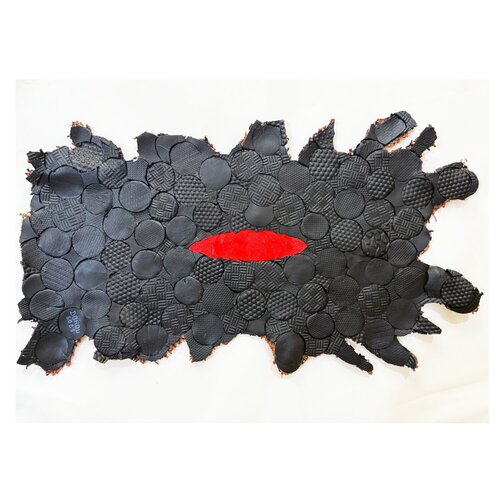
MANKPO, translated from the local language "Fongbé parlé au Bénin" into French, means royal scepter. This work is inspired by the history of the Kingdom of Dahomey during the reign of King Béhanzin. The royal scepter is a symbol of power used by the kings of the time, given to their messengers to lend credibility to their messages. But according to history, the Mankpo was first used as a weapon of war by the citizens of the kingdom of King AKABA… (1685 to 1708) to fight their enemies.
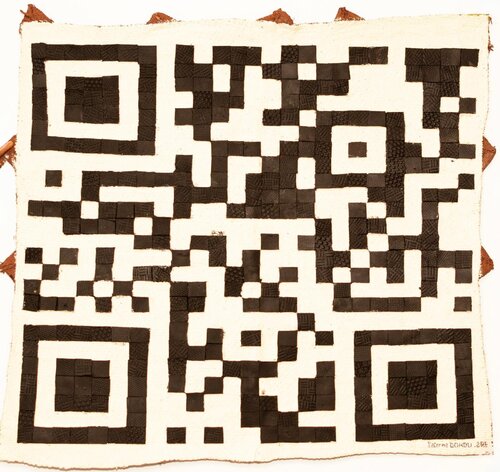
Beninese visual artist Paterne Dokou explores painting, sculpture, photography, and textiles, drawing on a rich self-taught and academic background. His Cut and Paste technique combines Xwéda scarification, recycled materials (rubber, burlap), and a cutting and collage gesture evoking traces and repair. Through his profound, hybrid style, he weaves powerful narratives about memory, identity, and collective resilience, conveying an intense emotion of dialogue between past and present, tradition and modernity, without ever forgetting ecological responsibility.