Not currently available for saleThis piece is currently reserved (either by a client or for an exhibition...).Get notified when it becomes available again.
Thank you very much for your interest!
Your message has been sent successfully! We will get back to you if the artwork becomes available again.
Singulart guarantees reliability and traceability.
All the artists on the platform have been specially selected and certify to only sell works, of which they are the artist. Whatever the medium, the work is sent to the buyer with a certificate of authenticity. Photographs are numbered and signed.
Every customer can be given a copy of their certificate of authenticity by contacting support@singulart.com
With Singulart, you can pay safely by credit card or bank transfer.
For all transactions exceeding your credit limit, contact us. We are required to verify every transfer, as part of the fight against fraud and money laundering.
Singulart prices include:
Price of an artwork defined by an artist.
Insurance. Your order is 100% protected in case of any damage or loss.
All customs fees, taxes, and document preparation.
Third-party logistic provider shipping costs.
A dedicated Singulart customer care specialist that will assist you with any questions or problems during shipment.
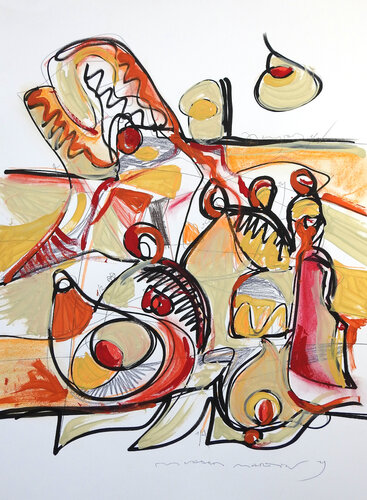
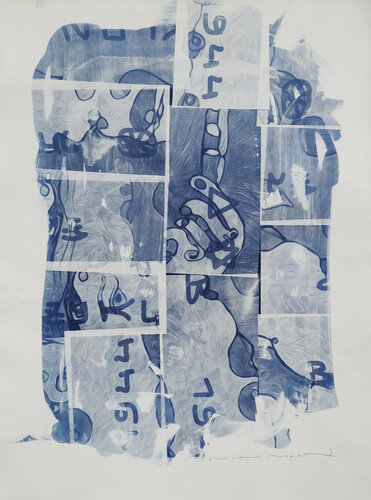
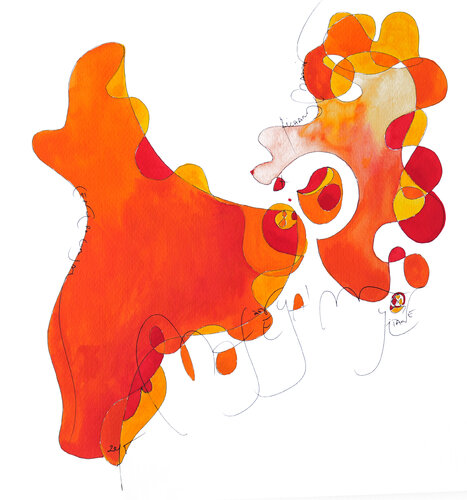
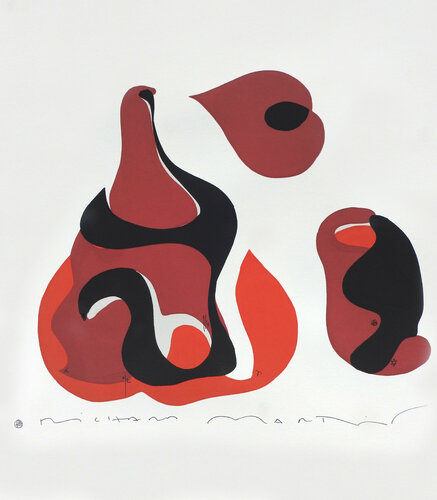
The work tries to express the social discrimination that still exists in society.
It is a reference to internal and external discrimination, whether on a social, labor, economic or political level, suffered by certain ethnic groups or races such as: gypsies, Jews, blacks,...
On the other hand, the man located on the… left side has a double meaning: the first is the jacket with a less flat finish, referring to the state that exists in certain societies placing men above women and the emphasis on their Genitals represents purity and strength.
Gypsy women often suffer double discrimination. This can happen in many ways: to be a woman, to be a gypsy, and because of all the additional adversities she has to face. Therefore, I place it on the feet, more pe
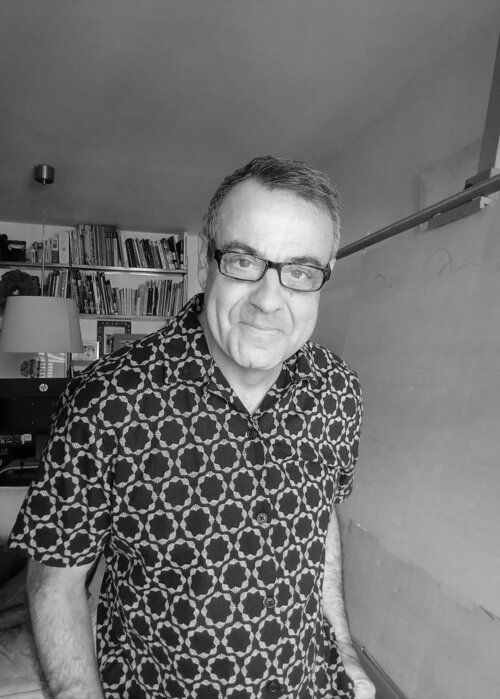
Born in Zurich, Switzerland, in 1968, Richard Martin explores in his work identity, memory and the dialogue between image and thought. A perspective situated between two ways of understanding the world: one linked to a nomadic, intuitive and symbolic sensibility, and another rooted in European tradition. This crossing of heritages places his work in an in-between space from which his artistic language emerges.
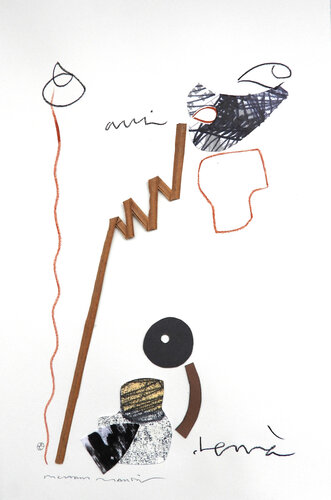
From this “no-place”, his work incorporates interconnection as a structure of the world. The curve, central to his visual language, does not describe reality: it connects it, generating meaning between the personal and the collective. His works are present in private collections in the United States and Europe.
He studied at the Escola Superior de Disseny i Art Llotja in Barcelona and later expanded his education in Exact Sciences, Humanities, Communication and Fine Arts.
“Art is an adventure in an unknown world, different for every person.” Richard Martin Maya