Singulart guarantees reliability and traceability.
All the artists on the platform have been specially selected and certify to only sell works, of which they are the artist. Whatever the medium, the work is sent to the buyer with a certificate of authenticity. Photographs are numbered and signed.
Every customer can be given a copy of their certificate of authenticity by contacting support@singulart.com
With Singulart, you can pay safely by credit card or bank transfer.
For all transactions exceeding your credit limit, contact us. We are required to verify every transfer, as part of the fight against fraud and money laundering.
Singulart prices include:
Price of an artwork defined by an artist.
Insurance. Your order is 100% protected in case of any damage or loss.
All customs fees, taxes, and document preparation.
Third-party logistic provider shipping costs.
A dedicated Singulart customer care specialist that will assist you with any questions or problems during shipment.
• Accompanied by a certificate of authenticity
• Limited edition
Three ears — black, beige, and white — held by wooden clothespins form a simple yet powerful image. The gesture of “pinching” hearing suggests silence, censorship, and saturation: would it be possible to switch off our hearing in a world that is too noisy? The piece, silent, makes us listen — or rather, think about what we do not hear. What… do we choose to ignore? What are we compelled to silence? The visual humor conceals a discomfort: there are denied, selective, and hierarchized forms of listening. By varying the colors of the ears, the artist also puts racial and social dynamics under tension: who gets to speak? Who is heard? And who is systematically silenced?
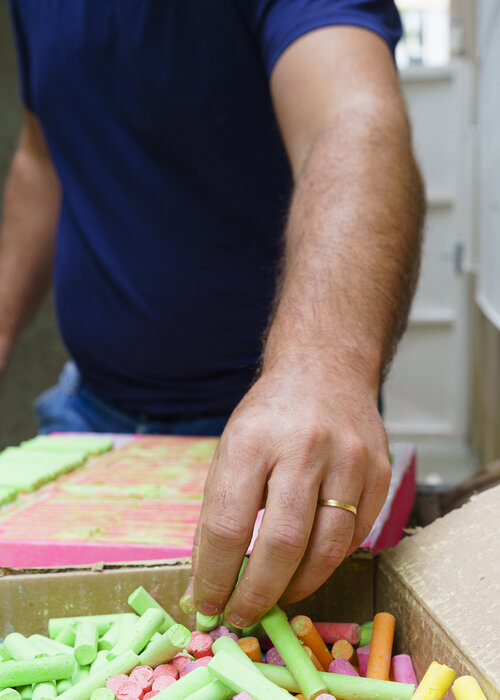
Renato Gosling is a São Paulo–based visual artist who transforms everyday subtleties into works charged with memory, affection, and critique. Born in 1976, he builds his practice from fragments of popular Brazilian life, using micro-narratives, sensory references, and childhood evocations to reflect on time, identity, and culture. In an era of acceleration and information overload, his works propose a pause — quiet invitations to contemplation. By appropriating common objects and vernacular symbols, he shifts the viewer’s gaze toward deeper layers of human experience. His imagery often reimagines familiar materials — chalk, cardboard, school furniture — turning them into poetic reflections on education, social structures, and collective memory. His solo exhibition The Truth About Nostalgia (2024) marked a turning point in his trajectory, alongside group shows and awards. Balancing technical rigor with poetic sensitivity, Gosling creates an affective archaeology where beauty resides in