
Painter
· 1912 – 1956
- United States
Jackson Pollock
Jackson Pollock, an artist synonymous with the abstract expressionist movement, dramatically altered the landscape of modern art. Born in 1912 in Wyoming, Pollock's journey to becoming an art world icon was as turbulent and passionate as his paintings. He moved beyond the traditional brush and canvas, introducing the radical technique of drip painting, which would become his signature style and a defining moment in art history.
Pollock's art is a visceral, rhythmic dance of color and form. His most famous works, such as “Number 1 (Lavender Mist),” “Autumn Rhythm,” and “Blue Poles,” are characterized by an intense, dynamic energy. The chaotic swirls and splatters of paint on his canvases are not random; they are the deliberate expressions of Pollock's inner turmoil and creativity. His technique—flinging, dripping, and smearing paint—allowed him to channel his emotions directly onto the canvas, creating an intimate and raw portrayal of his psyche.
So it is no surpirise that the pieces are highly valued on the market today which makes buying a Jackson Pollock piece an interesting investment. Jackson Pollock lives on as a symbol of innovation and freedom in artistic expression. His works are celebrated for their complexity and have become a beacon for collectors and art enthusiasts to buy.
Pollock's influenced the artworld in a fundamental way by challenging preconceived notions about the creative process and the relationship between the artist, the canvas, and the viewer. His approach was a philosophy, a radical rethinking of what art could be.
In conclusion, Jackson Pollock's art is an immersive journey into the heart of abstract expressionism. His legacy is not just in the chaotic beauty of his paintings but in the freedom and innovation they represent. For those looking to buy Jackson Pollock art, it's an chance to buy a piece of the untamed spirit of creativity that Pollock championed throughout his life.
Pollock's art is a visceral, rhythmic dance of color and form. His most famous works, such as “Number 1 (Lavender Mist),” “Autumn Rhythm,” and “Blue Poles,” are characterized by an intense, dynamic energy. The chaotic swirls and splatters of paint on his canvases are not random; they are the deliberate expressions of Pollock's inner turmoil and creativity. His technique—flinging, dripping, and smearing paint—allowed him to channel his emotions directly onto the canvas, creating an intimate and raw portrayal of his psyche.
So it is no surpirise that the pieces are highly valued on the market today which makes buying a Jackson Pollock piece an interesting investment. Jackson Pollock lives on as a symbol of innovation and freedom in artistic expression. His works are celebrated for their complexity and have become a beacon for collectors and art enthusiasts to buy.
Pollock's influenced the artworld in a fundamental way by challenging preconceived notions about the creative process and the relationship between the artist, the canvas, and the viewer. His approach was a philosophy, a radical rethinking of what art could be.
In conclusion, Jackson Pollock's art is an immersive journey into the heart of abstract expressionism. His legacy is not just in the chaotic beauty of his paintings but in the freedom and innovation they represent. For those looking to buy Jackson Pollock art, it's an chance to buy a piece of the untamed spirit of creativity that Pollock championed throughout his life.
31 Artworks


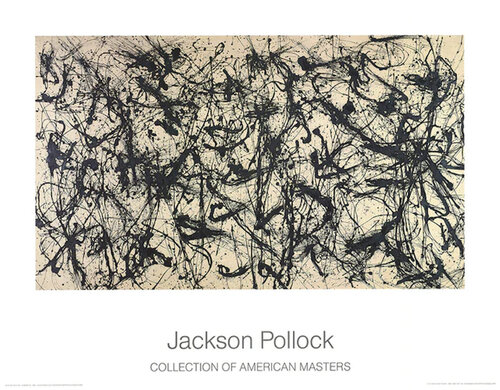

What is the most famous Jackson Pollock artwork?

Artworks inspired by Jackson Pollock
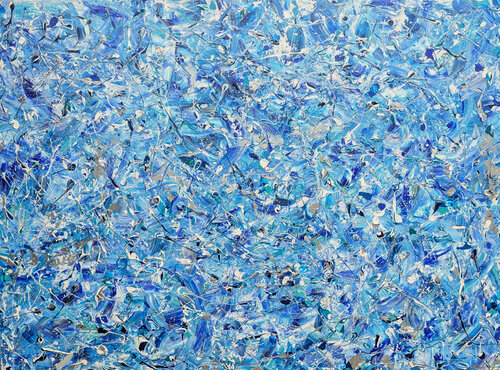
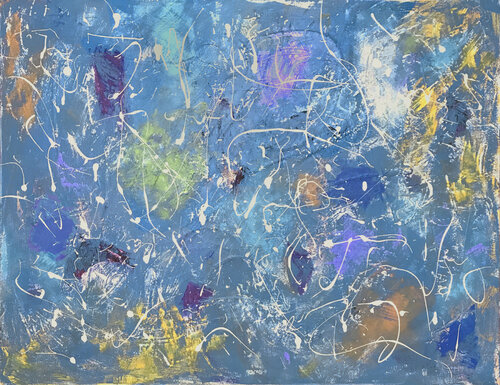
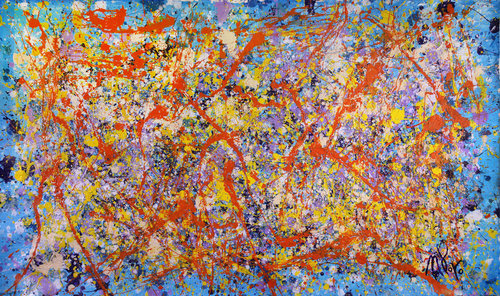
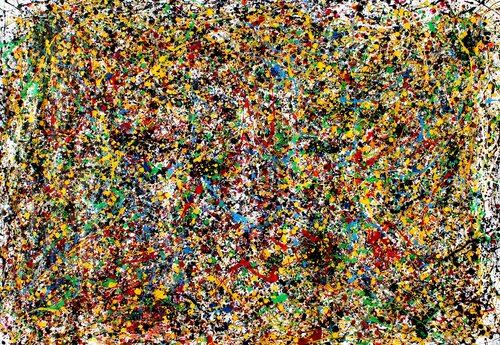
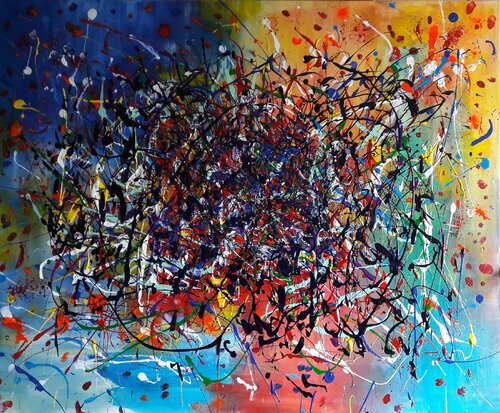
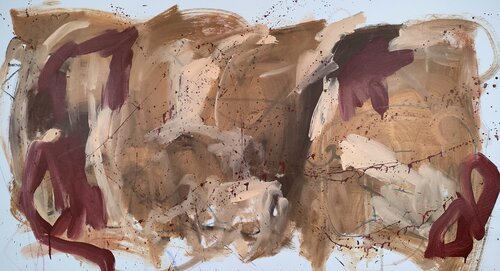
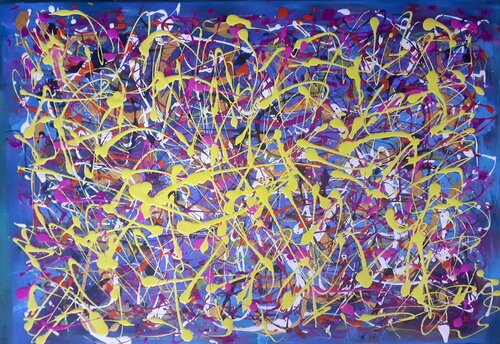
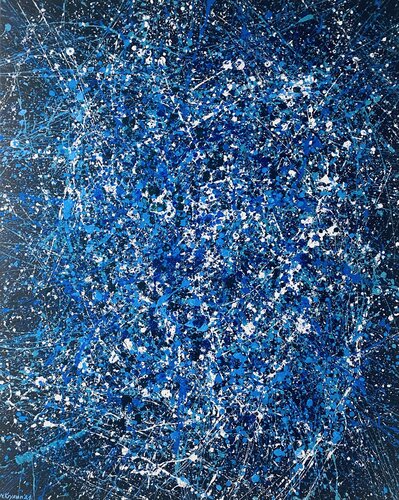
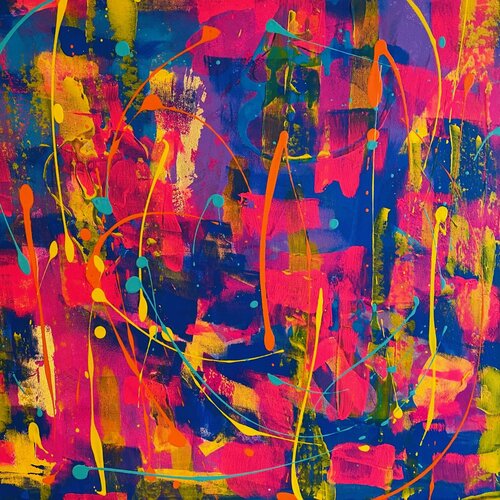
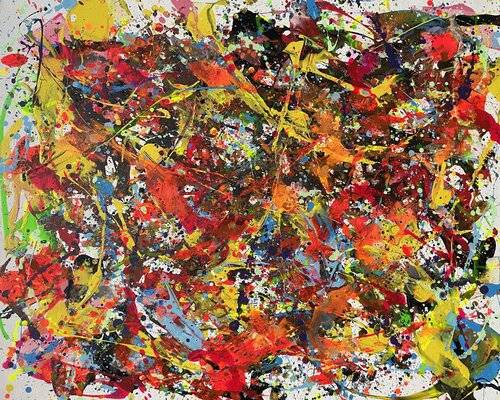
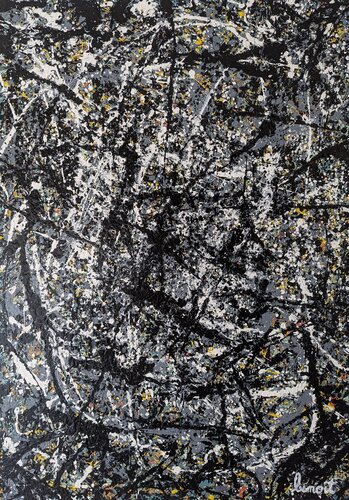
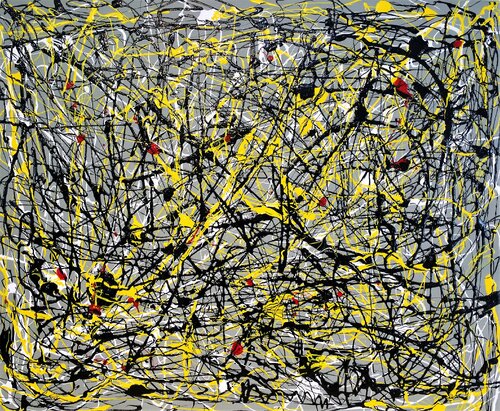
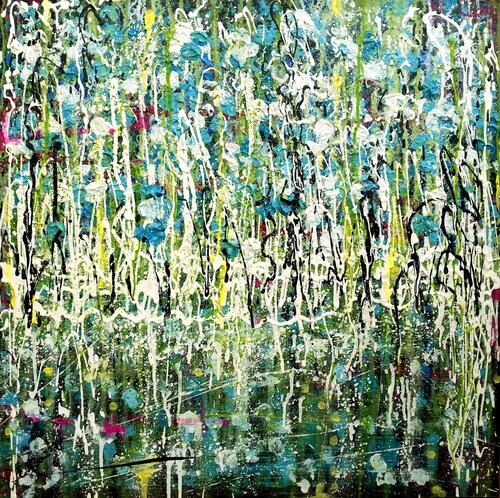
Explore our unique artists creating art in the Pollock style



Can't find what you're looking for? Let’s get in touch:
Singulart Artists continuing Pollock's style
Discover selections of artists following Jackson Pollock’s footsteps.



Related artists
Discover editions from other great masters in the style of Jackson Pollock.




- Nationality
- United States
- Born
- 1912 – 1956
- Mediums
- Painter
Jackson Pollock: A Collection Survey 1934–1954 / Museum of Modern Art - New York, United States
Jackson Pollock: Blind Spots / Tate Liverpool - Liverpool, United Kingdom
Major retrospective / Museum of Modern Art - New York, United States
Retrospective / Tate Gallery - London, United Kingdom
Jackson Pollock: Works on Paper / Metropolitan Museum of Art - New York, United States
Major retrospective / Museum of Modern Art - New York, United States
Retrospective / Whitechapel Gallery - London, United Kingdom
São Paulo Biennale / São Paulo Biennale - Sao Paulo, Brazil
Solo Exhibition / Sidney Janis Gallery - New York, United States
Solo Exhibition / Betty Parsons Gallery - New York, United States
Abstract Painting and Sculpture in America / Museum of Modern Art - New York, United States
Venice Biennale / Venice Biennale - Venice, Italy
Peridot Gallery solo exhibition / Peridot Gallery - New York, United States
The Irascibles exhibition / Museum of Modern Art - New York, United States
First Solo Exhibition / Peggy Guggenheim's Art of This Century Gallery - New York, United States
Stedelijk Museum, Amsterdam, Netherlands
Kunstsammlung Nordrhein-Westfalen, Düsseldorf, Germany
Peggy Guggenheim Collection, Venice, Italy
Art Institute of Chicago, Chicago, United States
San Francisco Museum of Modern Art (SFMOMA), San Francisco, United States
Los Angeles County Museum of Art (LACMA), Los Angeles, United States
Museum of Contemporary Art Tokyo, Tokyo, Japan
Centre Georges Pompidou, Paris, France
Tate Modern, London, United Kingdom
Hirshhorn Museum and Sculpture Garden, Washington D.C., United States
National Gallery of Art, Washington D.C., United States
Whitney Museum of American Art, New York City, United States
Solomon R. Guggenheim Museum, New York City, United States
Metropolitan Museum of Art, New York City, United States
Museum of Modern Art (MoMA), New York City, United States
Birth of Jackson Pollock in Cody, Wyoming, USA
Attends Manual Arts High School in Los Angeles
Moves to New York City
Studies at the Art Students League under Thomas Hart Benton
Begins psychiatric treatment for alcoholism
Exhibits in the "Artists for Victory" show at the Metropolitan Museum of Art
First solo exhibition at Peggy Guggenheim's Art of This Century gallery
Marries artist Lee Krasner
Moves to Springs, East Hampton, New York
Develops his signature "drip painting" technique
Creates "Lavender Mist," one of his most famous pieces
Exhibits in the Venice Biennale
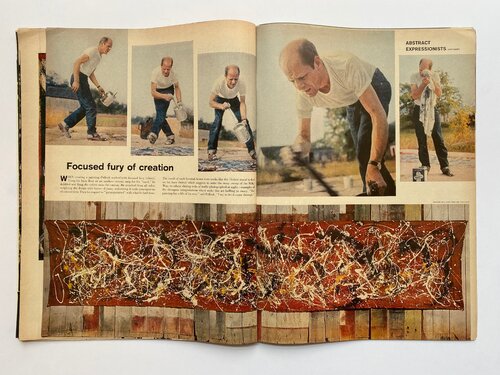
Featured in Time magazine as "Jack the Dripper"
Creates "White Light," his last major work
Dies in a car accident in Springs, East Hampton, New York

