Discover the creation in interiors
Other artworks by Lucas Stolz
Artwork details
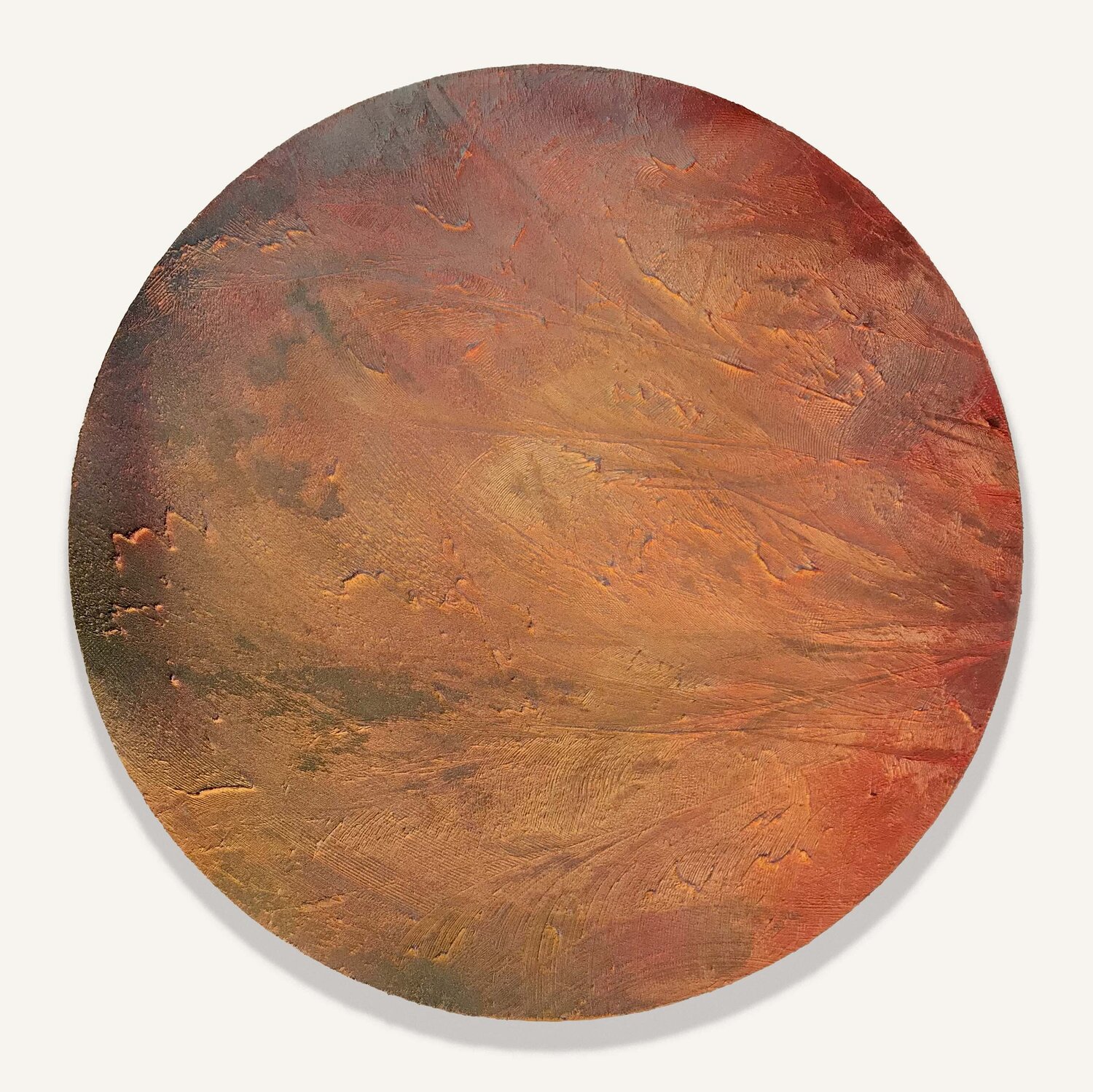
- Medium : Acrylic, Spray Paint on Wood
- Other details : Artwork on fixed support. Ready to hang. Framing on request.
- Dimensions : 39.4x39.4in
About this artwork
Zeiggeist* Dots
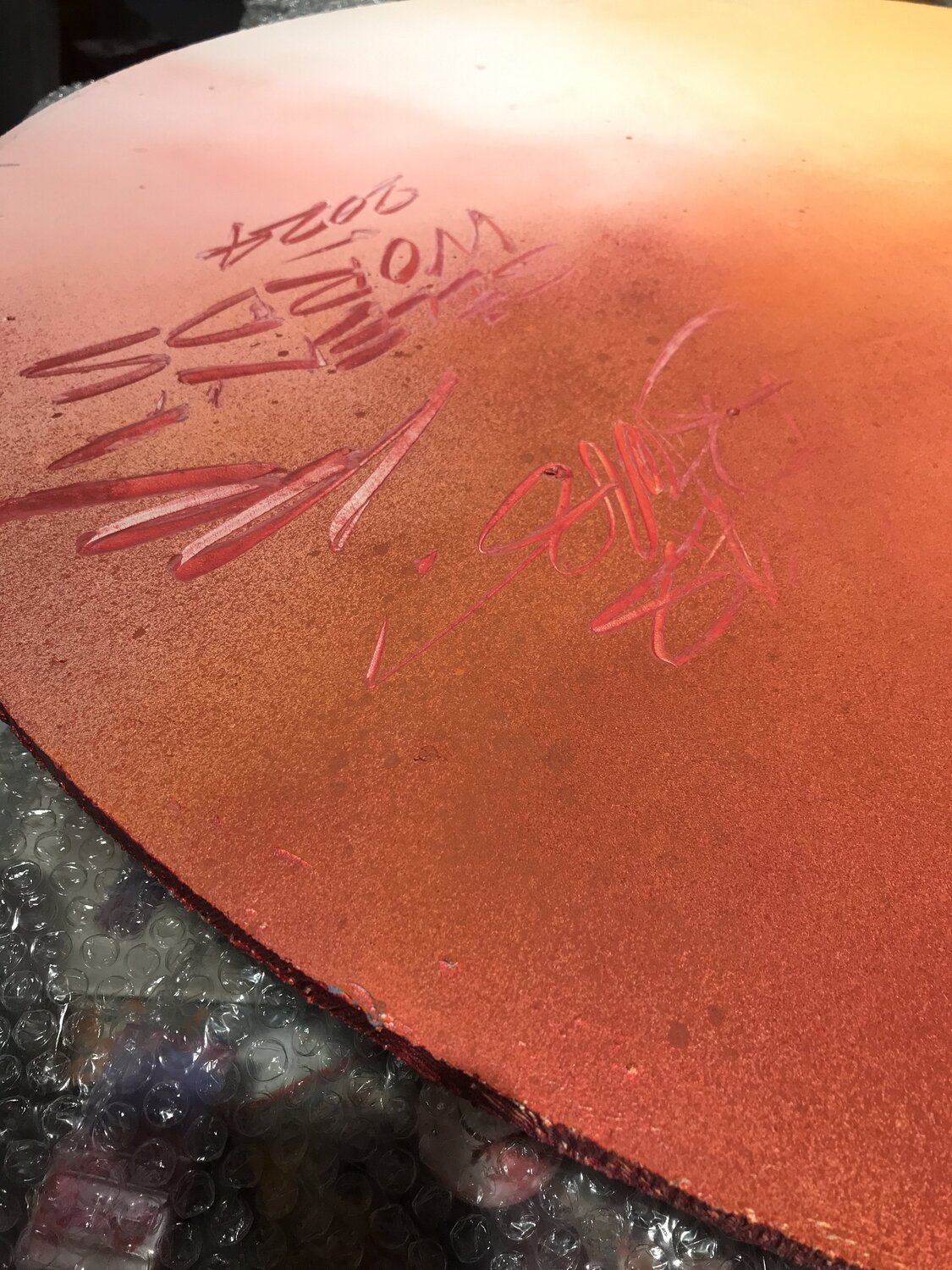
This series is made up of circular works which change colors depending on your viewpoint. Each piece can be rotated freely on its axis (360%). As you turn the piece, its hues shift and the mood of the piece is transformed.
The title, Einfallspinsel is a play on words, hinting at the idea that the writing tool is also an author, affecting what is written with its unique character.
*The title of this series is a play on the German… word “Zeitgeist,” which refers to a way of thinking that is symbolic for a moment in time. “Zeig,” (to show), combined with “Geist,” (ghost/spirit), could be interpreted as the "spirit of showing (time)". Each of these works is built from the accumulation of many layers over time
This series is made up of circular works which change colors depending on your viewpoint. Each piece can be rotated freely on its axis (360%). As you turn the piece, its hues shift and the mood of the piece is transformed.
The title, Einfallspinsel is a play on words, hinting at the idea that the writing tool is also an author, affecting what is written with its unique character.
*The title of this series is a play on the German… word “Zeitgeist,” which refers to a way of thinking that is symbolic for a moment in time. “Zeig,” (to show), combined with “Geist,” (ghost/spirit), could be interpreted as the "spirit of showing (time)". Each of these works is built from the accumulation of many layers over time
Lucas Stolz
Spain
Credentials
- Featured in gallery curations
- Works on commission
Lucas Stolz (*1985 in Basel, Switzerland) understands calligraphy as a painterly act. Writing as a developmental process for images in which words dissolve, signs as traces of a body that writes, where it could also paint.
In his work, he explores four fundamental levels of handwriting: the invention and transformation of signs; continuous writing, which, through repetition, makes humanity visible; the development of custom writing tools, that shape the stroke; and the analysis and repurposing of materials from writing cultures, leading to experiments with sand, pigments and wood.
The artist develops tools and techniques that are idiosyncratic, almost defiant. They demand physical effort, they distort, chop, and multiply the stroke—giving it temperament. This process highlights the question of authorship: Who is writing here—the hand, the tool, or the surface?
In his work, he explores four fundamental levels of handwriting: the invention and transformation of signs; continuous writing, which, through repetition, makes humanity visible; the development of custom writing tools, that shape the stroke; and the analysis and repurposing of materials from writing cultures, leading to experiments with sand, pigments and wood.
The artist develops tools and techniques that are idiosyncratic, almost defiant. They demand physical effort, they distort, chop, and multiply the stroke—giving it temperament. This process highlights the question of authorship: Who is writing here—the hand, the tool, or the surface?