Singulart guarantees reliability and traceability.
All the artists on the platform have been specially selected and certify to only sell works, of which they are the artist. Whatever the medium, the work is sent to the buyer with a certificate of authenticity. Photographs are numbered and signed.
Every customer can be given a copy of their certificate of authenticity by contacting support@singulart.com
With Singulart, you can pay safely by credit card or bank transfer.
For all transactions exceeding your credit limit, contact us. We are required to verify every transfer, as part of the fight against fraud and money laundering.
Singulart prices include:
Price of an artwork defined by an artist.
Insurance. Your order is 100% protected in case of any damage or loss.
All customs fees, taxes, and document preparation.
Third-party logistic provider shipping costs.
A dedicated Singulart customer care specialist that will assist you with any questions or problems during shipment.
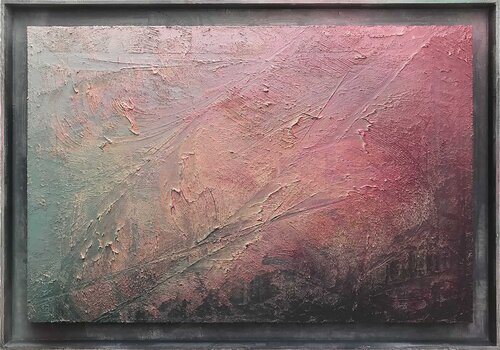
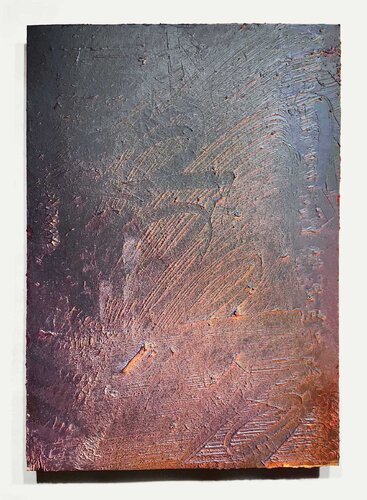
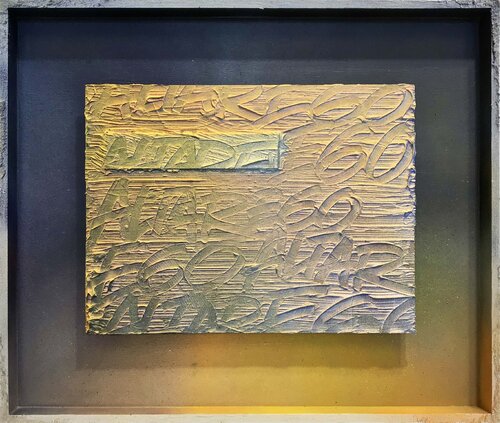
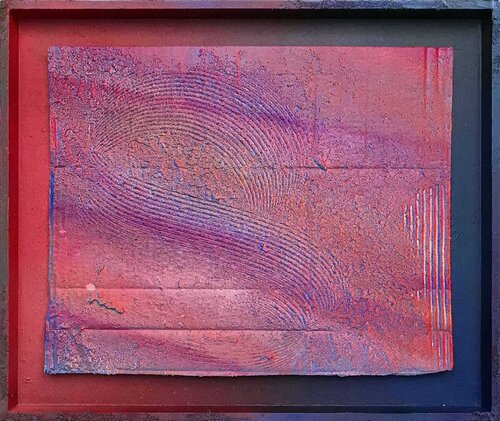
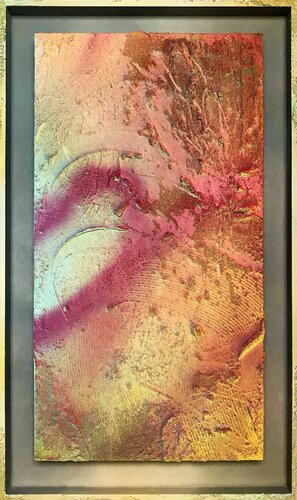
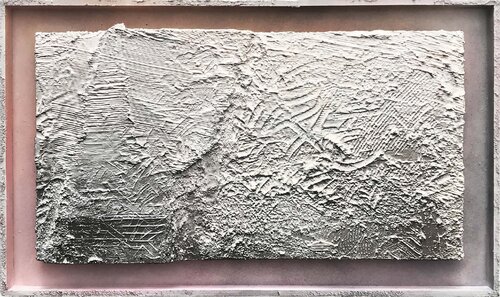
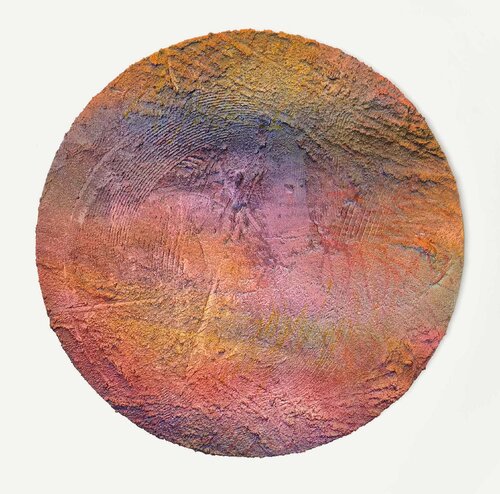
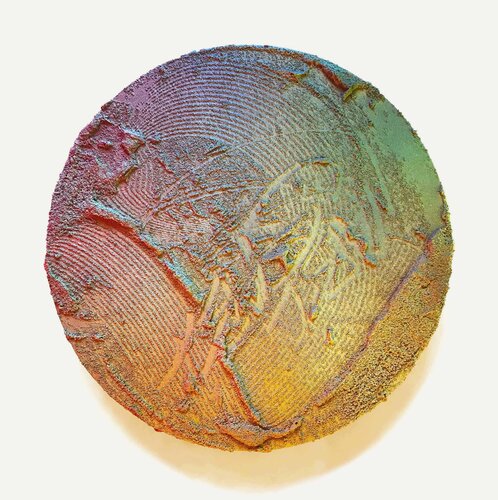
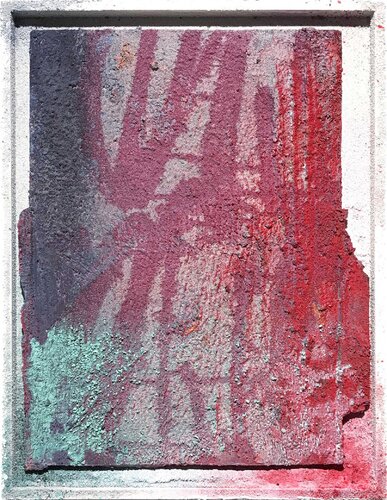
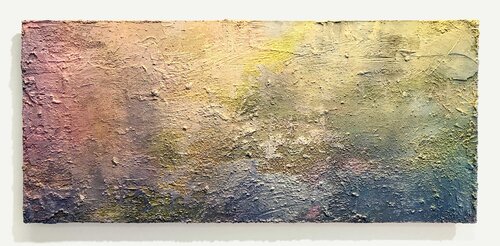
This piece was the one that kicked off the eponymous series. It received its first layer in November 2021 and was finished in February 2024. When I realised how long the piece had been in the works and that you could still see traces of the very first layer, I realised that in itself said something about time. There are inks that bled back through fresh coverings of gesso, there are reliefs of at least 5 different self-made tools I used to write… with over the years.
Zeiggeist is painted with special a technique that lets the colours shift as you look on from different angles. The piece never stays the same.
The title of this series is a play on the German word “Zeitgeist,” which refers to a way of thinking that is symbolic for a moment in time. “Zeig,” (to show), combined with “Geist,” (ghost/spirit), could be interpreted as the "spirit of showing (time)". At its heart, the series is about showing the evolution an artefact with time.
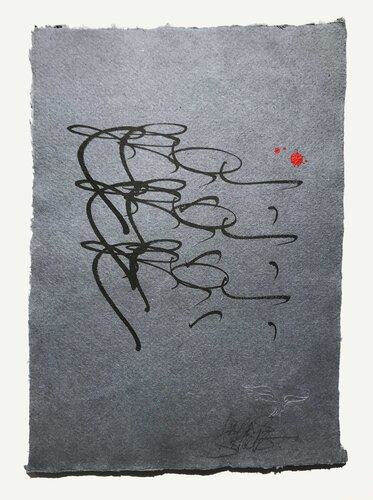
Lucas Stolz (*1985 in Basel, Switzerland) understands calligraphy as a painterly act. Writing as a developmental process for images in which words dissolve, signs as traces of a body that writes, where it could also paint.
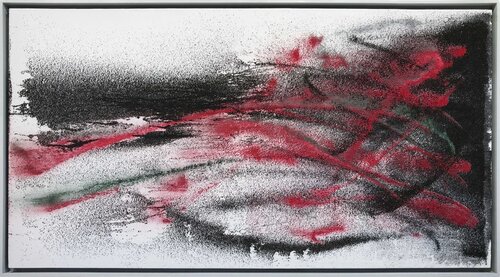
In his work, he explores four fundamental levels of handwriting: the invention and transformation of signs; continuous writing, which, through repetition, makes humanity visible; the development of custom writing tools, that shape the stroke; and the analysis and repurposing of materials from writing cultures, leading to experiments with sand, pigments and wood.
The artist develops tools and techniques that are idiosyncratic, almost defiant. They demand physical effort, they distort, chop, and multiply the stroke—giving it temperament. This process highlights the question of authorship: Who is writing here—the hand, the tool, or the surface?