
Not currently available for saleThis piece is currently reserved (either by a client or for an exhibition...).Get notified when it becomes available again.
Thank you very much for your interest!
Your message has been sent successfully! We will get back to you if the artwork becomes available again.
Singulart guarantees reliability and traceability.
All the artists on the platform have been specially selected and certify to only sell works, of which they are the artist. Whatever the medium, the work is sent to the buyer with a certificate of authenticity. Photographs are numbered and signed.
Every customer can be given a copy of their certificate of authenticity by contacting support@singulart.com
With Singulart, you can pay safely by credit card or bank transfer.
For all transactions exceeding your credit limit, contact us. We are required to verify every transfer, as part of the fight against fraud and money laundering.
Singulart prices include:
Price of an artwork defined by an artist.
Insurance. Your order is 100% protected in case of any damage or loss.
All customs fees, taxes, and document preparation.
Third-party logistic provider shipping costs.
A dedicated Singulart customer care specialist that will assist you with any questions or problems during shipment.
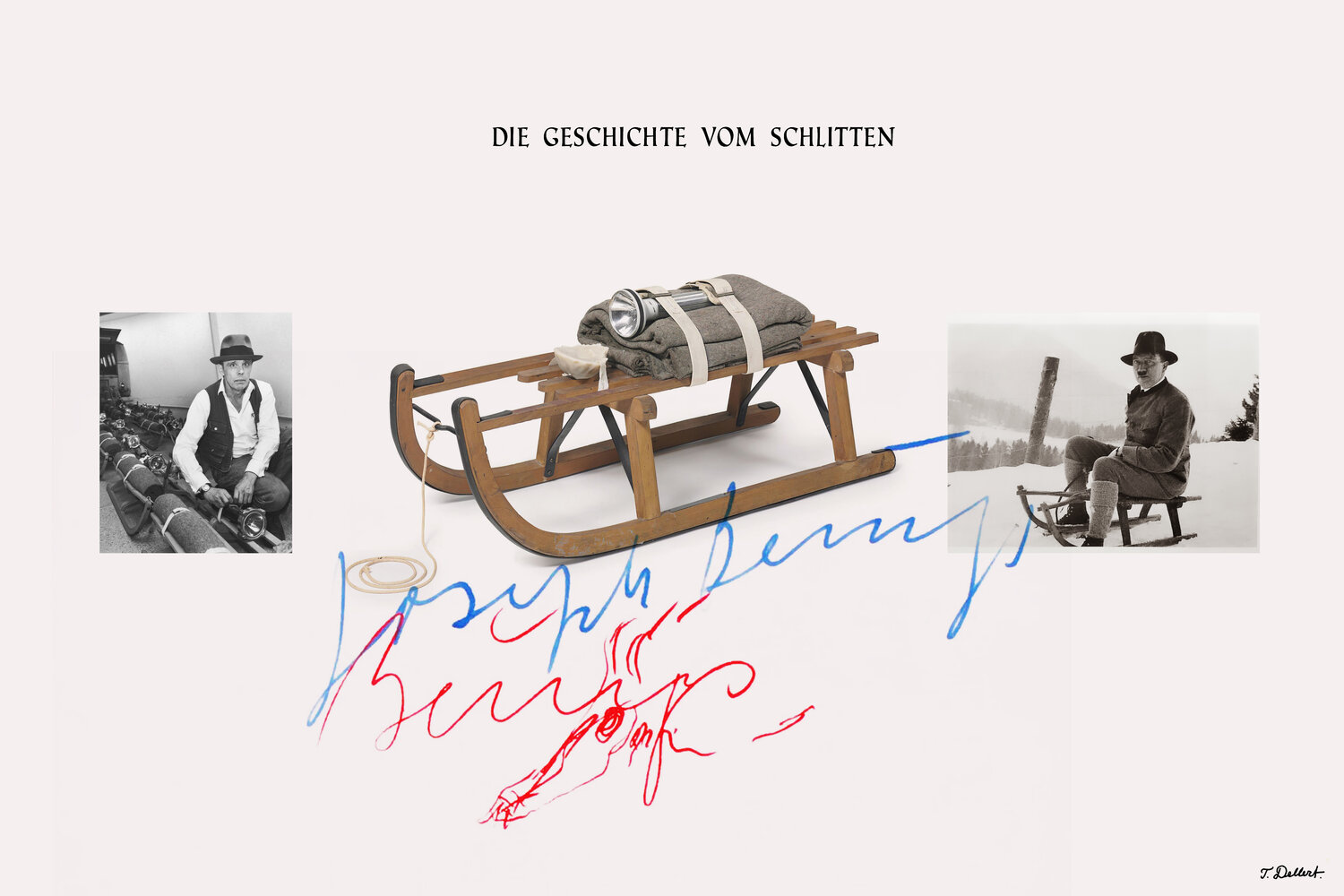
The motif of the sleigh runs through Beuys' entire work. In early drawings it often appears as a primal sleigh , thus pointing to its function as one of humanity's oldest means of transport.
Beuys often described the sleigh as a rescue vehicle. This feature is related to the legendary story of his own rescue by Crimean Tatars after his plane crash in World War II. They transported him away on a sleigh… so that he could recover from his injuries. 3 Even if the veracity of this story can be doubted, it is symbolically informative because it provides vivid images for central motifs and materials in Beuys' work. This idea of rescue is at the forefront of the multiple Schlitten , as well as in the work Das Rudel from the same year, in which Beuys also used sledges. In this installation they are lined up behind a VW bus, each one equipped with a rolled-up felt blanket, a flashlight and a small lump of grease.
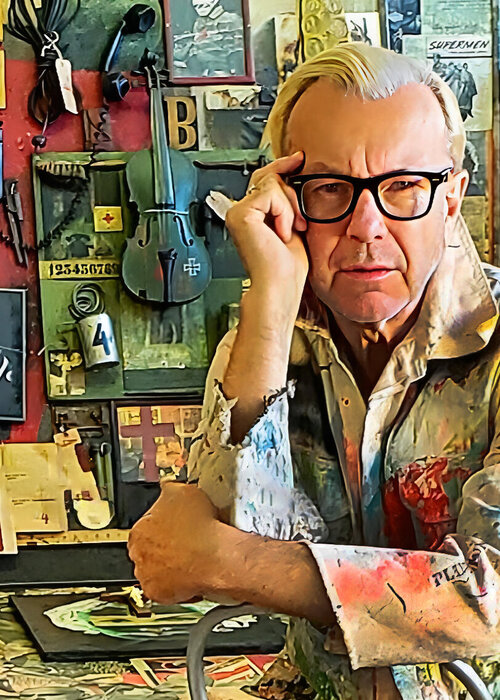
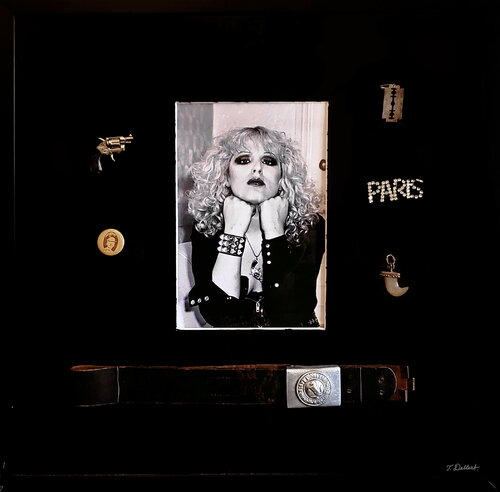
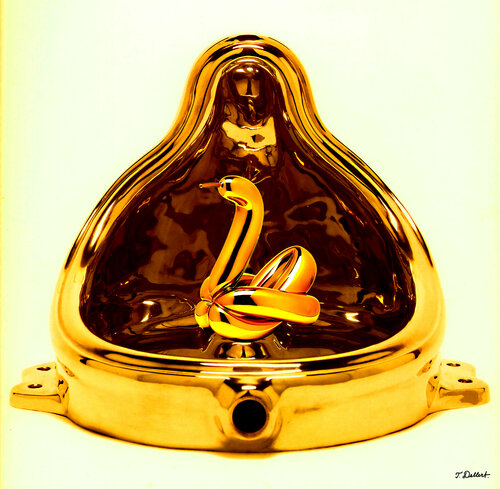
Thomas Dellert is an internationally renowned Swedish painter and photographer who has taken part in numerous solo exhibitions throughout the United States and several European nations. His works are featured in the permanent collections of the Holocaust Memorial Museum (Washington DC), Heinz, Mercedes Benz, Absolute Vodka and the Swedish Royal Family, to name a few. Combining satirical and historical elements, Dellert mixes painting, collage and graphic art to convey both the deep darkness and shining hope of humanity.