Singulart guarantees reliability and traceability.
All the artists on the platform have been specially selected and certify to only sell works, of which they are the artist. Whatever the medium, the work is sent to the buyer with a certificate of authenticity. Photographs are numbered and signed.
Every customer can be given a copy of their certificate of authenticity by contacting support@singulart.com
With Singulart, you can pay safely by credit card or bank transfer.
For all transactions exceeding your credit limit, contact us. We are required to verify every transfer, as part of the fight against fraud and money laundering.
Singulart prices include:
Price of an artwork defined by an artist.
Insurance. Your order is 100% protected in case of any damage or loss.
All customs fees, taxes, and document preparation.
Third-party logistic provider shipping costs.
A dedicated Singulart customer care specialist that will assist you with any questions or problems during shipment.
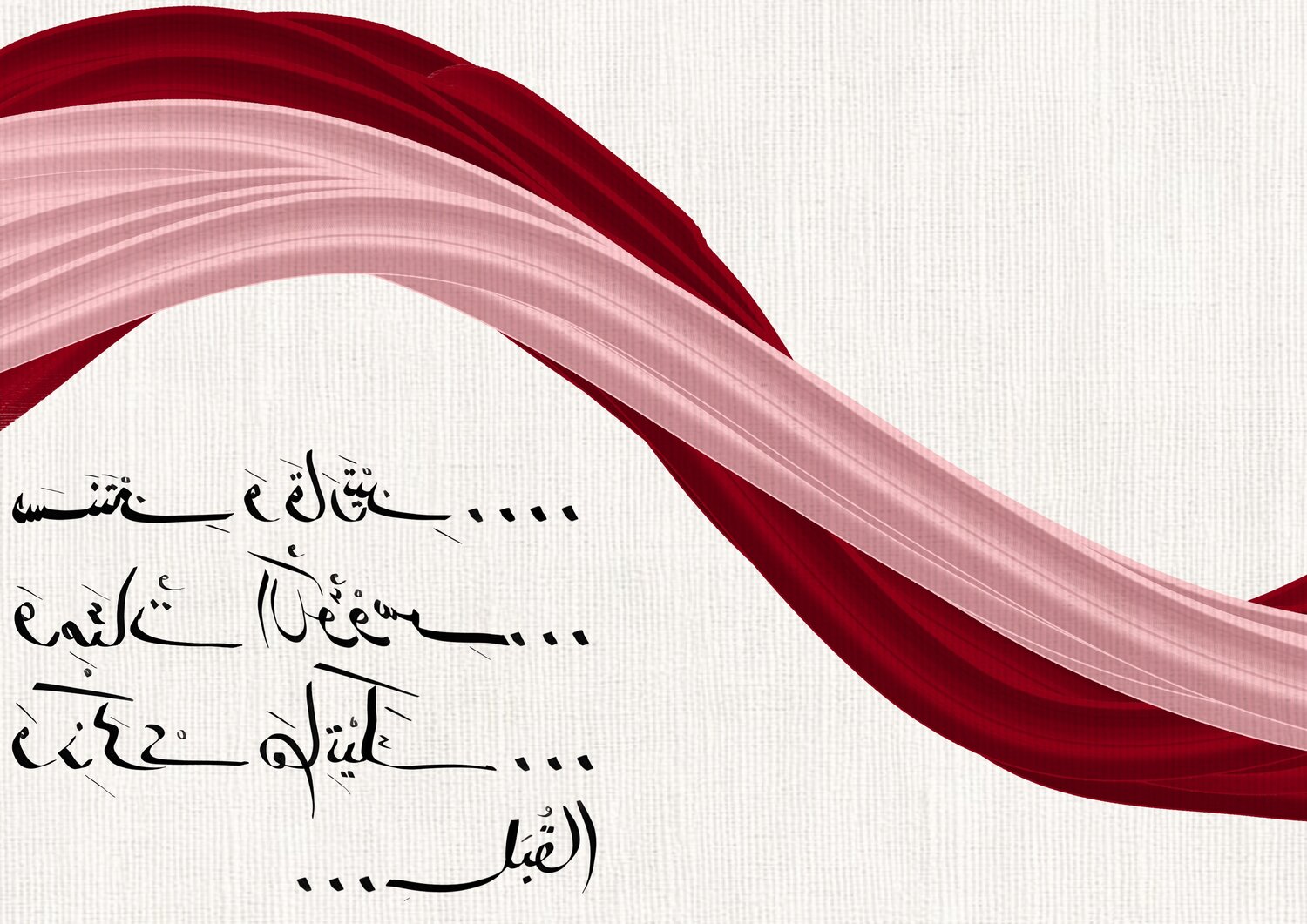
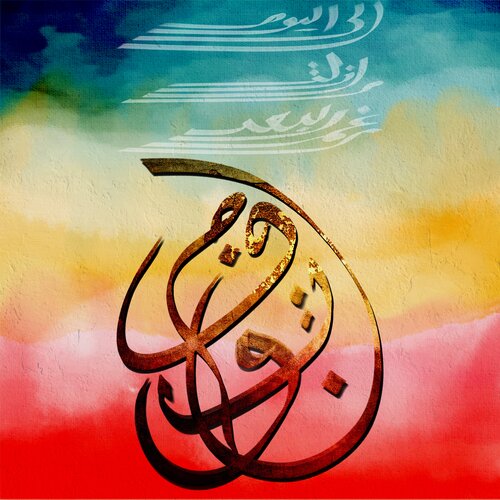
Original verse
سنتين، وقارتين،
ومئات الكؤوس،
وذكرى هاتيك القُبَل.
English translation
Two years, two continents,
hundreds of glasses,
and the memory of those kisses.
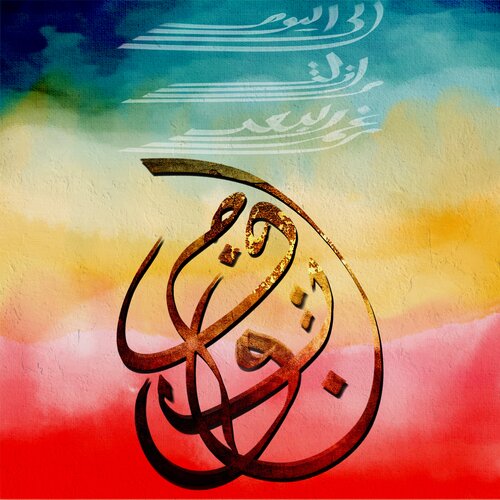
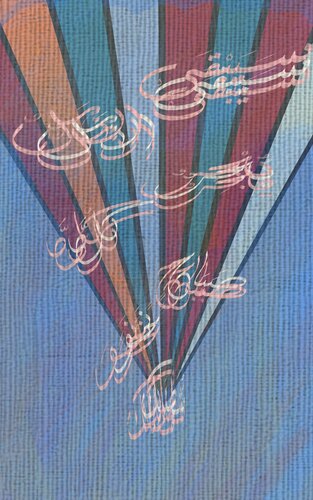
Drunkenness originates from a single verse written by the artist, tracing time through distance, repetition, and memory. The line unfolds as a quiet inventory—years passed, places crossed, moments consumed—where intoxication is not only physical, but temporal and emotional.
The calligraphic… text is suspended beneath a sweeping red form that moves like a current rather than an object. Rather than illustrating the verse, the composition allows language to dissolve into rhythm and weight. What remains is not excess, but residue: the aftertaste of time, distance, and accumulation.
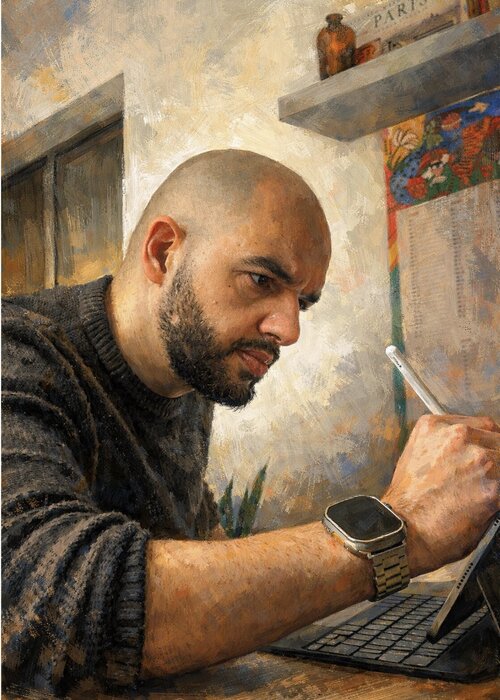
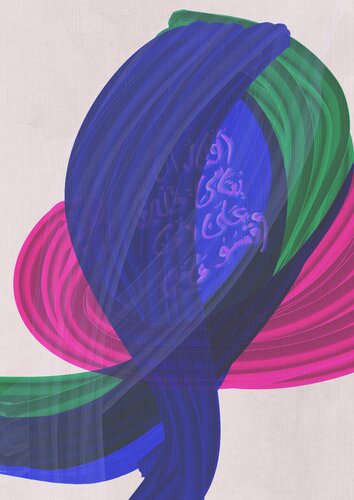
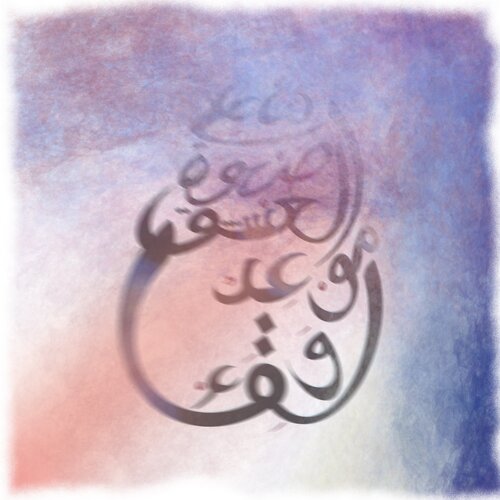
I am not a calligrapher. I am a poet who writes by hand. The Arabic script in my work is my own — composed, not transcribed. Each piece begins as a poem written in the margins of a life spent between conflict zones, peacekeeping missions, and displacement. Fifteen years across Lebanon, the Arab world, and international humanitarian work left me with a particular relationship to language: as witness, as survival, as the thing that holds when institutions fail and borders shift. ENJZ — which means accomplish in Arabic — carries the initials of what I cannot afford to lose. The work asks what happens when a private text enters visual space. When handwriting becomes image. When a poem written in exile finds a surface large enough to breathe. The background does not decorate the script — it is the atmosphere the poem already inhabits: fragile, luminous, not entirely resolved. I make these works in Madrid. I think in Arabic. I am still, in some sense still in Lebanon.