Singulart guarantees reliability and traceability.
All the artists on the platform have been specially selected and certify to only sell works, of which they are the artist. Whatever the medium, the work is sent to the buyer with a certificate of authenticity. Photographs are numbered and signed.
Every customer can be given a copy of their certificate of authenticity by contacting support@singulart.com
With Singulart, you can pay safely by credit card or bank transfer.
For all transactions exceeding your credit limit, contact us. We are required to verify every transfer, as part of the fight against fraud and money laundering.
Singulart prices include:
Price of an artwork defined by an artist.
Insurance. Your order is 100% protected in case of any damage or loss.
All customs fees, taxes, and document preparation.
Third-party logistic provider shipping costs.
A dedicated Singulart customer care specialist that will assist you with any questions or problems during shipment.
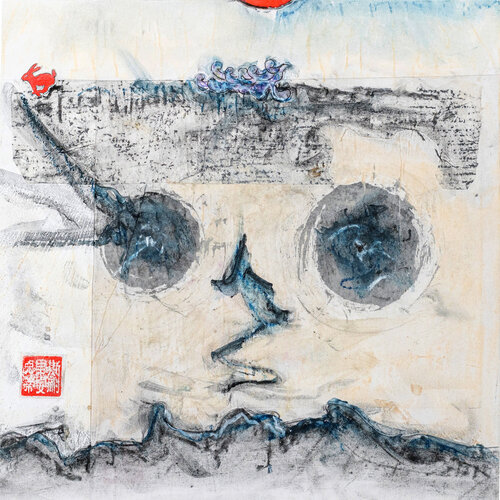
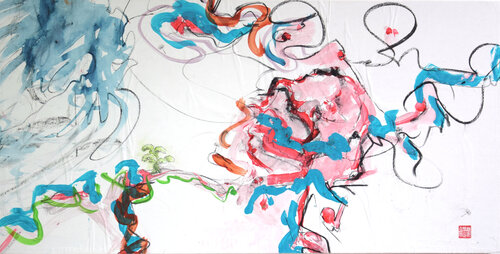
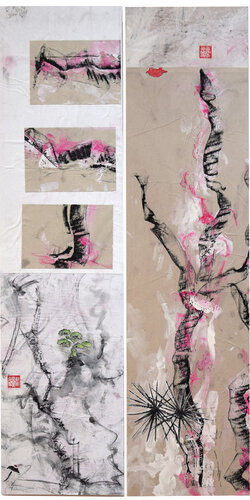
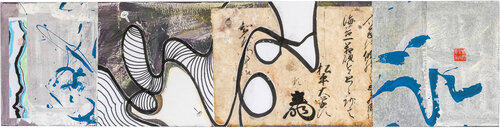
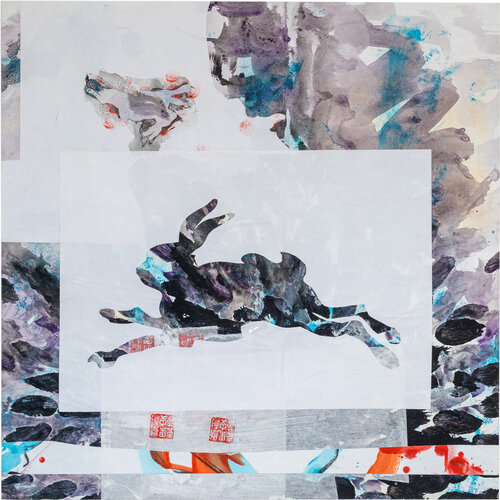
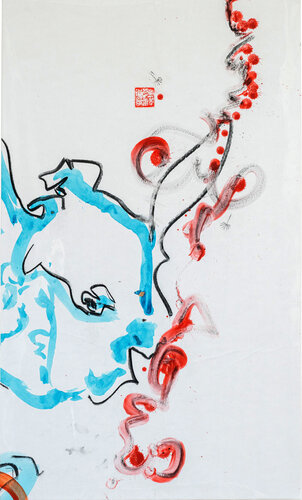
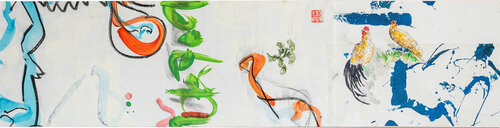
Sagasu (Japanese for "search") combines Eastern and Western visual logics in an open, process-oriented structure.
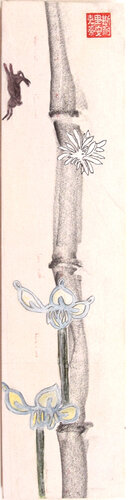
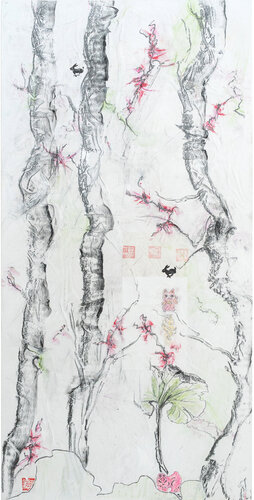
Layers of paper, ink, acrylic, graphite and collage on an open wooden support form a structure of lines, surfaces and movement.
The work exists in the space between image and object. Its depth of 6 cm creates a spatial presence.
Blue and green hues evoke water and transitions. Lines crisscross the surface like currents. Searching… appears not as a goal, but as a state of being.
NOTE: The variable orientation shifts the relationship between image and space. The work can be hung or stood up and can be reinterpreted by rotating it 90 degrees.
Christiane Hiltrop develops open pictorial structures that exist between surface and space. Through the layering of paper, ink, acrylic, pencil, charcoal, and collage on an open wooden support, she creates dense yet breathable surfaces. Material is understood not merely as a support, but as an active component of the pictorial process. Variable orientations change the perception of the work in space and constantly open up new perspectives – the viewer can become part of this open process. In terms of content, European and Japanese visual logics merge as permeable layers. Signs, shifts in scale, and transparent planes create tensions between visibility and concealment, movement and stillness. Hiltrop has a background in visual communication, art history, and modern Japanese studies. Her academic engagement with image theory and cultural studies shapes the conceptual orientation of her work.