Singulart guarantees reliability and traceability.
All the artists on the platform have been specially selected and certify to only sell works, of which they are the artist. Whatever the medium, the work is sent to the buyer with a certificate of authenticity. Photographs are numbered and signed.
Every customer can be given a copy of their certificate of authenticity by contacting support@singulart.com
With Singulart, you can pay safely by credit card or bank transfer.
For all transactions exceeding your credit limit, contact us. We are required to verify every transfer, as part of the fight against fraud and money laundering.
Singulart prices include:
Price of an artwork defined by an artist.
Insurance. Your order is 100% protected in case of any damage or loss.
All customs fees, taxes, and document preparation.
Third-party logistic provider shipping costs.
A dedicated Singulart customer care specialist that will assist you with any questions or problems during shipment.
Other details :
Artwork on fixed support. Artwork framed.
Dimensions :
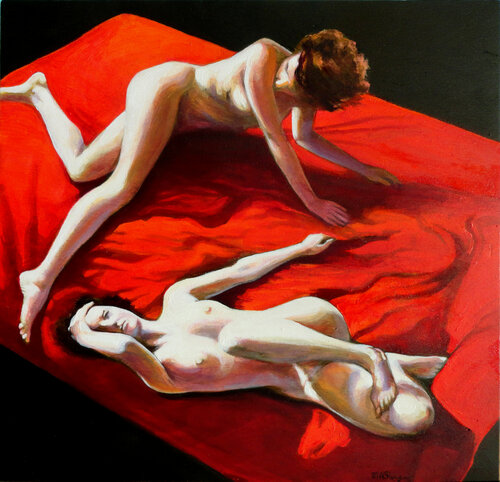
39.4x39.4in
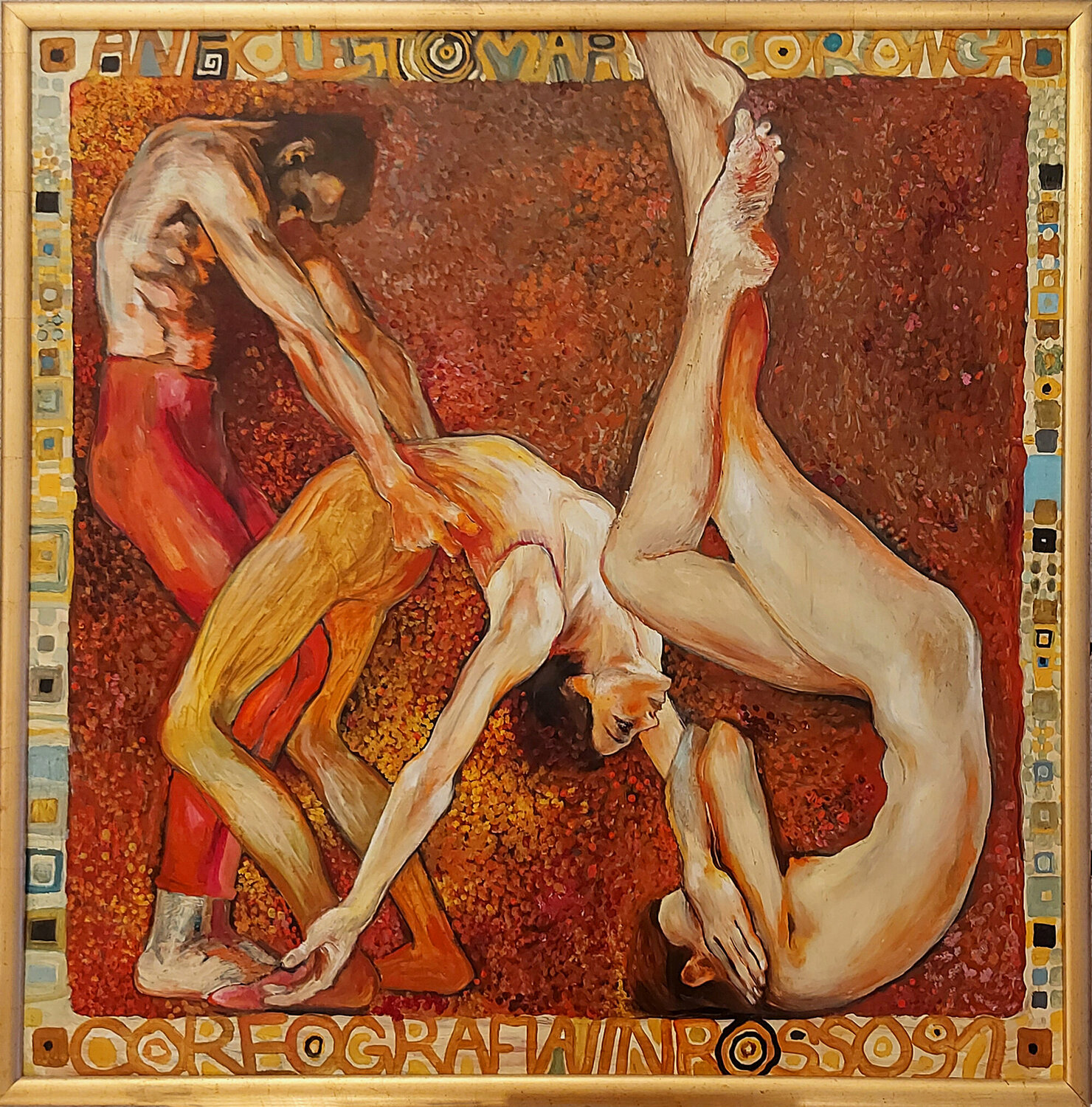
About this artwork
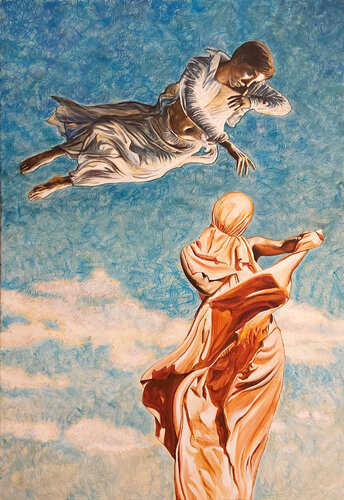
Work freely inspired by the style of the Viennese Secession after the vision of the paintings by Gustav Klimt and Egon Schiele in the Belvedere palace in Vienna. The composition is characterized by a linear and two-dimensional formal structure that unites three human figures as in a contemporary dance choreography, while the background is a material background of shades of red. The decorativism of the Secession has been reinterpreted in the geometric… decorative band that surrounds the strictly square image and is completed with the gilded frame. The decorative band proposes another typical theme of the Secession which is the use of writing characters as decorative elements: the name of the author and the title of the work are in fact legible.
« A mirror reflects a face and art reflects the soul. »
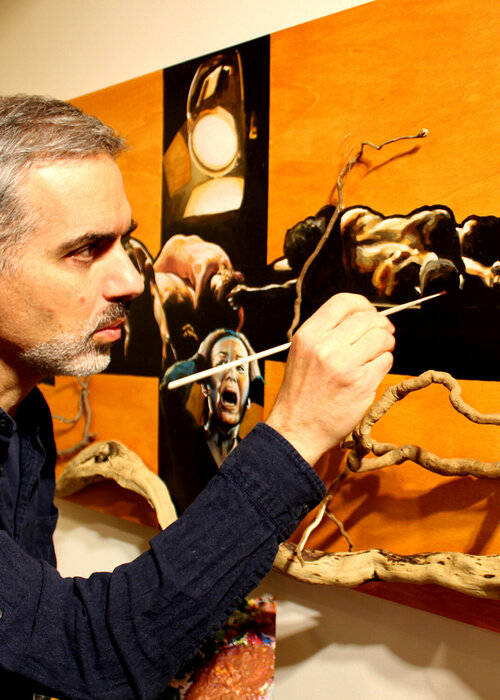
Marco Ronga is an experienced painter, draftsman, and sculptor based in Italy whose works have been exhibited nationally and in England. He describes his works as fusing themes of the portrait and the human figure with suggestions of urban architecture and the landscape resuting in "portraits of places and landscapes of bodies". Ronga's painterly compositions are most often created with acrylics and oils on wood or canvas.