Singulart guarantees reliability and traceability.
All the artists on the platform have been specially selected and certify to only sell works, of which they are the artist. Whatever the medium, the work is sent to the buyer with a certificate of authenticity. Photographs are numbered and signed.
Every customer can be given a copy of their certificate of authenticity by contacting support@singulart.com
With Singulart, you can pay safely by credit card or bank transfer.
For all transactions exceeding your credit limit, contact us. We are required to verify every transfer, as part of the fight against fraud and money laundering.
Singulart prices include:
Price of an artwork defined by an artist.
Insurance. Your order is 100% protected in case of any damage or loss.
All customs fees, taxes, and document preparation.
Third-party logistic provider shipping costs.
A dedicated Singulart customer care specialist that will assist you with any questions or problems during shipment.
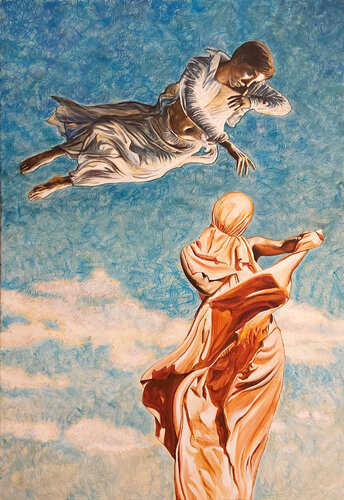
The painting is inspired by the violence exercised by some American soldiers against Iraqi prisoners in the Abu Ghraib prison during the 2004 peacekeeping mission in Iraq.
A woman waves the flag of freedom. It is an allegory of peace that the International Mission was supposed to bring to a context already tormented by interminable conflicts, but in fact the woman is trampling on a man bound and covered by a canvas sack.
The photos of the violence… against prisoners have been so sublimated into a symbolic image which, moreover, refers to the first great political picture of the nineteenth century: "Freedom that guides the people" created by Delacroix in 1830.
The painting "Mission of Peace" was exhibited in 2004 in an exhibition on the theme of peace at the Kursaal in Abano Terme.
« A mirror reflects a face and art reflects the soul. »
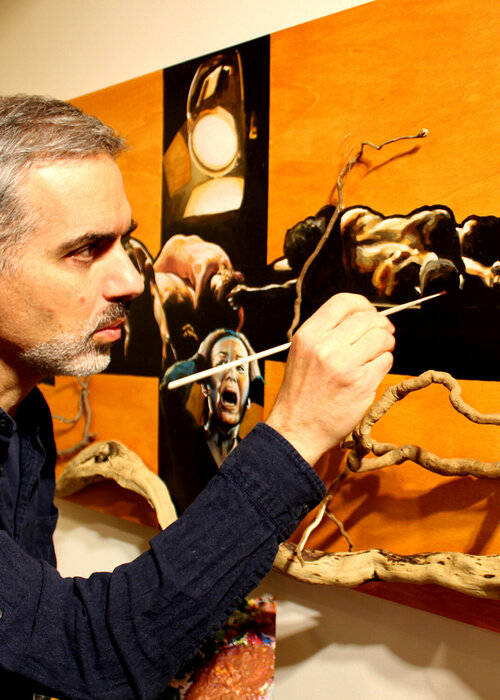
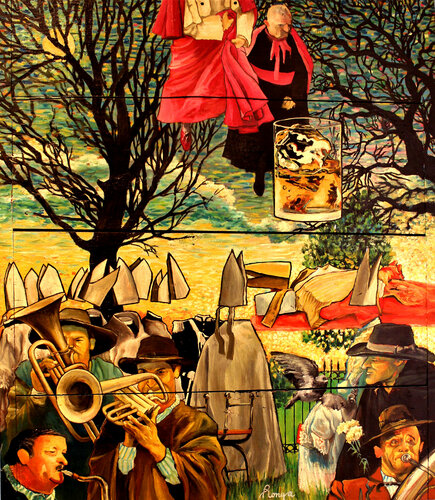
Marco Ronga is an experienced painter, draftsman, and sculptor based in Italy whose works have been exhibited nationally and in England. He describes his works as fusing themes of the portrait and the human figure with suggestions of urban architecture and the landscape resuting in "portraits of places and landscapes of bodies". Ronga's painterly compositions are most often created with acrylics and oils on wood or canvas.