Not currently available for saleThis piece is currently reserved (either by a client or for an exhibition...).Get notified when it becomes available again.
Thank you very much for your interest!
Your message has been sent successfully! We will get back to you if the artwork becomes available again.
Singulart guarantees reliability and traceability.
All the artists on the platform have been specially selected and certify to only sell works, of which they are the artist. Whatever the medium, the work is sent to the buyer with a certificate of authenticity. Photographs are numbered and signed.
Every customer can be given a copy of their certificate of authenticity by contacting support@singulart.com
With Singulart, you can pay safely by credit card or bank transfer.
For all transactions exceeding your credit limit, contact us. We are required to verify every transfer, as part of the fight against fraud and money laundering.
Singulart prices include:
Price of an artwork defined by an artist.
Insurance. Your order is 100% protected in case of any damage or loss.
All customs fees, taxes, and document preparation.
Third-party logistic provider shipping costs.
A dedicated Singulart customer care specialist that will assist you with any questions or problems during shipment.
Other details :
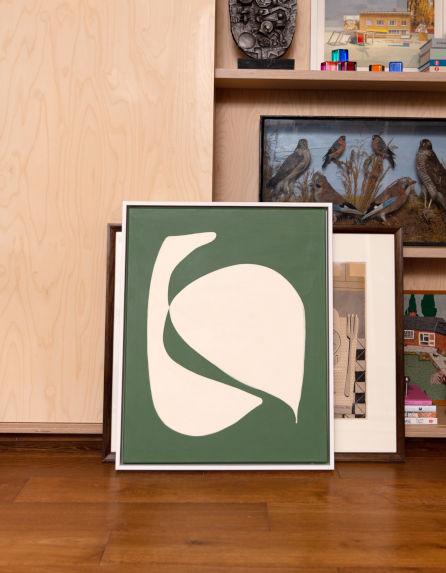
Artwork on supported wooden frame. Ready to hang. Framing on request.
Dimensions :
22.8x34.3in
About this artwork
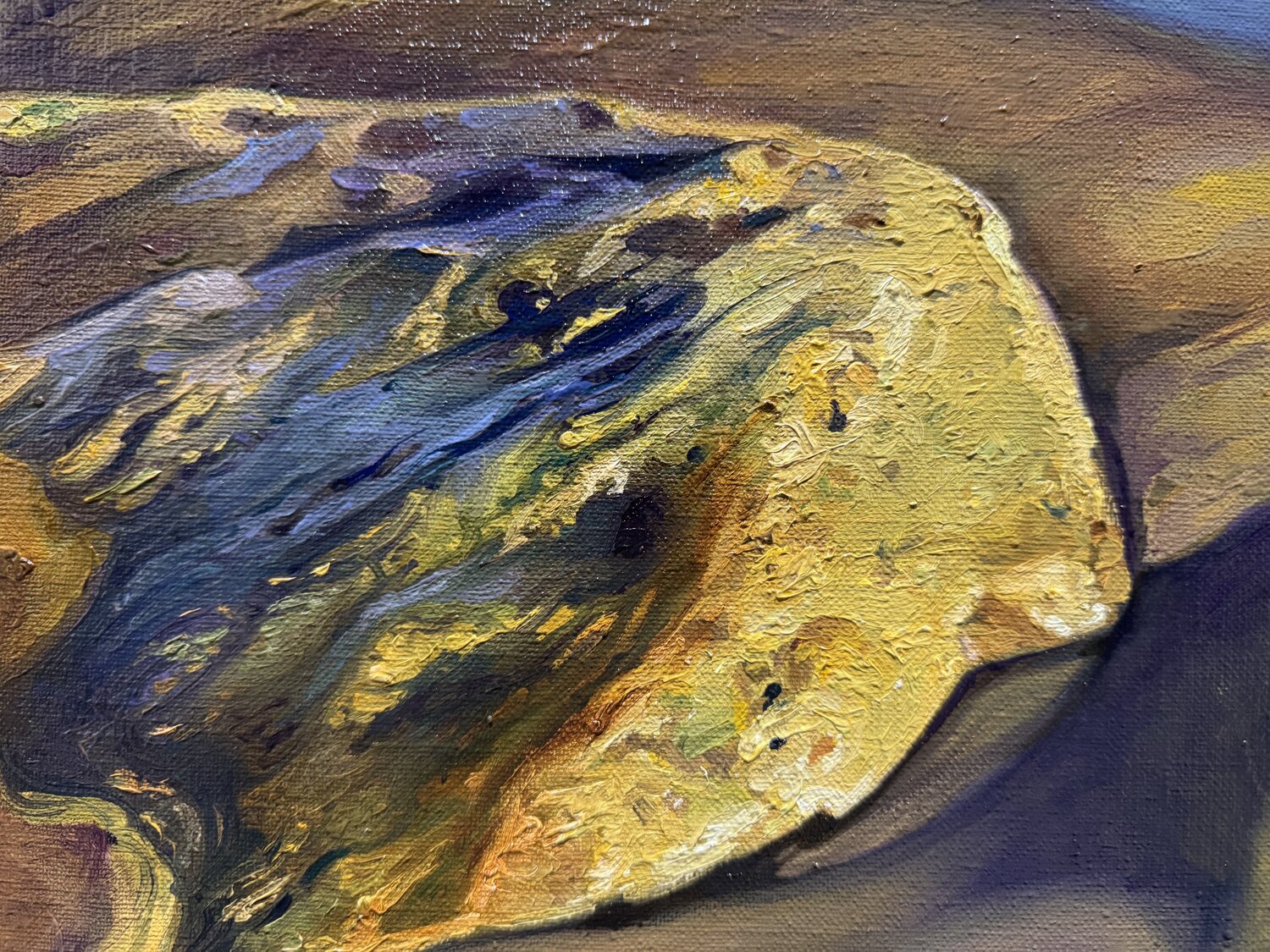
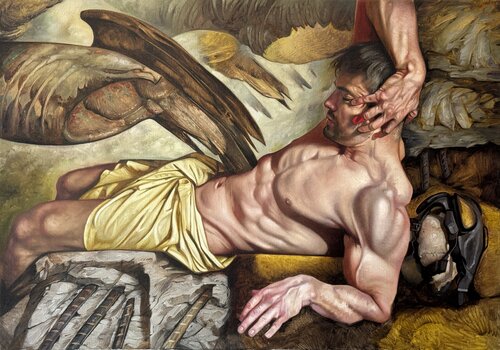
In this work I wanted to represent Orpheus not only as a mythological figure, but as a symbol of the destiny of art and the artist.
His face emerges from the sand and rocks, between the waves and the shore, like a body returned to nature. It is a suspended moment, in which the song fades but continues to resonate in the matter, in the movement of the water, in the light that envelops him.
I'm interested in that threshold where art, like myth, dissolves… and at the same time regenerates itself: when the artist's voice no longer belongs to the one who emits it, but becomes an echo of the world itself.
Through Orpheus, I reflect on the fragility and persistence of the creative gesture—on the possibility that beauty, even while losing its sound, continues to live as a trace, a memory, a breath.
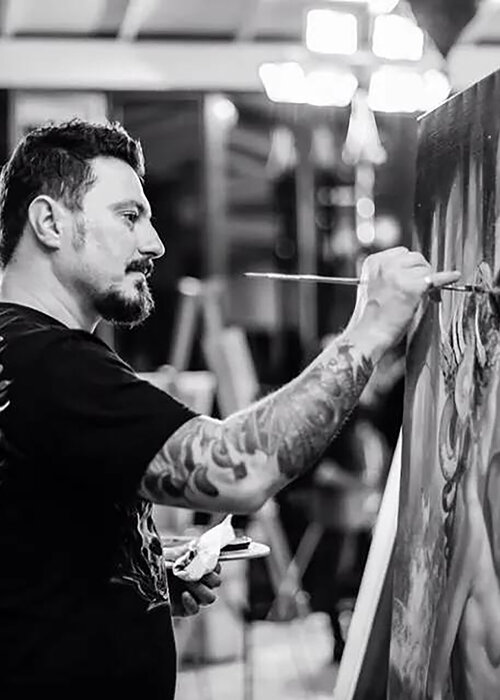
Paul Andi Bocu, born in Romania and educated at the Liceo di Belle Arti and the Accademia di Belle Arti in Rome, primarily uses painting as his medium. He works in a figurative style that pays homage to tradition and classicism, embracing both technical virtuosity and expressive freedom; his works range across genres, still lifes, mythologies, and landscapes. Through a dialogue between the visible and the invisible, he communicates the power and necessity of beauty as a profound and human value.