



- Professional worldwide delivery, monitored by our logistics experts
- Shipping fees, duties and taxes are included in the price
- 30-day free returns (except made-to-order items)
Singulart guarantees reliability and traceability.
All the artists on the platform have been specially selected and certify to only sell works, of which they are the artist. Whatever the medium, the work is sent to the buyer with a certificate of authenticity. Photographs are numbered and signed.
Every customer can be given a copy of their certificate of authenticity by contacting support@singulart.com
With Singulart, you can pay safely by credit card or bank transfer.
For all transactions exceeding your credit limit, contact us. We are required to verify every transfer, as part of the fight against fraud and money laundering.
Singulart prices include:
- Price of an artwork defined by an artist.
- Insurance. Your order is 100% protected in case of any damage or loss.
- All customs fees, taxes, and document preparation.
- Third-party logistic provider shipping costs.
- A dedicated Singulart customer care specialist that will assist you with any questions or problems during shipment.

Alexandra Kapogianni-Beth
Germany
Related collection
Human vs Wild: Black & White
21 pieces
Artist highlights
- Established Artist
- International Exposure
- Prizewinner
- Featured in gallery curations
- Works on commission
Artwork details
- Medium : Bronze With Stand
- Dimensions : Length: 5.5in, Height: 11.8in, Depth: 4.3in
- Edition : All editions sold (6 / 6)
- Artist's proof : 1
About this artwork
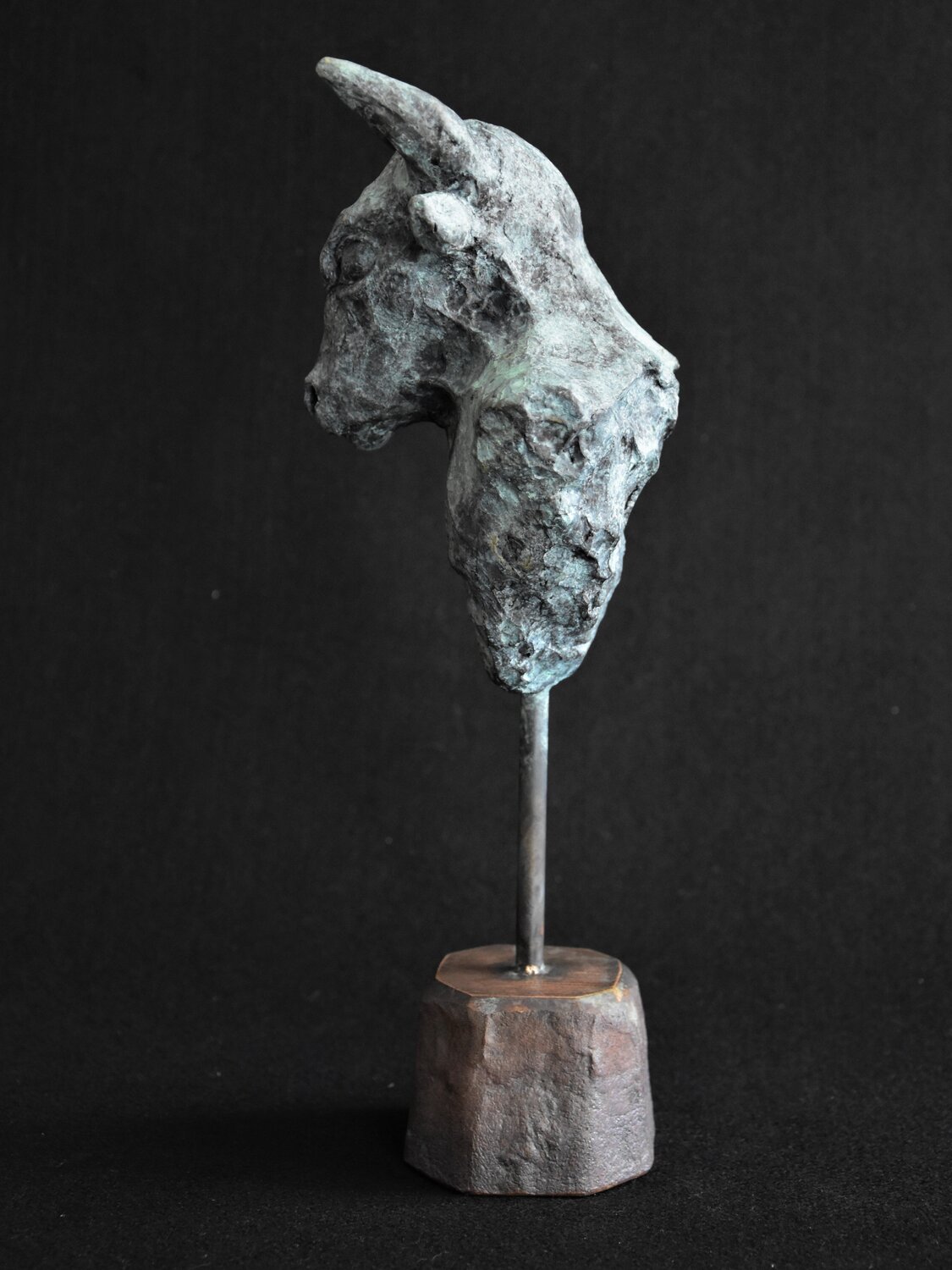
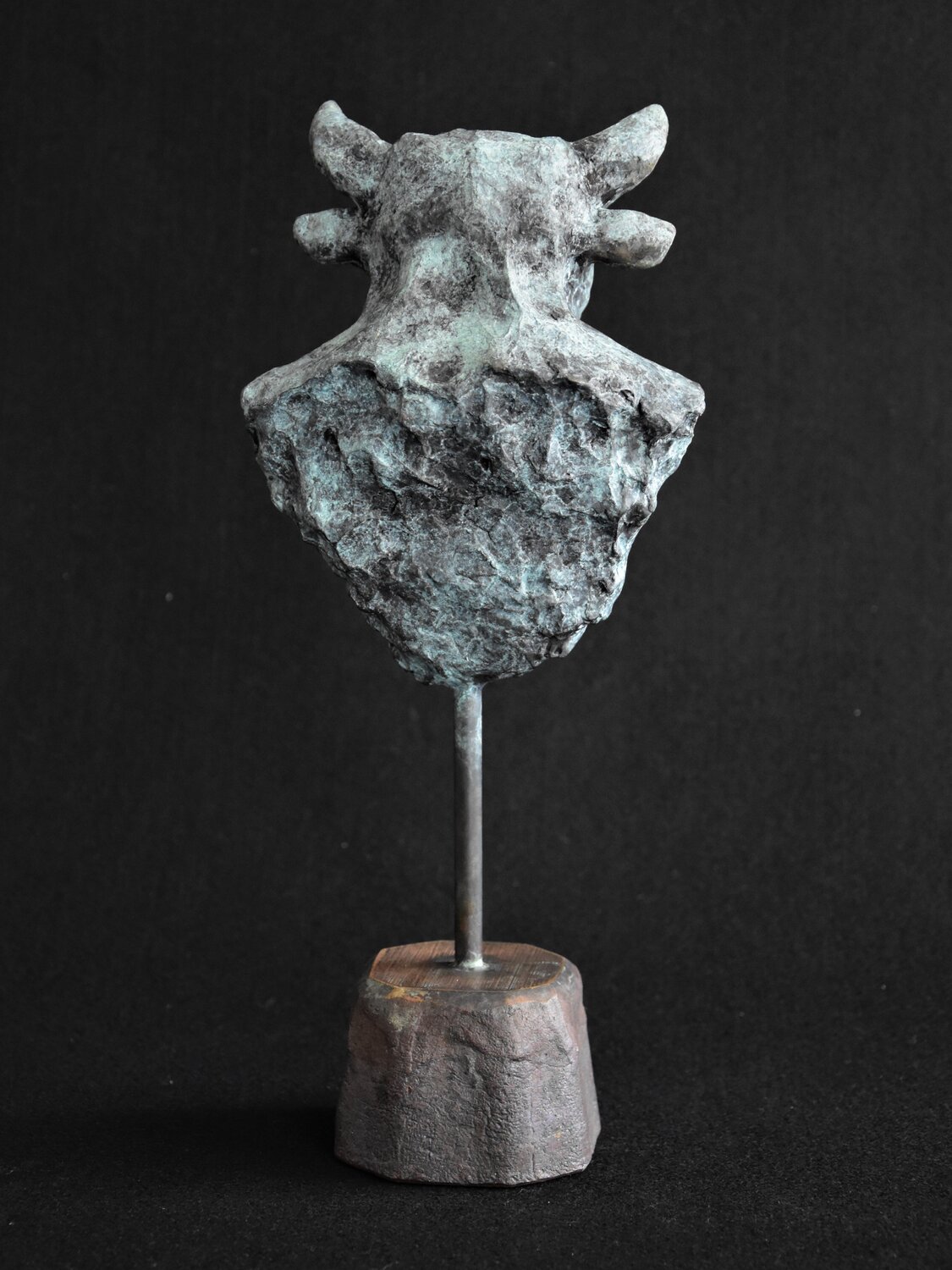
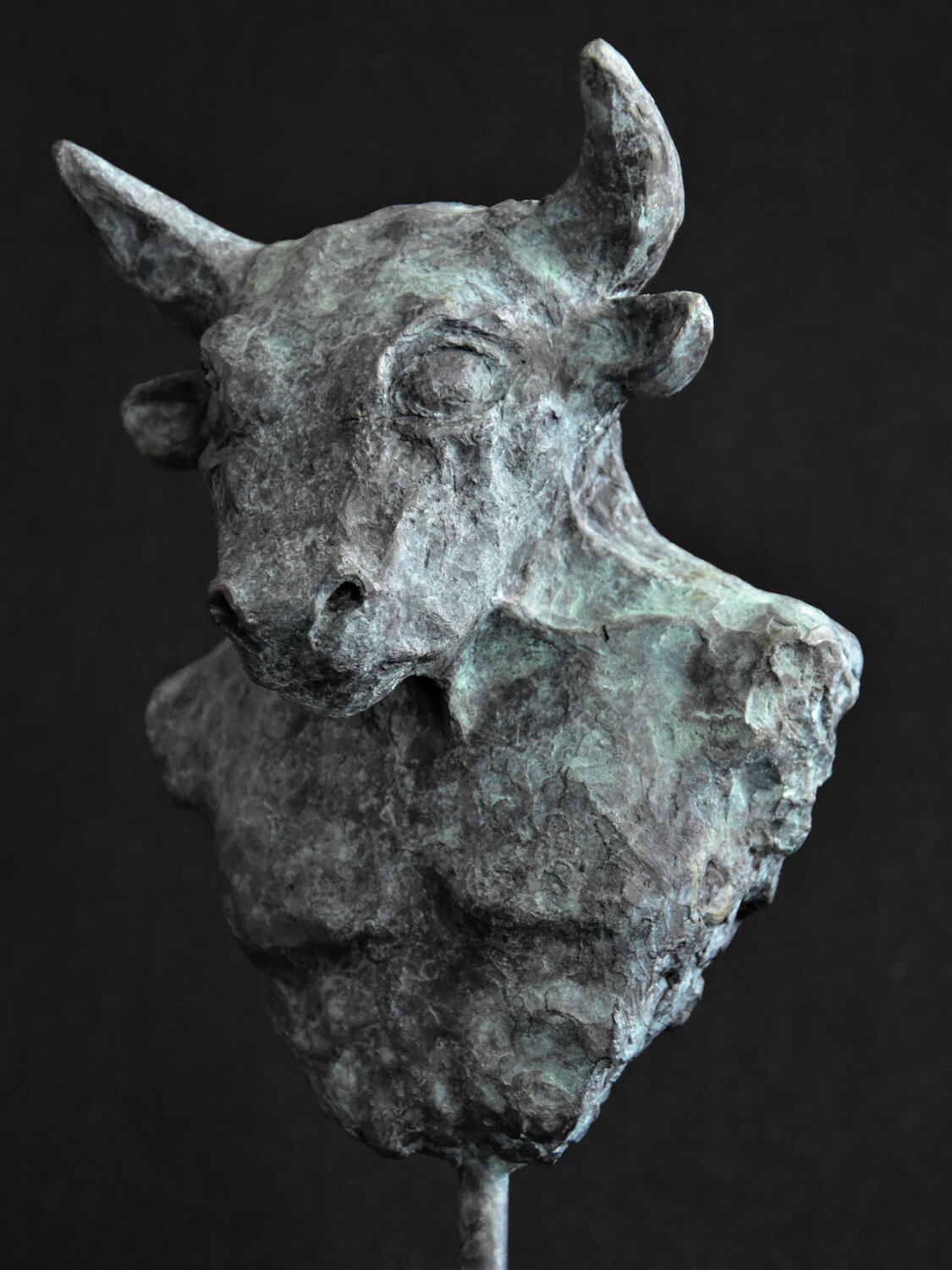
The Minotaur, according to Greek mythology, was a beast with a man's body and the head and tail of a bull. The ancient Greek god of the seas, Poseidon, had sent to the king of Crete, Minos, a white bull to be given as a sacrifice to please Poseidon himself. When the king kept the white animal as his own and sacrificed another bull, Poseidon punished him by instigating his wife, Pasiphae, to fall in love with the animal, to sleep with it and finally…
to give birth to the Minotaur.
The "Minotaur" is cast in bronze and fixed to a pedestal which itself is a residue of the bronze casting process.
The "Minotaur" is cast in bronze and fixed to a pedestal which itself is a residue of the bronze casting process.
Alexandra Kapogianni-Beth
Germany
Credentials
- Established Artist
- International Exposure
- Prizewinner
- Featured in gallery curations
- Works on commission
« I am a figurative sculptor, focused on turning dead material, as hard rock or soft matter as plaster and clay, into something vivid. »
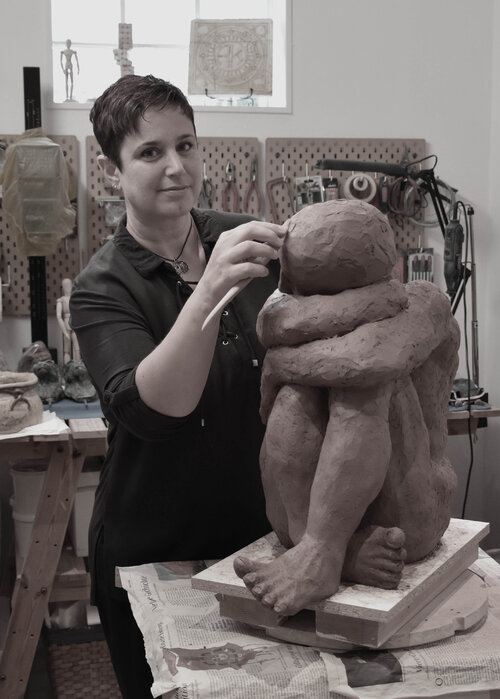
Alexandra Kapogianni-Beth is a Greek art historian and sculptor who lives and works in Germany. Her artistic career began over 20 years ago with initial experiments in sculpture and drawing. She deepened her knowledge through numerous courses at home and abroad and completed a sculpture degree at the IBKK Design and Art Center in Bochum-Wattenscheid, where she also teaches today. Her works focus on the human body—its expressiveness, fragility, and transformation. The contrast between strength and vulnerability, ideal beauty and imperfection, is central. She works with live models and anatomical studies. Fragmented forms reflect the complexity of human existence. A central element of her art is Greek mythology, whose figures, symbols, and stories she combines with classical aesthetics and modern impulses.