Not currently available for saleThis piece is currently reserved (either by a client or for an exhibition...).Get notified when it becomes available again.
Thank you very much for your interest!
Your message has been sent successfully! We will get back to you if the artwork becomes available again.
Singulart guarantees reliability and traceability.
All the artists on the platform have been specially selected and certify to only sell works, of which they are the artist. Whatever the medium, the work is sent to the buyer with a certificate of authenticity. Photographs are numbered and signed.
Every customer can be given a copy of their certificate of authenticity by contacting support@singulart.com
With Singulart, you can pay safely by credit card or bank transfer.
For all transactions exceeding your credit limit, contact us. We are required to verify every transfer, as part of the fight against fraud and money laundering.
Singulart prices include:
Price of an artwork defined by an artist.
Insurance. Your order is 100% protected in case of any damage or loss.
All customs fees, taxes, and document preparation.
Third-party logistic provider shipping costs.
A dedicated Singulart customer care specialist that will assist you with any questions or problems during shipment.
Other details :
Artwork on supported wooden frame. Ready to hang. Framing on request.
Dimensions :
78.7x55.1in
About this artwork
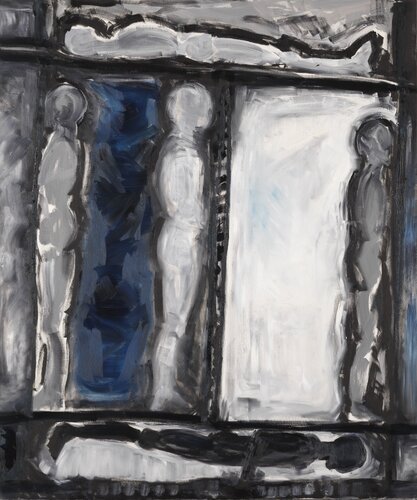
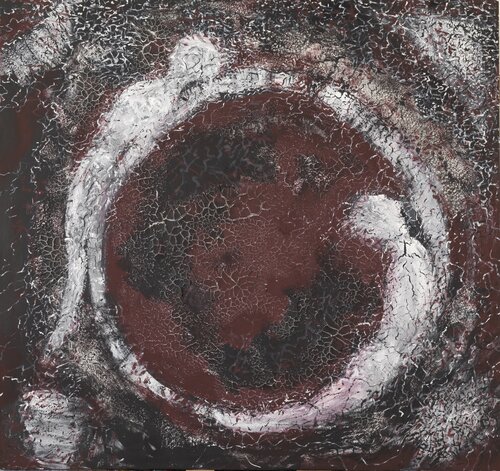
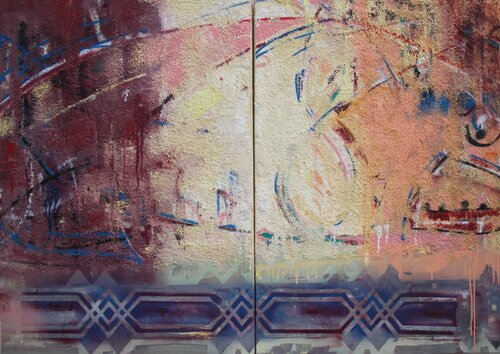
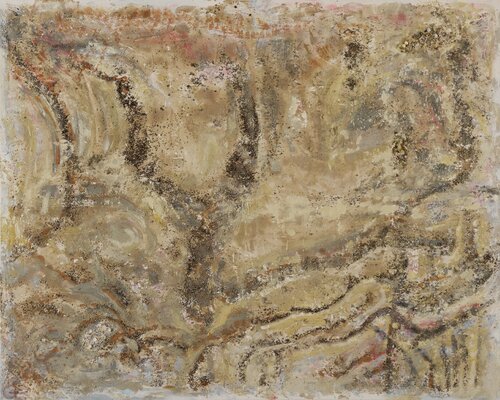
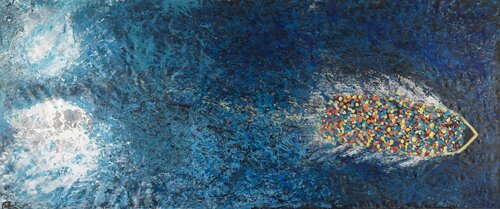
This is the third work that artistically addresses the inhumane dimensions of the war in Ukraine. Two figures are recognizable, sitting in the rubble of a completely destroyed building, having apparently survived the hail of bombs. In this painting, too, the color scheme does not reflect the actual conditions of a war zone, but rather symbolizes the vulnerability of people, especially women and children, in modern warfare. Despair and hope are juxtaposed… in close proximity.
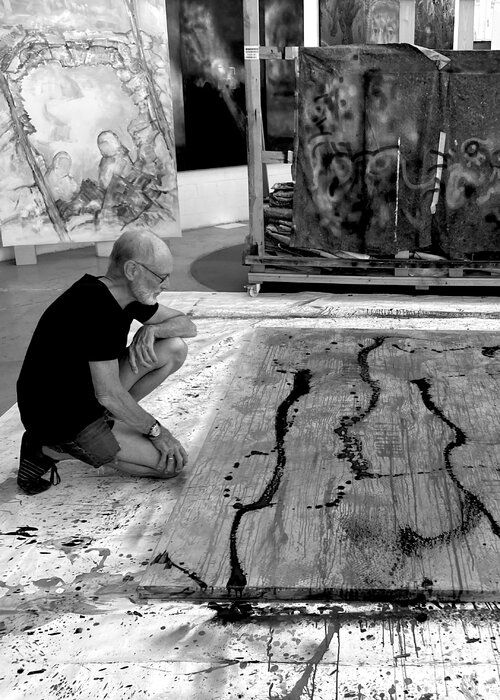
Günther Baechler, an art teacher, painter, conflict researcher with a doctorate, and peace diplomat, works primarily with oil paints but also experiments with acrylics, spray paint, and natural materials such as sand, stones, and wood. Since returning to painting in 2018, his work has followed a thematic development closely linked to his experiences: climate change, environmental destruction, armed conflicts, and their societal transformation. The artist walks a fine line between representational and abstract art, with abstract painting taking center stage recently. While earth tones and textures dominated his earlier works, he increasingly employs a broad palette. The smaller formats of his most recent work demonstrate a strong and contrasting use of color, without uncritically following the current trend of vibrant hues.